At least 60,000 of the nearly 200,000 personal protection equipment (PPE) kits donated by industry and philanthropic organisations have failed quality test over the past one month, officials familiar with the matter said on Sunday.
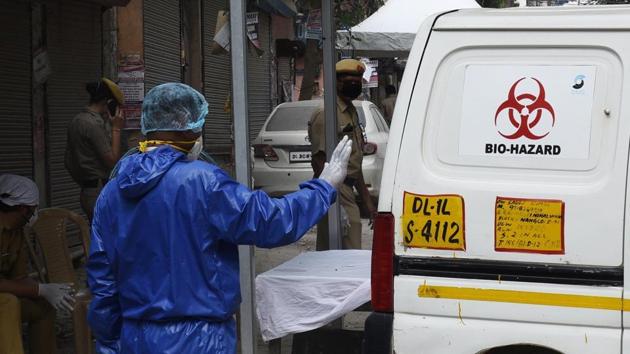
Most of these kits were imported from China, the world’s largest supplier of medical products including drugs and diagnostics, which led India to look for manufacturers based in other countries. The highest rejections were in a batch of 170,000 kits that arrived on April 5.
“There are no government-to-government donations; these are all philanthropic organisations that have come forward to donate necessary supplies in this moment of crisis. Our rules are clear that we do not let anything be distributed without necessary quality checks,” said a senior government official, requesting anonymity.
“All imports, be it bought or donated, undergo stringent quality checks and are being looked for certificate of compliance before they are put to use. When dealing with such a large number there are bound to be some pieces that can be faulty, and we are rejecting those. It doesn’t mean the entire lot is faulty.”
One of the big labs where the products are being tested is the Defence Research & Development Organisation (DRDO) in Gwalior, Madhya Pradesh.
{{/usCountry}}One of the big labs where the products are being tested is the Defence Research & Development Organisation (DRDO) in Gwalior, Madhya Pradesh.
{{/usCountry}}The Union health ministry’s joint secretary, Lav Agarwal, in one of his press briefings, said, “India has put stringent standards in place for medical items, and whichever product does not meet the quality standards will not be accepted. We will not provide our health care workers anything substandard, and we are looking around the globe to identify manufacturers who can supply us not just PPE kits, but also diagnostic kits. We have enough PPE at the moment, and we will get more soon.”
India is also looking at other countries to source essential medical supplies, such as South Korea, Singapore, Japan, Germany, France, the US, among others.
While doctors across the country have been highlighting the need for more PPE in hospitals to reduce health care workers contracting infections, the government says it is ensuring that this demand is met.
“There was shortage earlier as we were only importing PPE but now we are comfortably placed in terms of supply,” said Agarwal.
According to health ministry sources, close to 400,000 PPE kits are already in stock in hospitals across India, and more shipments are expected in a week or so.
“Over the past month we have placed orders for some 16 million PPE that have already started coming in. In a week or so we should receive most of our orders. Also, there is a significant number of domestic manufacturers now who have been identified for the job, and have started manufacturing. Some have even scaled up their capacity really fast,” said a health ministry official.
From being totally dependent on imported PPE, India has managed to set up about 50 domestic companies in just the past one month to raise its PPE manufacturing capacity. Currently, all 50 of these companies have the capacity to manufacture about 60,000 PPE kits a day, and are in the process of scaling it up further, to be able to meet the country’s demand for about 100,000 kits a day.
“There should be enough PPE in stock by next week. There is absolutely no shortage, and there won’t be any in future, too,” said the health ministry official cited above.
Experts say rather than relying on imports, the focus now should be on manufacturing indigenously.
“It is better to import critical missing raw material fabric for PPE that’s breathable and yet is fluid and viral-resistant, rather than importing planeloads of PPE kits that may not meet the quality criteria,” said Rajiv Nath, founder and forum coordinator of the Association of Indian Medical Device Industry (AiMeD).