
 E-Paper



‘Covid-19 pandemic exposed gaping loopholes in boasts’: Chidambaram
Former Union finance minister P Chidambaram on Friday sought an answer whether the Indian democracy has risen to the challenge of the Covid-19 pandemic and protected the lives and livelihood of its people


Former Union finance minister P Chidambaram on Friday sought an answer whether the Indian democracy has risen to the challenge of the Covid-19 pandemic and protected the lives and livelihood of its people.
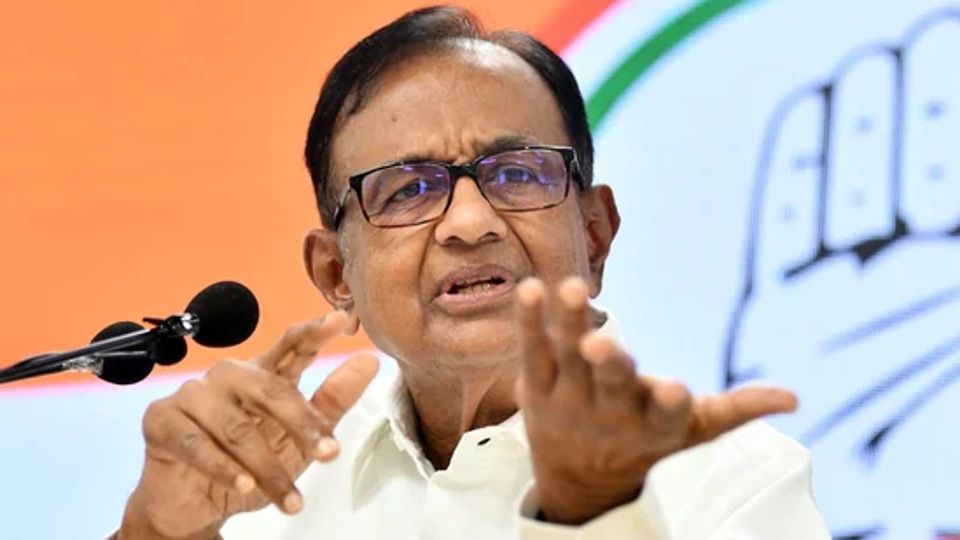
Chidambaram’s comments came during his visit to Jaipur where he took part in a seminar on ‘Global Pandemic and Challenges before the Democracy’ organised by the Rajasthan chapter of Commonwealth Parliamentary Association (CPA) in Rajasthan Assembly.
He said that the pandemic may be contained by universal vaccination or the disease may be cured by the discovery of medicines but an answer to a question needed to be continuously searched.
“Did Indian democracy rise to the challenge of the pandemic and protect the lives and livelihood and the wellbeing of its people, especially the poor and the children,” Chidambaram said.
He said that every political system boasts that it is best suited to address the needs of the people.
“What the pandemic has done is expose the gaping loopholes in the boasts. From monarchies to dynastic rulers to military dictatorships to one-party governments to so-called ‘elected’ autocrats to presidents in a presidential system to the prime minister in a parliamentary democracy, every kind of government is riddled with weaknesses. A democratic government faces the added challenge of its shortcomings laid bare every day and being criticised every hour,” he said.
“In a true Parliamentary democracy system, the prime minister is responsible every day to the Parliament and to the people. However, in a corroded diminished democracy, the rulers will find diverse ways to evade accountability,” he said.
Chidambaram said that faced with any adversity, the weaknesses would have been exposed in due course but the pandemic has exposed the weaknesses brutally with no scope of excuses or a cover-up.
The former finance minister highlighted seven challenges, including perils of centralisation in not placing orders for supply of vaccines, design, and execution of vaccination programme, resources and allocation thereof, widening of disparity among people.
He said that the elimination of poverty and reducing inequalities are accepted goals among democratic countries. According to a study, 23 crore people were pushed into poverty in the last two years.
He said that deprivation of school education has been the most devastating impact of the pandemic. Indian democratic governments at the Centre and the states have found no answer to this catastrophe and stand by as helpless spectators, he added.
He said that rule of law requires multiple institutional support and when government institutions fail and bend before the executive or collaborate with rulers, they aid the executive to subvert the rule of law. When this happens, the energies of the rulers will be focused on self-preservation and not fighting the pandemic.
The Rajya Sabha MP said that it is a challenge to make the Legislative branch work to mitigate the suffering of the people.
He said that challenges to democracy are not at the national level alone. The pandemic has thrown an unusual phenomenon of vaccine nationalism.
“What I make is mine, what I can afford to buy is mine,” is vaccine nationalism, he said.
Chidambaram said that countries are not allowing the use of other vaccines in order to promote their vaccine. Vaccine nationalism has thrown a spanner in the wheel of global cooperation in the fight against the pandemic.
Chief guest of the concluding session of the seminar and Rajya Sabha MP, Dr Vinay Prabhakar Sahasrabuddhe, said democracy is not just a matter of voting or discussion, but innovation that emerges from discussions.
He said that India did not restrict freedom of ideological expression even during the pandemic, rather social media and the internet were used for the ‘test, track and treat’ policy. The media was given complete freedom even during the pandemic in the country.
Assembly speaker CP Joshi said, at present, in this era of the Covid epidemic, policy decisions should be taken to reduce social inequality, strengthen economic policy and increase per capita income. He said that along with us, other countries of the world also adopted curative measures to fight this disease. No one took preventive measures. He called for the need to strengthen the preventive measures and for this, every person should discharge the duties.
Leader of Opposition Gulabchand Kataria said that this pandemic has affected the whole world and this period is most difficult for democratic countries. He said that the epidemic does not see pros and cons, religious beliefs, rich and poor. “In this difficult time, it is most important to strengthen the democratic structure with education, economic activities,” he said.


