E-Paper



Cumin prices hit eye-watering ₹600/kg as spice inflation bites
A silver lining is that farmers are getting a fair share of the market price due to a twist in how the spices market functions.

 Prefer HTon Google


NEW DELHI/AHMEDABAD: Inflation has set the spice route ablaze and cumin (jeera), a widely consumed condiment, is the costliest food ingredient in the Indian kitchen at ₹560- ₹600 a kg, thanks to the climate crisis.
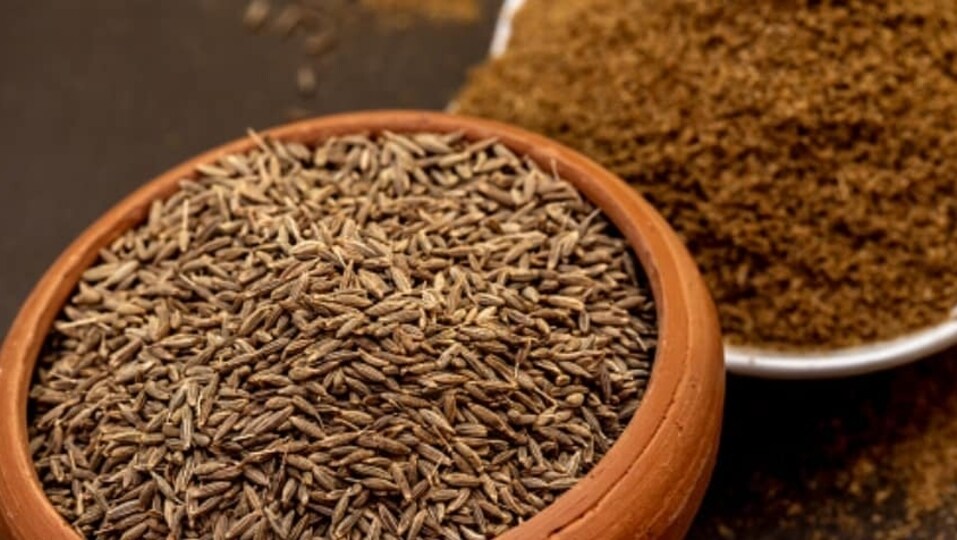
Experts say changing weather patterns in Rajasthan, India’s largest spice grower, have upended the demand-supply balance, and a that large deficit of cumin has sent demand soaring. The silver lining is that farmers are getting a fair share of the market price due to a twist in how the spices market functions. Essentially, as one farmer put it, farmers have beaten traders at their own game.
Consumer inflation in spices rose 18.21% in March, the highest among components in the retail food basket, latest official data show. In Unjha, the nerve centre of India’s spice trade in Gujarat, prices of cumin shot to over ₹40,000 a quintal (100kg) last week, market data shows.
As harvests of the winter-sown condiment were under way, estimates by the Federation of Indian Spice Stakeholders (FISS) showed the overall area under cumin in Gujarat and Rajasthan grew by nearly 13% from a year ago and the average yields were expected to be higher by 13.2% from last year.
Farmers disputed this because ground reports showed extreme weather shrivelled cumin, a grain-based condiment. “A month ago, the industry and traders predicted a 26% surplus. That didn’t look right,” said Bhagirath Choudhary of the South Asia Biotechnology Centre, Jodhpur, Rajasthan.
Choudhary, whose firm works for cumin quality development under a central government programme, said he suspected traders were inflating output to cut wholesale prices and squeeze farmers’ margins. Quite simply, when supply increases, prices decrease.
Choudhary’s firm did a survey of crops on behalf of cumin growers and found that inclement weather had not just shrunk output but also yields by nearly a third.
The ensuing demand-supply mismatch that has driven cumin prices to a record high proved the impact of weather. “So, farmers were armed with their own data, which is rare, leading to the right price discovery,” he said.
Cumin is sown from October and arrival of crops at the Unjha wholesale market begins around early March.
“A big gap in demand-supply scenario has taken prices of cumin to an all-time high,” said Dinesh Patel, chairman of the Unjha agricultural market produce committee.The crop loss is greater in Rajasthan than Gujarat and prices are almost double than in the corresponding period last year,said Ashwin Nayak, president of FISS, adding that they would revise their output estimates.
Soaring prices aren’t the only bad news for consumers. Choudhary, a farm scientist working on cumin, says he has noticed unusual weather changes in western Rajasthan, the heart of spice-farming in India.
“Winters are getting shorter and a western warm wind has started blowing in from Pakistan (bordering western Rajasthan) right at the germination stage of cumin crops around early February. This didn’t happen until a few years ago,” Choudhary said.
Farmers are battling newer and more intensive pest infestation as a result, he said, calling for climate crisis mitigation.
Against a total demand of 800,000 bags (55kg each), cumin output this year is estimated to be around 550,000 bags, a drop of 31%. “Unseasonal rains have also led to loss in production in Rajasthan and Gujarat,” Patel of the Unjha market said.
However, FISS says its report did not factor in losses caused due to rains in February and March and that it would revise its estimates. Choudhary disputes this and said: “Overestimation is neither beneficial to industry nor to farmers.”
The spot-prices rally has had a knock-on effect on futures on NCDEX, an agri commodities futures exchange, where they are trading higher by about 77% from last year. Futures (short for futures contracts) are contracts to buy the commodity at a certain price at a future date.
Syria and Turkey were once considered India’s closest rivals in cumin in the global market. Geopolitical changes and other reasons have forced the two to lower their output and exports.
There is renewed demand for cumin from China which had stopped buying the commodity for last few years due to Covid curbs, said Patel of Unjha APMC.
“The price hike could be a result of speculation in futures trading. There is new arrival of jeera crop and some are trying to artificially jack up the prices. With Turkey deciding to remove jeera from its list of irrigation crops, India has an advantage in exports,” said Yogesh Mehta, chairman of World Cloves Council and member of Taskforce Committee Seeds and Spices formed by Spices Board of India.