
 E-Paper



Davinder Toor: A London collector in pursuit of Sikh art
The connected histories of the British empire and the Sikh empire means that there is a large number of artefacts dispersed across the globe, having travelled out of India over centuries as gifts, auction purchases, items looted or as trophies of war.

 Prefer HTon Google


From a teenage volunteer at the Victoria & Albert Museum’s exhibition on Sikh art in 1999, London-based Davinder Toor has today put together one of the finest private collections of Sikh art, gathering rare artefacts from various countries.
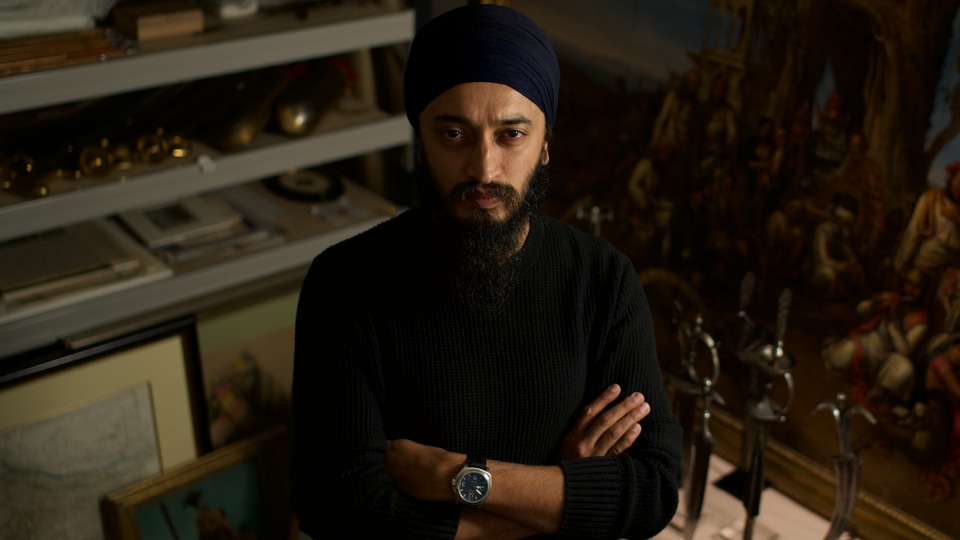
The connected histories of the British empire and the Sikh empire means that there is a large number of artefacts dispersed across the globe, having travelled out of India over centuries as gifts, auction purchases, items looted or as trophies of war.
Driven by a passion to collect and preserve Sikh heritage, Toor, 38, now has in his collection nearly 500 such artefacts, once owned by Ranjit Singh (1780-1839, Jind Kaur (1817-1863) and Duleep Singh (1838-1893), among many others, including governors-general during the British raj in India.
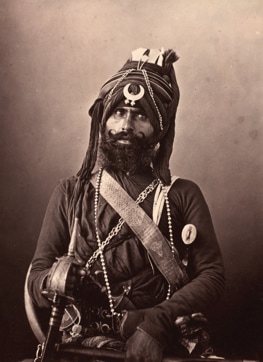
After showcasing the items in various exhibitions in the UK, US, Europe and Canada, Toor will launch a book – titled ‘In Pursuit of Empire: Treasures from the Toor Collection of Sikh Art – in June in London, containing 150 illustrations of some of the rare artefacts.
“The plan is to continue collecting and some day maybe set up a museum as a repository of Sikh heritage. The most important items are those directly associated with Sikh royals and nobles. I have been financing my passion myself but collaborate to hold exhibitions”, Toor said.
Born in London to immigrants from Punjab who arrived here in the 1960s, Toor trained as an optometrist and is engaged in medical research. He will also discuss his work on collecting the items at the Jaipur Literature Festival at the British Library in London in June.
Toor recalls that not every item is easy to collect: “Some auctions are highly contested, particularly by buyers from the Gulf countries interested in such artefacts. There is an overlap of tradition, mixing of Hindu, Muslim, Sikh cultures; the items reflect the inclusiveness of the Sikh historical landscape”.
“Several people from Punjab and India travelled to London in 2018 for a major exhibition at the School of Oriental and African Studies, titled ‘Empire of the Sikhs’. Toor’s book to be launched in June was released originally during the exhibition, and includes an introduction by writer William Dalrymple.”
Toor, who has featured in documentaries along with objects from his collection, said there are no immediate plans to hold an exhibition in India, but the next one is scheduled to be held in Toronto in 2021.
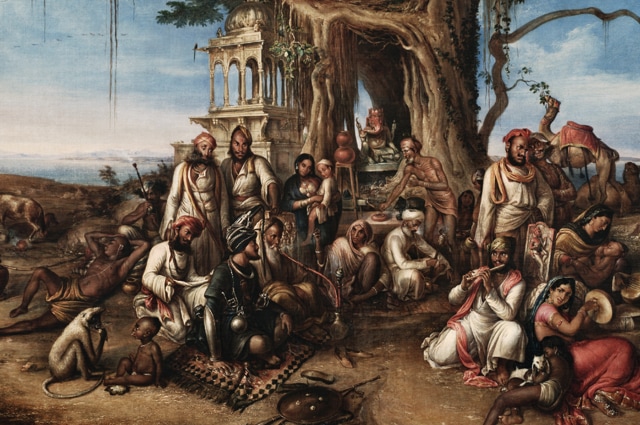
Besides artefacts associated with Sikh royals and nobles, such as swords and jewellery, Toor’s collection includes objects created by artists, writers, photographers, cartographers and craftsmen, including Europeans who explored Sikh themes.
Some of these are:
Punjabi artists and scribes: Family workshop of Nainsukh of Guler, Ram Chand of Patiala, Sheikh Basharat Ullah of Patiala/Nabha, Family workshop of Purkha (fl 1780–1820) of Kangra, workshop of Imam Bakhsh Lahori, Lahore, Rattan Singh of Lahore/Delhi, and Bishan Singh (1836–c 1900) of Amritsar.
European artists: August Schoefft (1809–1888), Colesworthey Grant (1813–1880), Egron Lundgren (1815–1875), Helen Catherine Douglas Mackenzie (c 1819–c 1910), Walter Fane (1828–1885), George Landseer (1834–1878), Mortimer Menpes (1855–1938) and Lucien Lévy-Dhurmer (1865–1953).
Photographers: Duleep Singh (1838–1893), Ernst Becker (1826–88), Margaret Bourke-White (1904–1971), William Baker (d 1880), Samuel Bourne (1834–1912), Fred Bremner (1863–1942) and Lala Deen Dayal (1844–1905).
Cartographers: Rigobert Bonne (1727–1794), John Cary (c 1754–1835), John Luffman (1756–1846), Robert Wilkinson (fl c 1768–1825), John Arrowsmith (1780–1873).
Craftsmen: Muhammad Hayat of Punjab and Henry Wilkinson of Pall Mall, London.


