
 E-Paper



'Decided to intensify…': What India, US said after resumed talks on trade deal
“It was decided to intensify efforts to achieve early conclusion of a mutually beneficial trade agreement,” Indian commerce said.

 Prefer HTon Google


After talks with the US for a trade deal formally resumed on Tuesday, the Indian government described the discussions as “positive and forward-looking, covering various aspects of the trade deal". The US echoed the sentiment with a spokesperson describing the meeting as positive as well.
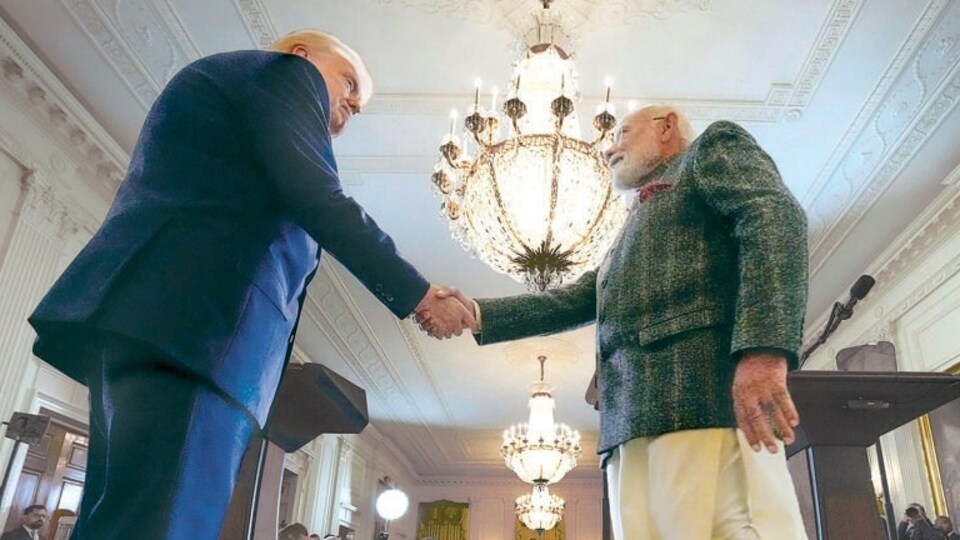
The statement by the Indian commerce ministry said a team from the office of the United States Trade Representative, led by chief negotiator Brendan Lynch, visited India on September 16.
India was represented by officials led by special secretary, department of commerce, Rajesh Agarwal.
“It was decided to intensify efforts to achieve early conclusion of a mutually beneficial trade agreement,” the ministry statement said.
Talks began in March-April, but have gone through many crests and troughs amid a tariff offensive by the US.
Things got back on track — with some hiccups and red lines remaining — after a recent thaw was effected with mutual-admiration posts on social media by President Donald Trump and PM Narendra Modi.
But any progress towards a deal hinges on the US rolling back additional 25 per cent tariff that it has imposed on India — besides 25 per cent in general — citing its purchase of oil from Russia despite the war in Ukraine, according to an India-based, trade-focused think tank called Global Trade Research Initiative (GTRI).
The think tank's report argued that the US has looked desperate to close a deal even as its officials almost daily use "disparaging language" against India.
"The challenge will be how much India concedes without undermining regulatory autonomy or economic sovereignty," it added.
India has said it won't allow a free flow of American agriculture and dairy products as PM Modi vows to “protect the farmers, no matter the cost”.
At one point, the US said one of the reasons for the “punitive” tariffs was that the talks were taking too long.
This has meant that a pact that was expected to be in place by September, may now be possible, in its first stage, by November.
India's exports to the US fell to $6.86 billion in August from $8.01 billion in July, though the full impact of higher tariffs would be known next month as the additional tariffs kicked in at the end of August.


