
 E-Paper



Defence ministry to seek CCS approval to build 6 submarines under Project 75
The project, to be executed with the support of Germany’s ThyssenKrupp Marine Systems (TKMS) under Project 75 India, is estimated at $8 billion ( ₹66,000 crore).

 Prefer HTon Google


With the cost negotiating committee (CNC) successfully completing its work, the defence ministry will soon approach the Cabinet Committee on Security (CCS) for approval to construct six air-independent propulsion (AIP) submarines at Mazagon Dock Shipbuilders Limited (MDL). The project, to be executed with the support of Germany’s ThyssenKrupp Marine Systems (TKMS) under Project 75 India, is estimated at $8 billion ( ₹66,000 crore), with the submarines expected to be commissioned by the end of this decade.
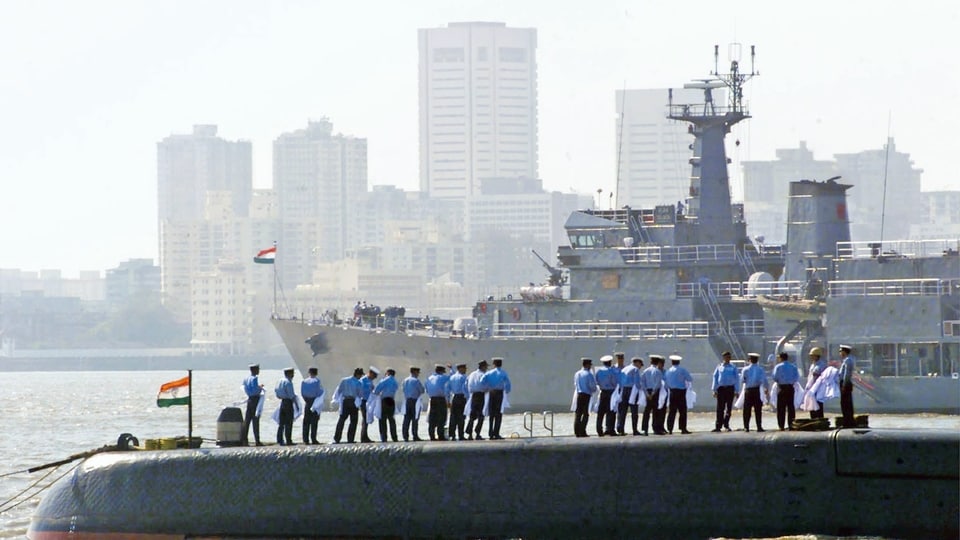
HT learns that the Indian Navy expects the CCS to give the green light within the current fiscal year, following approvals from the finance department. People familiar with the matter said the CNC has negotiated the construction price of each submarine within the projected cost band.
India has decided to fast-track the project as Pakistan is set to acquire eight Yuan (Hangor)-class AIP-equipped diesel attack submarines from China between 2026 and 2028. Four Pakistani submarines are being constructed in China and the remaining four in Karachi. The Yuan-class SSKs will provide Rawalpindi with immense leverage in area and access denial to Indian naval forces in a worst-case scenario, as well as act as a sea-based deterrent to Indian warships operating in the north Arabian Sea. Pakistan claims to have eight functional submarines, but the actual numbers may be lower as the vessels are old and have not been upgraded.
During Operation Sindoor, the Indian Navy went as close as 200 nautical miles from Karachi with its submarines deployed near the Makran coast. Such was the Indian sea deterrent that major Pakistan Navy ships moved out from Karachi towards the Ormara, Pasni and Gwadar harbours. The Indian Navy stood down on May 10 after the Pakistan DGMO sued for peace early that morning.
While India has two functioning nuclear-armed, nuclear-powered submarines operating in the Indo-Pacific, the navy needs AIP-equipped submarines with submarine-launched cruise missiles to strengthen its sea-based deterrent. While diesel-electric submarines have to surface nearly every day to charge batteries, AIP vessels use fuel cell technology and can remain submerged for a longer period without compromising speed and stealth. However, once the fuel cell is depleted, the submarine operates like a diesel-electric vessel with slightly lower speeds.
India’s sea-based capabilities will get a huge boost with the acquisition of an Akula-class nuclear-powered conventionally armed submarine from Russia in 2027-2028, and the commissioning of two more SSBNs (INS Aridhaman and INS AriSudan). The Narendra Modi government has approved the construction of two SSNs for the Strategic Forces Command in 2025 and work has begun on Project 77.


