
 E-Paper



Delhi, 5 other high courts to get new chief justices: Supreme Court collegium
The recommendations made by the Supreme Court collegium, comprising Chief Justice of India NV Ramana and justices UU Lalit and AM Khanwilkar of the apex court, will come into effect following orders issued by the Centre.

 Prefer HTon Google


The Supreme Court collegium on Tuesday elevated five judges as chief justices of high courts, and transferred Satish Chandra Sharma, chief justice of Telangana high court, to the Delhi high court as its chief.
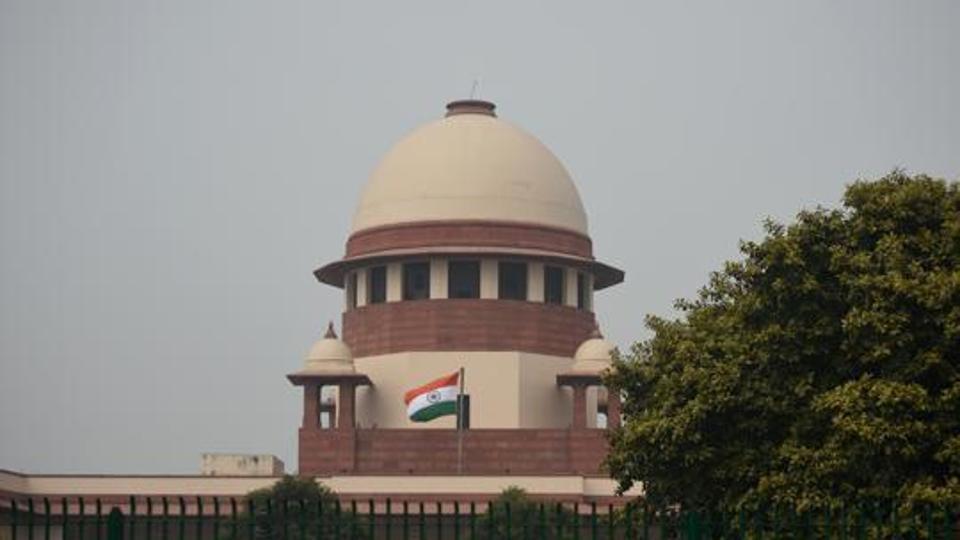
The recommendations made by the collegium, comprising Chief Justice of India NV Ramana and justices UU Lalit and AM Khanwilkar of the apex court, will come into effect following orders issued by the Centre.
The collegium elevated Delhi high court’s acting chief justice Vipin Sanghi as chief justice (CJ) of Uttarakhand high court, two judges of Bombay high court – justice Amjad A Sayed as CJ of Himachal Pradesh high court and justice Sambhaji Shiwaji Shinde – as CJ of Rajasthan high court.
Gujarat high court judge Rashmin M Chhaya was elevated as CJ of Gauhati high court, and justice Ujjal Bhuyan of Telangana high court as CJ of the same high court.
In three high courts, appointment was overdue as the posts of CJ was lying vacant in Uttarakhand since December 24, while at Rajasthan and Delhi, it was due since March 7 and 13, respectively. In Himachal Pradesh, the incumbent CJ Mohammad Rafiq will be demitting office on May 24, while the vacancy at Gauhati arose following the elevation of CJ Sudhanshu Dhulia as judge of the Supreme Court on May 7. Justice Dhulia took oath as judge of Supreme Court on May 9.
Justice Satish Chandra Sharma, who has been recommended as the new CJ of Delhi high court, belongs to the Madhya Pradesh high court and was appointed as a high court judge in January 2008. Similarly, justice Bhuyan recommended as the CJ of Telangana high court belongs to the Gauhati high court, where he was appointed as a judge in October 2011.
Justice Shinde, a judge of the Bombay high court who has been recommended by collegium to head the Rajasthan high court, had courted controversy last year after he heaped praise on Stan Swamy, a tribal rights activist who died in custody after he was arrested by the National Investigation Agency in the Bhima Koregaon case. He was accused of having links with Communist Party of India (Maoist), a banned organization.
Following the 84-year-old Jesuit priest’s death on July 5, justice Shinde had praised Swamy for the wonderful person he was and the service he rendered to society.
Within a week, justice Shinde had to withdraw his statements after NIA, which had opposed bail to Swamy, complained to the judge that such observations showed NIA in a bad light. The judge took back his words, saying: “Suppose you are hurt that I personally said something, I take those words back,” while accepting that even judges are human beings who endeavour to be always balanced, but tend to observe when something suddenly happens such as the untimely death of the priest.
Justice Sanghi of the Delhi high court, who has been recommended to head Uttarakhand high court, was recently in the news after he called for a report from Delhi police over vandalism outside the official residence of Delhi chief minister Arvind Kejriwal. The judge had also recently pulled up Twitter for not being sensitive in dealing with blasphemous posts against Hindu deities.


