
 E-Paper



Kejriwal, LG Saxena hold meet on Delhi electricity commission after Supreme Court nudge
Delhi CM and LG hold meeting to decide on next chairperson of Delhi Electricity Regulatory Commission (DERC) after Supreme Court intervention.

 Prefer HTon Google


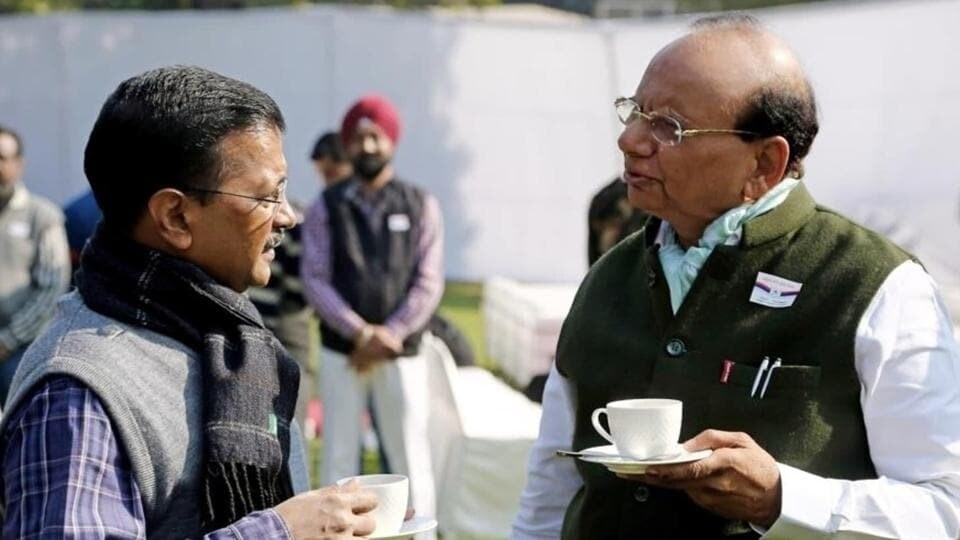
Delhi chief minister Arvind Kejriwal and lieutenant governor VK Saxena on Wednesday held a meeting in Raj Niwas to decide on the next chairperson of the Delhi Electricity Regulatory Commission (DERC), two days after the Supreme Court asked the constitutional functionaries to sort out what has been a contentious matter between themselves and “rise above political bickering”.
Also Read | Arvind Kejriwal's rare gesture for Mallikarjun Kharge after comment on Centre's ordinance
The DERC chief’s appointment is crucial to effectively regulate the city’s power sector, but has been at the heart of a tussle between the elected Delhi government and centrally appointed LG, with both groups floating their own names for the position and the former alleging that the latter picked justice (retd) Umesh Kumar for the post unilaterally.
It was not immediately clear if the two reached a consensus on Wednesday, though people aware of the meeting said a few names were put on the table. The Supreme Court is slated to hear the matter again on Thursday, when the government and LG are expected to present before the bench a list of names for the position.

Officials from the CM and LG’s offices declined to comment on the meeting.
Usually a routine appointment, the choice of the DERC chairperson has morphed into the latest chapter in the long-running feud among the city’s power centres.
Also Read | AAP's ‘yes’ to Opposition's Bengaluru meet after Congress backs Kejriwal against Centre's ordinance
This protracted tussle snowballed after the Centre on May 19 issued an ordinance reversing a Supreme Court verdict from May 11 that handed control of the state’s bureaucratic machinery with the elected government in all departments, except those surrounding land, public order and police.
The Delhi government on June 21, recommended justice (retd) Sangeet Lodhafor the position. However, later that day, the Centre appointed Kumar to the position, a move that the Aam Aadmi Party (AAP) government called “illegal and unconstitutional”.
At the time, the party stressed that electricity was under the state government’s jurisdiction and that the “aid and advice of the elected administration” is binding.
On July 4, the top court allowed the Delhi government not to proceed on administering the oath of office to Kumar.
On that day, the bench also agreed to examine the validity of Section 45D of the Government of National Capital Territory of Delhi (GNCTD) Ordinance, 2023, under which the appointment order came to be issued on June 21. Section 45D of the ordinance enables the Centre, acting through the LG, to decide on all appointments to all commissions, bodies and authorities in the Capital.
During the hearing in the case on Monday, the Supreme Court pulled up CM and LG, saying, “We want to know if it is possible to break this impasse. Cannot the LG and the CM, as two constitutional functionaries, sit together and give us a name of a consensus candidate for DERC? You either let the institutions work or you don’t. They have to rise above political bickering.”
Senior counsel Abhishek Manu Singhvi, arguing for the Delhi government, started by contending that it does not seem realistic the two functionaries can arrive at a name unanimously.
“But I don’t have a problem if they can miraculously agree,” he added.
To this, senior lawyer Harish Salve, representing the LG said he accepted the court’s suggestion that both the constitutional functionaries must sit across the table and resolve the issue.
“It’s unfortunate that the Delhi government lawyer starts by saying that he has no hope. The first reaction should be yes, we will do it,” said Salve.
The bench, headed by Chief Justice of India Dhananjaya Y Chandrachud, also mooted over referring the Delhi government’s separate challenge to the ordinance to a five-judge constitution bench.
DERC was constituted in 1999 to discharge a range of activities, including fixing the tariffs, while working as the electricity regulatory in the Capital. The post has been vacant since January 10, when (retd) justice Shabihul Husnain stepped down after reaching superannuation. The three-member panel currently has only one member.


