
 E-Paper



Delimitation Commission to visit J&K from July 6 to July 9
Former Supreme Court judge Ranjana Prakash Desai heads the commission, which was constituted in March 2020 to redraw the Lok Sabha and assembly constituencies of J&K, Assam, Arunachal Pradesh, Manipur, and Nagaland

 Prefer HTon Google


The Delimitation Commission tasked to carve out new constituencies in Jammu & Kashmir is set to visit the Union Territory to talk to political parties, district officials, and other stakeholders from July 6-9 as part of the process before the assembly polls are held.
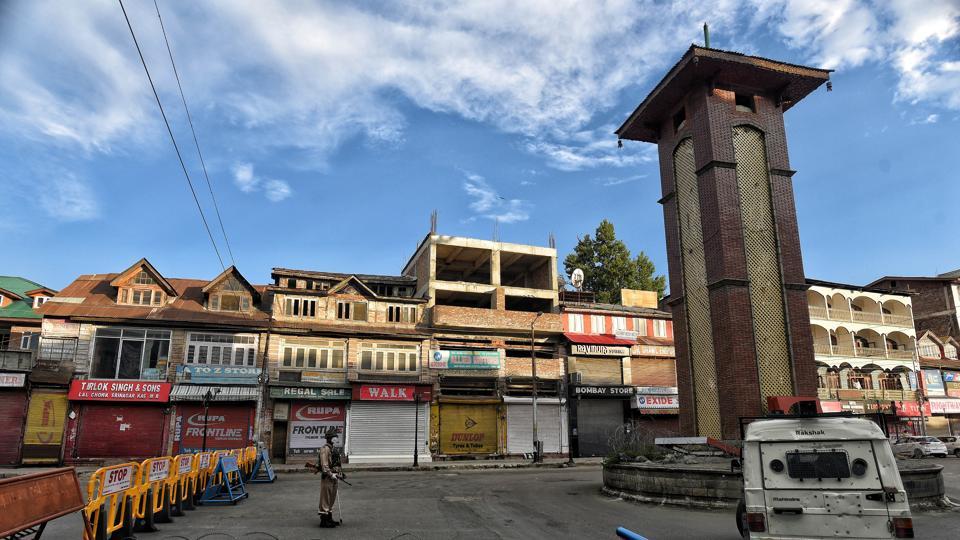
“During this period, the Commission will interact with political parties, public representatives and Union Territory administration officials including district election officers/deputy commissioners of the 20 districts of the Union Territory to gather first-hand information and inputs concerning the ongoing process of delimitation as mandated under the (Jammu &) Kashmir Reorganisation Act, 2019,” the commission said in a statement.
Former Supreme Court judge Ranjana Prakash Desai heads the commission, which was constituted in March 2020 to redraw the Lok Sabha and assembly constituencies of Jammu & Kashmir, Assam, Arunachal Pradesh, Manipur, and Nagaland. Chief election commissioner Sushil Chandra and election commissioners of Jammu & Kashmir and the three states are ex-officio members of the commission.
HT on June 26 reported the commission was planning interactions with the stakeholders in Jammu & Kashmir. The commission, which has nearly nine months left to complete the exercise, will also carve constituencies to be reserved for Scheduled Castes and Scheduled tribes for the first time in Jammu & Kashmir.
Also Read | J&K police recruitment: Large number of women turn up for PET
The constituencies are being created on the basis of “physical features, existing boundaries of administrative units, facilities of communication and public convenience”.
The commission, which was granted a yearlong extension in March to complete the exercise, has collated census and geographical data to factor in the existing difficulties and communication needs of the region.
“There are considerations of a geographical nature, such as access in hilly districts. The Commission will have to ensure that the most basic administrative block, whether it is the tehsil or the district, is not broken down in the process. This way there can be seamless elections and effective implementation of government schemes,” said a person familiar with the matter on June 26.
The delimitation of new assembly constituencies will be based on the 2011 census data. The constituencies will go up from 107 to 114.
The last redrawing of constituencies was done in 1995 on the basis of the 1981 census when the erstwhile state was governed under its own Constitution and Jammu & Kashmir Representation of the People Act because of the region’s special status. The status was revoked in 2019. After the 2001 census, the Jammu & Kashmir assembly passed a law putting delimitation on hold until 2026.
The issue of delimitation was discussed at Prime Minister Narendra Modi’s meeting with political leaders from Jammu & Kashmir last week. This was the first meeting of its kind since the Centre ended the region’s special status.
Former Jammu & Kashmir chief minister Omar Abdullah has said the delimitation exercise should be undertaken with the rest of the country due after 2026. An amendment was passed by Parliament to freeze the constituencies demarcated in 2002 until 2026.


