E-Paper



Developing specs for new nuclear plant in India with advanced reactors: Rosatom
Rosatom said New Delhi and Moscow are also discussing new areas of cooperation, including the construction of small modular reactors of Russian design


NEW DELHI: Russian organisations are developing technical specifications for a new nuclear power plant in India featuring the advanced VVER-1200 reactors, Russia’s state-run nuclear corporation, Rosatom, said on Monday.
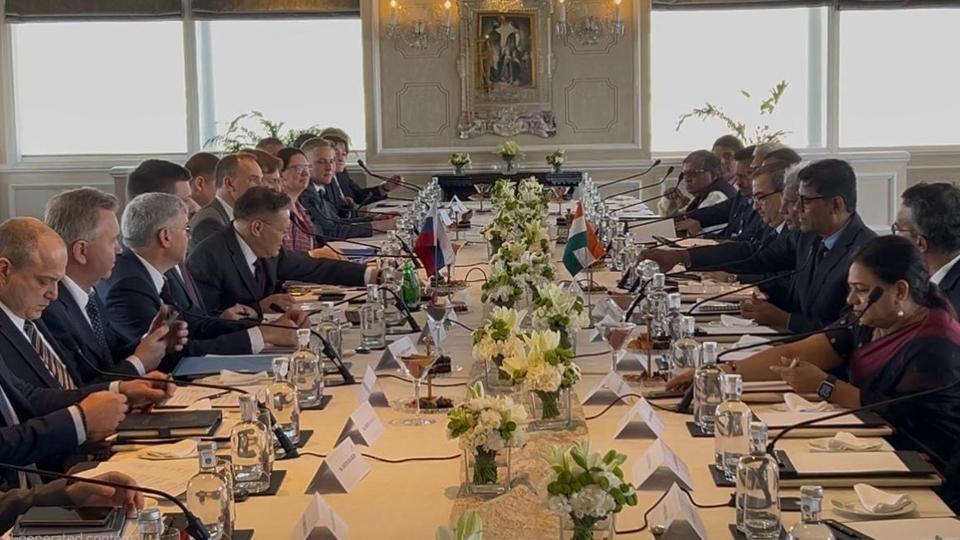
The two sides are also discussing new areas of cooperation, including the construction of small modular reactors (SMRs) of Russian design in India, Rosatom said in a statement following a meeting in Mumbai between its director general Alexey Likhachev and Department of Atomic Energy chairman Ajit Kumar Mohanty.
The meeting focused on the development of bilateral cooperation in nuclear energy. The two sides also reviewed progress on the Kudankulam nuclear power plant in Tamil Nadu, the largest nuclear facility in India and a flagship project of Russia–India energy cooperation. Upon completion, the Kudankulam plant will comprise six VVER-1000 reactors, with a total installed capacity of 6,000 MW.
“Relevant organisations are currently developing technical specifications for a new nuclear power plant in India featuring VVER-1200 reactor units,” the statement said, describing the serial construction of high-capacity nuclear power units of Russian design based on VVER-1200 technology as one of the key areas of cooperation.
India and Russia have engaged in discussions for several years regarding the construction of a second nuclear power plant. Rosatom didn’t give further details about the planned project.
“New areas of cooperation are also under discussion — including the construction of small modular reactors (SMRs) of Russian design in India. In April 2024, Rosatom presented its Indian partners with information on the corporation’s floating nuclear power solutions,” the statement said.
SMR technologies can help in supplying clean electricity to remote regions with limited grid infrastructure and to individual industrial enterprises.
Units 1 and 2 of the Kudankulam plant were connected to India’s power grid in 2013 and 2016 and currently supply electricity to the country’s southern region. Pre-commissioning activities are underway for Unit 3, and preparations have begun for testing of safety systems on an open reactor, one of the key upcoming milestones.
Construction and installation work and equipment deliveries are continuing for Unit 4, while the third phase covering Units 5 and 6 is “actively under construction”, the statement said.
The discussions at Monday’s meeting also covered the expansion of the partnership, including development of projects for large and small-scale nuclear power plants and cooperation in the nuclear fuel cycle, the statement said. “Particular attention was given to opportunities for localising equipment production in India,” it said.
“The participants emphasised the valuable experience gained during the Kudankulam project and confirmed their readiness to implement new large-scale initiatives in the field of nuclear energy in India,” it added.
Likhachev said Russia and India share a “long-term and mutually beneficial partnership in the nuclear sphere”, with the Kudankulam project and opening the way for new joint initiatives and technology exchange.
“We have built an effective interaction system and a reliable supply chain, which now serve as the basis for further development of new projects — whether for large or small-scale power plants,” he said, adding that Rosatom is ready to contribute to India’s goal of increasing nuclear generation capacity to 100 GW by offering efficient and proven technologies. Rosatom’s fuel company, TVEL, supplies India with advanced nuclear fuel, TVC-2M, which offers new capabilities for the Kudankulam plant. This allows it to operate for an 18-month fuel cycle, improving its economic efficiency compared to the traditional 12-month cycle.