E-Paper



Dignity trumps free speech: SC
The top court was hearing a batch of petitions concerning podcasters and YouTubers, including Ranveer Allahbadia and comedian Samay Raina


The Supreme Court on Tuesday asserted that an individual’s right to life and dignity must prevail over another’s right to free speech, urging the Union government to propose a set of balanced regulatory guidelines to curb obscenity and offensive content on social media and YouTube without crossing into censorship.
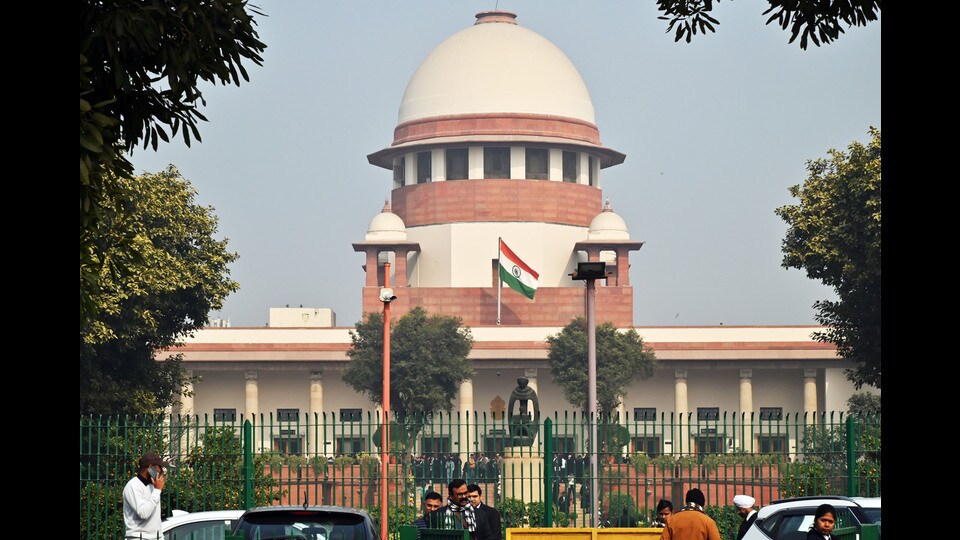
A bench of justices Surya Kant and Joymalya Bagchi, which is hearing a batch of petitions concerning podcasters and YouTubers, including Ranveer Allahbadia and comedian Samay Raina, emphasised that any proposed regulatory framework must define not just the boundaries of free speech but also the obligations that accompany it.
“The right to dignity emanates from the same Constitution which the other people cite to protect their right to speech. Article 19 (freedom of speech and expression) cannot prevail over Article 21 (right to life and dignity). This is what it has to be. If there is a race between Articles 19 and 21, Article 21 has to trump Article 19,” remarked the bench, referring to the constitutional guarantees of free speech and right to life with dignity.
It added that the guidelines have to be on conformity with the constitutional principle taking care of both parts – freedom, and the limits where this freedom ends and people’s duties start. “At the same time, we will be careful with the guidelines. Something approved by the court has to be for posterity and we have to remain cognizant that they cannot be misused. State’s power needs to be balanced with citizens’ rights. We have to protect the citizens’ rights but at the same time we have to ensure this does not end up trampling upon fellow citizens’ rights,” it added.
The court made these remarks during the hearing of a plea by Cure SMA India Foundation, which highlighted offensive remarks made against persons with disabilities by Raina and four others during an online show. The court, expressing strong displeasure, reaffirmed that individual conduct and misconduct will continue to be under scrutiny even as it deliberates the need for broader content regulation.
While granting the Union government more time to propose guidelines, the bench observed that any regulatory framework must be “in conformity with constitutional principles,” striking a balance between freedom and the limits of that freedom.
“We will invite open debates on these guidelines. Stakeholders, including members of the bar, may give their viewpoints,” the court said, indicating that the issue may require wider public engagement before finalisation.
Attorney general R Venkataramani, appearing for the Centre, informed the court that even if guidelines were framed, enforceability could pose challenges.
Senior advocate Aparajita Singh, appearing for Cure SMA India Foundation, said the case was about safeguarding the dignity of a marginalised group, stressing that such speech deeply affects persons with disabilities and cannot be justified as humour or free expression.
The court acknowledged this concern and maintained that some remedial and preventive standards were necessary to safeguard vulnerable communities, particularly persons with disabilities, from ridicule or abuse under the garb of humour or entertainment.
Also, refusing a verbal request by counsel to excuse the appearance of the accused comedians, the court reiterated its earlier order requiring their presence. “They have to remain present,” the bench said firmly, adding that no further time would be granted to file affidavits in response to the petition.
Only one of the five, Sonali Thakkar, was excused due to personal difficulties. The others, Samay Raina, Vipul Goyal, Balraj Paramjit Singh Ghai, and Nishant Jagdish Tanwar, must appear on the next date of hearing, the bench directed.
The case emerged from an earlier plea where Allahbadia, who runs a channel called BeerBiceps, sought clubbed hearing and protection from arrest in FIRs filed in Assam and Maharashtra over his comments made in an episode of YouTube show “India’s Got Latent.” Following this, the Cure SMA Foundation filed a petition citing derogatory and humiliating remarks made against persons with disabilities, including by Raina, in the same show.
The court had previously criticised Allahbadia’s content as “perverted” and “disgusting,” allowing him to resume his podcast only after submitting an undertaking to maintain “standards of decency and morality.”
Earlier, the Supreme Court had urged the government to formulate regulatory measures to check obscenity online without veering into censorship, noting that the existing Information Technology Rules, 2021, and Cable Television Rules, 1994, appear inadequate or ineffectively implemented. “There is no absolute fundamental right on a platter in this country, and all rights come with corresponding duties,” the bench had remarked on March 3.