The Supreme Court on Thursday delivered two separate critiques of the Enforcement Directorate (ED), questioning not only its low conviction rate under the Prevention of Money Laundering Act (PMLA), but also its functioning and sweeping powers, with one bench sharply remarking that the agency “cannot act like a crook” and must operate within the bounds of law.
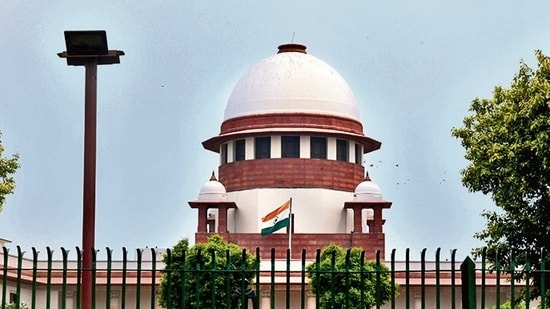
In two separate hearings, two benches of the top court heard matters linked to the constitutional validity and implementation of PMLA. Both benches raised concerns over ED’s methods, its prolonged investigations and its disproportionately low conviction rate.
In the first case, a bench led by Chief Justice of India Bhushan R Gavai was hearing review petitions related to its May 2 judgment in the Bhushan Power & Steel Limited (BPSL) insolvency matter, which had ordered liquidation of the company and set aside the resolution plan submitted by JSW Steel. That verdict has since been recalled, and the review petitions are being heard afresh.
During the course of the hearing, ED’s functioning and its probe into the BPSL matter came under discussion, prompting a sharp exchange between the bench, also comprising justices Satish Chandra Sharma and K Vinod Chandran, and solicitor general Tushar Mehta, who appeared for the agency.
“What is the conviction rate?” asked CJI Gavai, alluding to the broader question of whether ED’s outcomes justify its expansive powers under PMLA.
{{/usCountry}}“What is the conviction rate?” asked CJI Gavai, alluding to the broader question of whether ED’s outcomes justify its expansive powers under PMLA.
{{/usCountry}}Mehta admitted that conviction rates were indeed low, but attributed this to endemic flaws in the criminal justice system, such as delays and procedural inefficiencies. “Conviction rates are low even in other penal offences,” he submitted.
The CJI, however, was unsparing. “Even if they are not convicted, you have been successful in sentencing them almost without a trial for years together,” said justice Gavai, pointing to the prolonged pretrial custody and harsh bail conditions under PMLA that often result in punishment without adjudication.
To defend the agency, Mehta revealed that ED had recovered and returned close to ₹23,000 crore to victims of financial crimes. “Let me tell a fact which was never said before in any court -- ED has recovered ₹23,000 crore and given it to the victims,” said the SG, emphasising that the recovered amount does not remain with the state but is returned to the defrauded.
Mehta also tried to counter criticism of the agency by pointing to the scale of operations. “In some of the cases where politicians were raided and cash was found, our machines stopped functioning due to the volume of money… we had to bring in new machines,” he said. He further flagged what he described as damaging narratives built on social media platforms like YouTube, particularly when the agency targets high-profile individuals.
But the CJI remained unmoved. “We do not decide matters on narratives. I don’t see news channels. I only read headlines in newspapers for 10 to 15 minutes in the morning,” he said.
Mehta responded: “I know judges don’t decide cases based on external narratives,” while asserting that ED’s recoveries and asset tracing operations stood on firm legal ground.
“You cannot act like a crook”: Second bench
In a separate but equally consequential hearing on Thursday, a three-judge bench comprising justices Surya Kant, Ujjal Bhuyan and N Kotiswar Singh, while hearing review petitions in against the 2022 judgment in the Vijay Madanlal Choudhary case that affirmed ED’s vast powers under PMLA, expressed disapproval of the agency’s conduct.
“You cannot act like a crook. You have to work within the four corners of the law,” said the bench. Justice Bhuyan added: “There is a difference between law-enforcing authorities and law-violating bodies. See what I observed in one of the cases….it came true in what a minister said in Parliament. After 5,000 cases, less than 10 convictions... That’s why we insist improve your investigation, witnesses...we are talking about liberty of people.”
The bench added that people remain incarcerated for years pending investigations and trials. “We are equally concerned about the image of ED also. At the end of five-six years of judicial custody, if people are acquitted, who will pay for this?” it asked additional solicitor general SV Raju, who represented ED in this matter.
The Vijay Madanlal judgment had upheld the validity of several provisions of PMLA, including the power of arrest, search and seizure, reverse burden of proof, non-supply of the Enforcement Case Information Report (ECIR), and stringent bail conditions. The review petitions, including one filed by Congress MP Karti Chidambaram, are now seeking a relook at these aspects, arguing that the earlier judgment significantly diluted constitutional safeguards.
Appearing for ED, ASG Raju raised preliminary objections to the maintainability of the review, stating that no “error apparent on the face of the record” of the 2022 judgment had been shown. He added that the review was essentially an appeal in disguise, and that as per the Supreme Court’s August 25, 2022 order, the review could only be confined to two issues -- supply of ECIR and the reverse burden clause for bail.
“If the review is accepted, it would be tantamount to rewriting the judgment in Vijay Madanlal, which cannot be permitted,” Raju argued. He also attributed the low conviction rate to tactics employed by the accused: “The rich and powerful use a powerful battery of lawyers and file so many applications. They don’t even allow the trial to take place and delay it.”
The petitioners, led by senior counsel Kapil Sibal and Abhishek Manu Singhvi, have submitted a list of 13 issues for reconsideration, including the retrospective application of PMLA, classification of ED officials as non-police personnel, and the upholding of powers that compel self-incriminating statements.
This is not the first time the apex court has raised red flags about ED’s functioning. On July 21, in an unrelated matter, the CJI-led bench had observed that the ED was “crossing all limits” after it summoned two senior advocates for allegedly advising clients during the course of its investigation.