
 E-Paper



E-exams unfair to those with no devices: Kerala govt to Supreme Court
On Saturday, Kerala reported 20,487 new Covid-19 cases and 181 deaths, taking the state’s cumulative tally to 4,355,191. The toll in the state has reached 22,484.


Online examinations will be a disadvantage for students with no access to laptops and mobile phones, the Kerala government told the Supreme Court in an affidavit, days after the top court stayed the state’s decision to hold physical examinations for Class 11 students while terming their Covid-19 situation “alarming”.
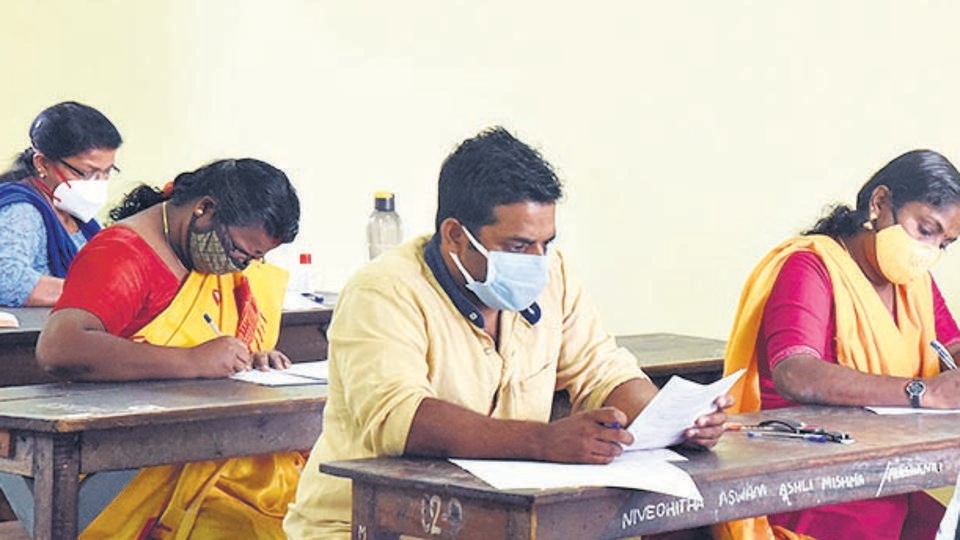
On Saturday, Kerala reported 20,487 new Covid-19 cases and 181 deaths, taking the state’s cumulative tally to 4,355,191. The toll in the state has reached 22,484.
In its affidavit, filed on Friday, APM Muhammad Hanish, principal secretary (Department of General Education) said: “The conduct of examination through online mode will prejudice a large number of students who have no access to laptops, desktops or even mobile phones. The students belonging to the lower strata of society are depending on mobile phones or tablets for attending online classes. In many areas, internet connection or mobile data are not available. These students will never be able to write online examinations.”
“The issue of lack of electronic gadgets to students could also be eliminated and a fair, equitable and transparent method of conducting examinations could be ensured, eliminating chances of any complaints,” the affidavit added.
On May 28, the state government announced that the Class 11 examinations, will be held offline between September 6 and 27, in view of the Covid-19 pandemic. This decision was challenged by advocate A Rasoolshan before the Kerala high court, which observed that conducting examination was a matter of government policy and no interference was warranted. Challenging the HC decision, Rasoolshan told the top court that holding physical exams was a huge risk since children have not yet been vaccinated.
On September 3, an SC bench of justices AM Khanwilkar, Hrishikesh Roy and CT Ravikumar acknowledged the petitioner’s concern and observed: “There is an alarming situation in Kerala... Children of tender age cannot be exposed to any risk in this situation... Prima facie, we find force in the submission made by the petitioner that the state government has not seriously considered the prevailing situation before deciding to conduct physical examination (for Class 11).”
The top court bench issued a notice on the petition to the Kerala government and put the examination on hold till September 13 -- the next date of hearing.
In the affidavit, the state government stood by its decision to hold Class 11 examinations, citing the success of offline examinations for Class 10 and 12 students in April.
The state further pointed out that all safety protocols are in place for the physical Class 11 examinations, and the state has also arranged separate rooms for students showing symptoms of illness. “Examination in offline mode can be conducted by strictly adhering to all precautionary measures issued by state and Central governments in preventing further spread of Covid-19 pandemic,” the affidavit said.
This is not the first instance where Kerala has been hauled up by the top court for its potentially dangerous decisions to spread Covid-19. In July, the state government’s decision to relax lockdown restrictions in view of Bakrid festivities was challenged before the top court. The Court slammed the state’s decision as “extremely alarming” and said that if the decision of the state resulted in any untoward spread of the Covid-19 infection, any member of the public would be free to approach the Court after which action will be accordingly taken. As two days of restrictions got over by the date when the order was passed, the state government decided not to continue with further relaxation of lockdown curbs.
This is not the first instance where Kerala has been hauled up by the top court for its potentially dangerous decisions to spread Covid-19. In July, the state government’s decision to relax lockdown restrictions in view of Bakrid festivities was challenged before the top court. The Court slammed the state’s decision as “extremely alarming” and said that if the decision of the state resulted in any untoward spread of the Covid-19 infection, any member of the public would be free to approach the Court after which action will be accordingly taken. As two days of restrictions got over by the date when the order was passed, the state government decided not to continue with further relaxation of lockdown curbs.


