
 E-Paper



Ex-Australian PM leads delegation to India, meets PM Modi on trade synergy
Tony Abbot is in India with a business delegation to boost trade ties between the two countries, met Prime Minister Narendra Modi and other Indian interlocutors.

 Prefer HTon Google


Former Australian premier Tony Abbott said on Wednesday that he understood India’s concerns about the Regional Comprehensive Economic Partnership trade pact, which appeared to be like the “trade leg” of China’s Belt and Road Initiative (BRI).
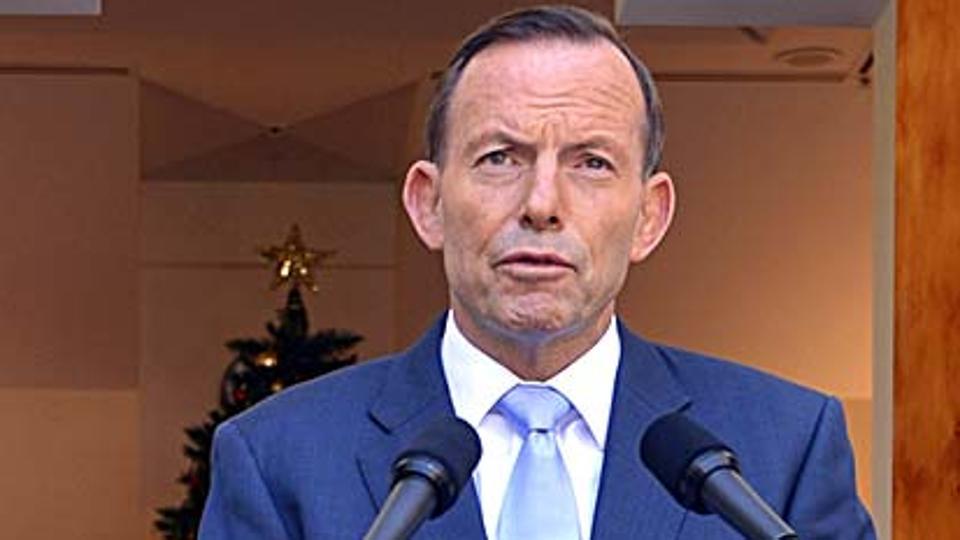
Abbot is in India with a business delegation to boost trade ties between the two countries, met Prime Minister Narendra Modi and other Indian interlocutors.
“I can understand India’s caution about RCEP. My anxiety with RCEP is that just as the Trans-Pacific Partnership (TPP) was the economic leg of the US pivot to the Asia-Pacific, I think RCEP is the trade leg of (China’s) Belt and Road Initiative,” he told reporters during an interaction.
“I’m in favour of generous assistance to countries in difficulties, but I’m very wary of anything that might end up leaving vulnerable countries permanently indebted to another,” he said, in an apparent reference to the debt trap faced by some countries that signed up for the BRI.
Earlier this month, India decided not to join RCEP, with Modi telling leaders of the 15 other countries participating in the agreement that the deal doesn’t satisfactorily address New Delhi’s concerns. One of India’s greatest concerns was RCEP leading to the virtually unrestricted entry of Chinese goods into Indian markets.
RCEP comprises the 10 Asean states and six of the grouping’s FTA partners – Australia, China, India, Japan, New Zealand and South Korea – and an agreement expected to be signed next year will create one of the world’s largest free trade regions.
Abbott, who oversaw the signing of Australia’s free trade pacts with China, Japan and South Korea, said he had done his best as prime minister to promote free trade but was keener on bilateral deals. He added that he and Modi had launched discussions on a bilateral trade deal but it “kind of got lost” in 2015 and was subsumed in the RCEP negotiations.
Economic relations between Australia and China had been good for both countries but there was concern over Beijing’s role in the region. “I think what’s changed in the last few years is that we don’t just see China as an economic opportunity, and increasingly people are conscious that China is a strategic competitor as well,” he said.
In response to a question on the Kashmir issue, Abbott said what the Indian people and government chose to do in Jammu and Kashmir is an internal matter.


