E-Paper



Exclusive: How CBSE whistleblower Sarthak Sidhant got into computers, hacking
CBSE-OSM whistleblower Sarthak Sidhant shares how his interest in technology started and the career path he hopes to follow.

 Prefer HTon Google


Long before he became known for raising concerns about the CBSE On-Screen Marking (OSM) tendering process, Sarthak Sidhant was a technology enthusiast who grew up surrounded by computers. By the age of three, he had already started using a computer mouse. His parents had backgrounds in computer engineering, while his father also ran a computer academy.
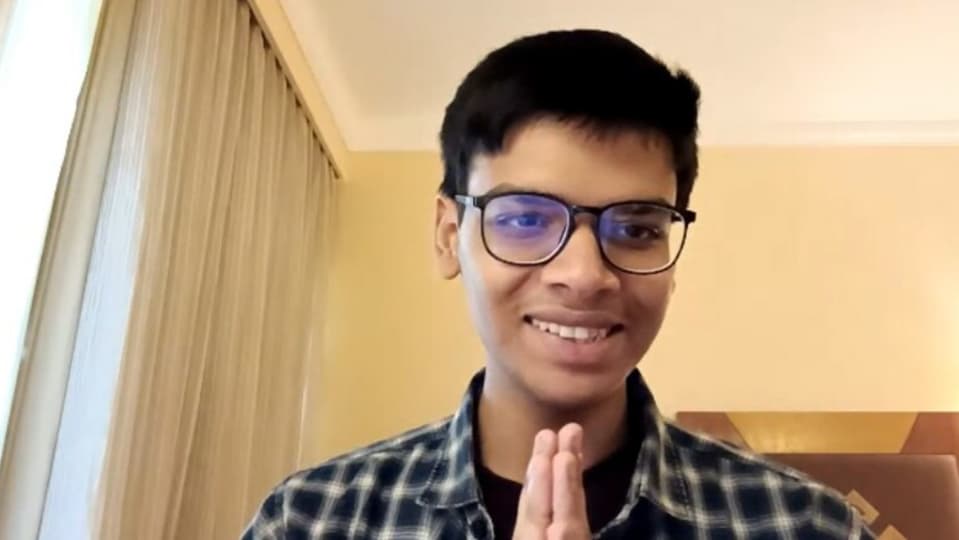
In an exclusive interview with Hindustan Times, Sarthak talked about his interests in technology. He revealed that being around computers from childhood naturally made him curious about technology and how computers work. Curious about how technology worked, Sarthak began learning beyond the classroom.
“I started having interest in computers and technology. I self-learned my way”, Sarthak added. During Classes 6 and 7, he started exploring programming and other areas of technology on his own, gradually developing a strong interest in coding and software development.”
How Sarthak learned coding and technology
As he learned more, he became very interested in coding and software development. His interests soon expanded beyond coding. He worked on robotics projects and explored the Internet of Things (IoT), which enables devices to communicate through the internet. By 2023, he had also begun learning about Artificial Intelligence (AI), a field that would later become one of his main areas of interest.
In Class 12, he studied Physics, Chemistry, Mathematics, Computer Science, and English, showing his continued interest in technology and computer-related subjects. His technical background was also evident during discussions around the OSM controversy. Sarthak spoke about scanners, image quality, DPI settings and digital systems, demonstrating the knowledge he had gained through years of independent learning and exploration.
Sarthak's future plans
Civic Technology is on Sarthak’s priority list, because it directly affects public systems. Sarthak tells HT that he wants to go for engineering as he completes class 12 exams.
"I want to pursue engineering and study in any college I get in Bangalore. I've given my entrance exams, and I'm waiting for the counselling process to start," said Sarthak. Looking ahead, Sarthak plans to pursue engineering.
When asked about his long-term plans, Sarthak said he wants to build a career in the technology sector, with Artificial Intelligence among the fields he would like to pursue professionally. Data Science is another area that particularly interests him.
He also expressed an interest in civic technology, which focuses on using technology to improve public systems and services. As he prepares to begin engineering studies, Sarthak hopes to combine his interests in AI, Data Science and civic technology to work on real-world challenges in the future. His journey from a curious child surrounded by computers to a self-taught technology enthusiast has already played a role in bringing attention to the CBSE OSM tendering process.
What is the CBSE OSM row?
The CBSE OSM (On-Screen Marking) row is a controversy surrounding CBSE's new digital system used to evaluate Class 12 board exam answer sheets in 2026. Under this system, answer sheets were scanned and checked on computers instead of being physically evaluated. The issue gained attention after the Class 12 pass percentage dropped to 85.2%, leading some students, parents and educators to question whether the new system affected results. At the same time, a separate controversy emerged over the contract awarded to Hyderabad-based Coempt EduTeck to run the OSM system.
The matter came under scrutiny after 17-year-old whistleblower Sarthak Sidhant alleged that CBSE changed tender conditions across multiple rounds in a way that favoured the company. His findings led to a parliamentary review, an Education Ministry inquiry into the tender process, political reactions, and the transfer of senior CBSE officials. CBSE and the Education Ministry have denied any wrongdoing, saying the OSM system was introduced to make marking more transparent, fair and accurate.