
 E-Paper



Exempting toddy from liquor ban a major peg in MGD's Bihar election manifesto: Why it matters so much
Jan Suraaj vows to lift Bihar’s liquor ban, citing economic benefits. Here's what experts say despite political debates.

 Prefer HTon Google


Among the election promises made by main opposition Rashtriya Janata Dal (RJD) led by Tejashwi Yadav in Bihar, is one to exempt toddy, a country liquor, from the state's blanket ban on liquor that was imposed in 2016.
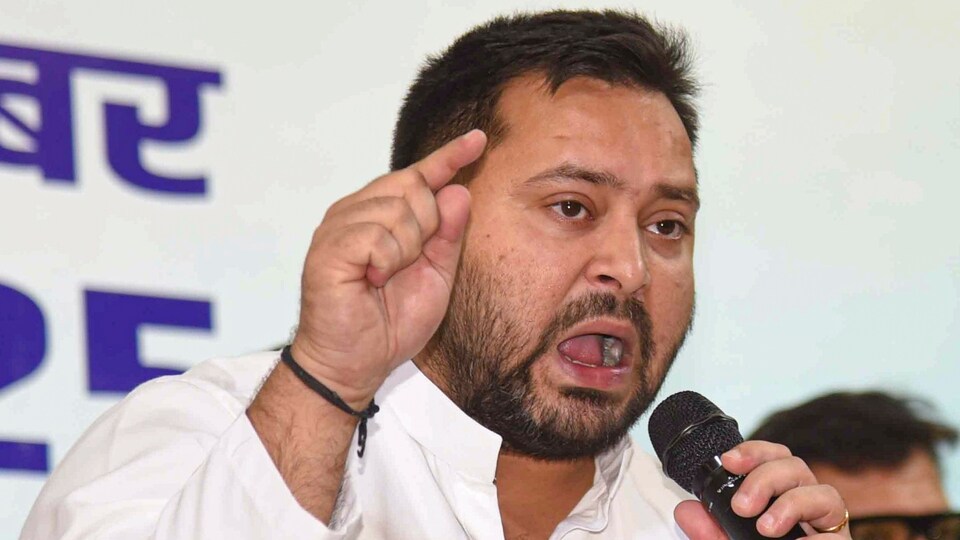
“(As the then deputy CM in the Mahagathbandhan government) I had tried hard to convince Nitish Kumar to keep toddy out of the liquor category, as the Pasi community had been extracting toddy from the palm and date trees for generations as their traditional occupation. But the CM did not listen,” he said recently at a gathering of the Pasi community (Scheduled Caste or Dalit community) in Patna.
And now it's part of the manifesto.
This comes as a step away from the much-debated liquor ban, though the newest Bihar political player, Prashant Kishor's Jan Suraaj Party, has gone ahead and promised to lift the prohibition altogether if voted to power. PK's argument is that it's ineffective anyway, and removing it would regulate the trade and unlock massive revenue of up to ₹28,000 crore a year.
The ban, imposed by the Nitish Kumar-led JDU-RJD-Congress government in April 2016, prohibits both the sale and consumption of alcohol. It covers toddy, made by fermenting the palm trees' sap (called ‘neera’).
At the time, leaders from the RJD and BJP, both having been Nitish-led JDU's partners in government, had backed the overall move but said a toddy ban would adversely affect the livelihood of poor families of Pasi community.
Nitish Kumar, who leads the JDU as part of BJP-led NDA now, links the liquor ban to women’s welfare, emphasising that alcohol abuse had the greatest negative impact on them via their husbands getting addicted. He has been firm on it. He routinely cites data on liquor, drug, and illegal arms seizures to say the ban works.
But the state continues to witness hooch-related deaths, and there are reports of how liquor continues to be available, though at a premium.
Also Read | Bihar’s liquor ban impact: Even local deities are going thirsty
What parties have said
“There is a law in place that has shut down liquor shops and started home delivery,” Prashant Kishor, the poll strategist-turned-politician, has said.
There's been s a mixed view in the ruling NDA too. Union minister and former Bihar CM Jitan Ram Manjhi, who leads the HAM(S) party, recently called for a review of the policy, arguing that its enforcement disproportionately targets the poor even as wealthy smugglers escape scrutiny. There have been three reviews of the ban but it has stayed.
Both Manjhi and union minister Chirag Paswan, whose party LJP(RV) is also a part of the NDA, have said should not be classified as liquor, calling it a “natural product”.
Nitish-led JDU was a partner of the RJD at the time of the ban in 2015-16, and later too, before he returned to the NDA fold.
But the RJD has taken a cautious route since. It has, along with Congress and the Left, attacked the ban as a "failure of governance", citing revenue losses, black markets, and corruption.
And now it has called for what can be called a partial lifting of the ban, as toddy remains a popular alcoholic drink particularly in the rural areas.
A caste outreach citing livelihood
There is a caste angle, of course. The RJD leader recalled how his father Lalu Prasad as CM waived the tax on toddy during his tenure.
The Bihar caste survey says the population of the Pasi caste in the state is barely 13 lakh, less than 1% of the total, but the community comes under Mahadalit sub-category of the Scheduled Castes. Hence the RJD promise is seen as a wider move to appeal to the depressed classes.
There is, also, the wider question of whether a ban works at all.
Has liquor ban shown any benefits?
A study published in The Lancet in May 2024 analysed the impact of Bihar’s alcohol ban, using national and district-level health and household survey data. It found that the ban led to a significant reduction in alcohol consumption, and contributed to a decrease in cases of partner violence.
Some research suggests that the prohibition may have inadvertently spiked crime rates by making otherwise-routine activities illegal. One by Aaditya Dar and Abhilasha Sahay also says police resources diverted to enforcing the alcohol ban may have reduced their capacity to address other criminal activities. Illicit alcohol has been linked to higher consumption among young people too.
What about other states, countries?
Gujarat has maintained a strict alcohol ban since 1961. While the ban has reduced legal access to alcohol, demand persists, fueling a black market. Mizoram reinstated a full alcohol ban in 2018 to curb domestic violence and public disorder. Early reports indicated some reduction in alcohol use, but inconsistent enforcement has created loopholes exploited by smugglers.
Globally, prohibition has shown similar complexities and has been difficult to enforce. Even the US had enforced a nationwide alcohol ban, from 1920 to 1933. It is this ban which led to the rise of what is now popularly known as ‘speakeasies’. It also caused an increase in bootlegging and organised crime.
In Pakistan, alcohol is banned for Muslims, while non-Muslims can obtain limited permits. Illicit production and smuggling are widespread. Saudi Arabia has a strict ban, with violations punishable even by corporal punishment. Smuggling and underground consumption persist there too. In 2025, the country opened its first liquor store exclusively for non-Muslim diplomats as part of a ‘Vision 2030’, signaling cautious “modernisation”.


