
 E-Paper



Experts trace the political and administrative roots of the Centre-Delhi tussle
Experts believe that the Centre’s move of introducing a Bill in Lok Sabha giving overarching powers over Delhi’s daily functions to L-G reflects lack of trust in the local government and there was even need for clear structures in place

 Prefer HTon Google


The Bharatiya Janata Party (BJP)-led Union government introduced a Bill in the Lok Sabha on Monday giving overarching powers over Delhi’s daily functions to the Centre-appointed Lieutenant Governor (L-G) even though the capital city has an elected government – ruled by the Aam Aadmi Party (AAP) – in place.
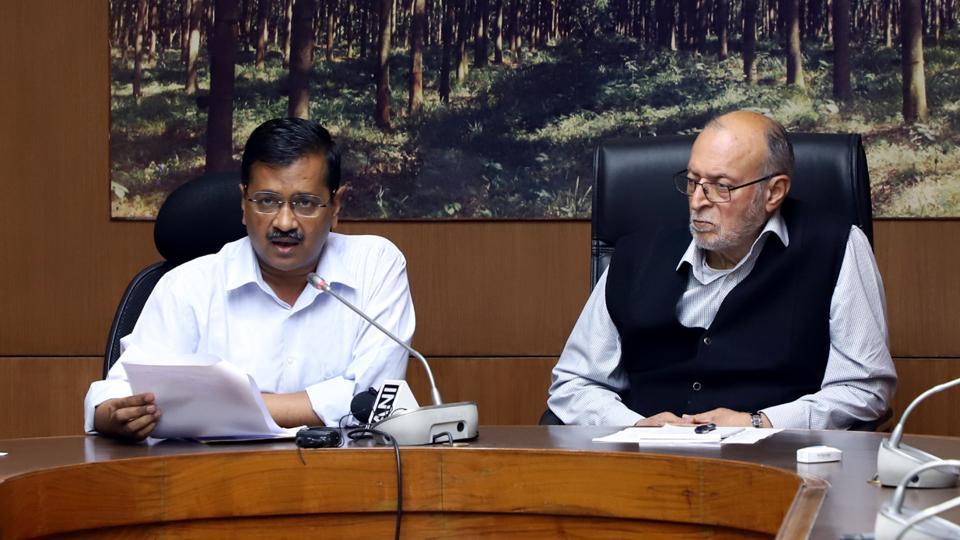
While Delhi is not an exception in terms of having a federal government exercise a range of powers in the national capital, and its state government has, over the past three decades, enjoyed more power than its counterparts elsewhere, experts believe that the Centre’s move reflects lack of trust in the local government and there was even need for clear structures in place. The national capital is currently mired in administrative overlapping and contested jurisdictions.
Partha Mukhopadhyay, a senior fellow with the Centre for Policy Research, said: “Having a powerful local government in a national capital is not incompatible with national interest. It is a question of political culture. In Washington DC and Australian Capital Territory of Canberra, sub-national powers are indeed curtailed. But there are clear structures in place… What Delhi needs is more clarity. Its chief minister is a visible leader. It comes down to whether the national government and political parties have the maturity to be comfortable with federalism generally, and with strong local leadership in the national capital, in particular.”
Niranjan Sahoo, a senior fellow with ORF’s governance and politics initiative, said: “A survey of major national capitals which I undertook shows that an overwhelming majority of national governments have serious reservations even on granting autonomy, let alone statehood for capital cities. Given that national capitals house critical infrastructure such as parliament, presidential estates, defence and foreign missions, most governments maintain strategic control over the city’s critical services like land and public order. The uncomfortable truth is that central governments lack complete trust in the ability of city governments.”
Washington DC has a municipal corporation whose powers are curtailed by the federal government, which can overturn local laws and even approves the local budget. Canberra is run by an assembly which doubles up as a local executive but cannot make laws on subjects that include establishment of courts, police services and securities industry.
Delhi has a 70-member assembly whose members are elected by the residents of the city. The political party with majority in the assembly forms the local government. Similarly, there are civic agencies which are independent of the city government. They include the three municipal corporations in the city in which leaders are elected through separate elections, a cantonment board and a municipal council that is in charge of the central area that houses the Parliament and Union government offices.
However, the Union government appoints a lieutenant governor (L-G), who is considered the administrator of Delhi and whose office has under its jurisdiction crucial subjects such as police, land and public order. Such special status was granted to Delhi under a constitutional amendment in 1991. Laws cleared by the Delhi assembly are routed to the President for his assent through the office of the L-G. Subjects under the city government’s jurisdiction include education, health care, fire services, public buses, water supply, electricity and social welfare.
However, accommodating such multiplicity of governing agencies for the national capital becomes difficult in day-to-day governance and has often led to frictions between the elected government in Delhi and the Union government which intervenes through the L-G – especially at times when two opposing political parties are in charge of the two governments. The current scenario is one such phase and, according to experts, have witnessed the worst of such frictions.
The BJP today controls most Indian states but in the national capital’s assembly, its presence is limited to a mere eight out of 70 legislators. The AAP government in Delhi has had a long history of power tussle with the Centre now. If put into a timeline, it would be prominently marked by chief minister Arvind Kejriwal’s resignation in 2014 after failing to clear the Jan Lokpal Bill, major fights over appointments and transfers of bureaucrats, conflicts over getting files cleared by the L-G, which led to obstructions in launch of several flagship projects that include Mohalla Clinics, doorstep delivery of ration and CCTV in public places, and more.
Praveen Rai, a political analyst with the Centre for Study of Developing Societies, said: “The power tussle between the Central and Delhi government has been a recurring feature and will continue unabated till it becomes a full state. But it seems like a distant reality, as AAP does not have the required numbers in the Parliament to pass a bill for Delhi’s full statehood. On the other hand, the BJP, like other national governments in the world, is not likely to relinquish its political supremacy over the national capital. The incessant frictions in the power sharing structure between the Central and state government is not only disruptive, but also slows down the development story of Delhi.”
Sahoo said, “While there is no harm in aspiring for statehood, a long history of flip-flops by governments of every hue at the Centre suggests that it is like chasing a chimera. With overlapping and contested jurisdictions, it is imperative to institutionalise dispute resolution as has been adopted by national capitals around the world.”
In 2018, the Supreme Court’s intervention brought some clarity and helped reduce the power tussle. In a judgment, the top court said that the L-G is bound by the aid and advice of the elected government in Delhi except for matters pertaining to land, police and public order. While the AAP asserts that the new Bill of the central government essentially overturns the Supreme Court judgment, the BJP claims it is aimed at bringing more clarity in Delhi’s administration.
“If the current Bill is enacted, Delhi’s legislature will be made clearly subordinate to the Lieutenant Governor – a feature already frowned upon by the Supreme Court. This kind of second-guessing makes the democratic system irrelevant. Perhaps the Union Territory with Legislature is an oxymoron-like concept and it is time to end the charade,” said Mukhopadhyay.


