
 E-Paper



ALH Dhruv flaws identified, being fixed: Senior officials
The army, air force, navy, and coast guard operate more than 330 ALHs.

 Prefer HTon Google


Flaws on the Dhruv advanced light helicopter (ALH), whose safety record came under scrutiny after a string of accidents earlier this year, have been identified and are being fixed on priority to address flight safety issues, senior officials aware of the matter said on Wednesday.
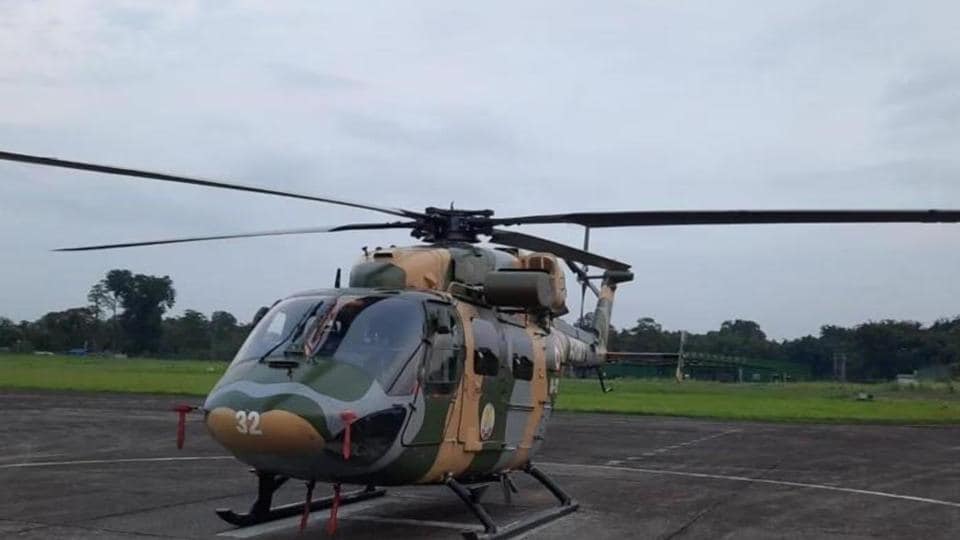
Some design and metallurgy issues came to the fore during investigations into the recent incidents involving the India-made helicopter, said one of the officials cited above, asking not to be named.
The army, air force, navy, and coast guard operate more than 330 ALHs. The helicopter was grounded, then cleared for flying and again grounded during March-May after safety issues came into sharp focus in the backdrop of three accidents during this period.
The helicopters, designed and developed by state-owned Hindustan Aeronautics Limited, are being cleared to fly in batches for urgent missions after comprehensive checks, said a second official cited above, who also asked not to be named.
In the past five years, the ALH was involved in 12 accidents, including the crash-landing of an army helicopter in Jammu & Kashmir’s Kishtwar on May 4 in which a soldier was killed and two pilots were injured. Before that, a coast guard ALH made a forced landing in Kochi on March 26, and a navy ALH ditched (emergency landing in water) into the Arabian Sea on March 8.
As specified in a government letter dated May 22, the resumption of urgent flights followed the prescribed “satisfactory conduct of independent maintenance flight safety audit” of critical items and systems, and compliance with safety-related “special technical instructions and alert notices” issued by technical authorities.
HT reported on May 10 that a design review of a “safety-critical system” on the ALH may be in order, according to a top government regulatory body responsible for the certification of the airworthiness of military aircraft. The Bengaluru-based Centre for Military Airworthiness and Certification (CEMILAC) wrote to the three services and the coast guard about this on April 23. It ordered the design review of the booster control rods to improve the ALH’s airworthiness.
CEMILAC, which functions under the Defence Research and Development Organisation (DRDO), reached the conclusion that the design review of the booster control rods is mandatory after an expert committee, formed in the backdrop of the navy ALH incident on March 8, explored the possible failures that led to the incident. These rods allow pilots to control the helicopter’s motion, and any failure can severely affect power input to the rotor blades and cause accidents.
The committee, constituted by the CEMILAC chief executive (airworthiness), found that the most probable cause of the March 8 incident was a technical failure – an error in the assembly of serrated washers in the booster control rods. It recommended short and long-term measures to enhance the safety of the ALH.
Also Read: Army grounds Dhruv ALH fleet again following Kishtwar crash
The design, development and qualification of the steel booster control rods that are tolerant to assembly errors shall be expedited, and the compliance of the new design shall be aimed for implementation in six months to one year, CEMILAC wrote in the letter dated April 23 to HAL, the three services, and the coast guard.
CEMILAC prescribed measures for the resumption of operations of the ALH, Rudra (the armed version of ALH) and the light combat helicopter (LCH). The Indian Air Force’s latest LCHs were also grounded earlier as they inherit several features of the ALH.
It said clearance for these platforms, limited to 100 flight hours each, would be given after mandatory inspections. Further clearance for up to 500 flight hours or one year, whichever is earlier, would be based on the successful completion of two critical tests by HAL, it added.
These tests involve the flight testing of two helicopters with instrumented control rod assembly for verifying the multi-axis loads on the control rods, and the fatigue testing of the rods with correctly assembled serrated washers to confirm their original capability.


