
 E-Paper



Food output to set new record this year despite pandemic
Foodgrain production is estimated to be 303.4 mn tonne in 2020-21 — increase of 2% over last year, according to government’s estimates.


India’s annual food output is set to hit a new record in 2020-21 despite the Covid-19 pandemic, with the country estimated to post a higher yield for the fifth year in a row in the summer (kharif) harvest, and sowing for winter (rabi) crops poised to cross last year’s all-time high, official data shows.
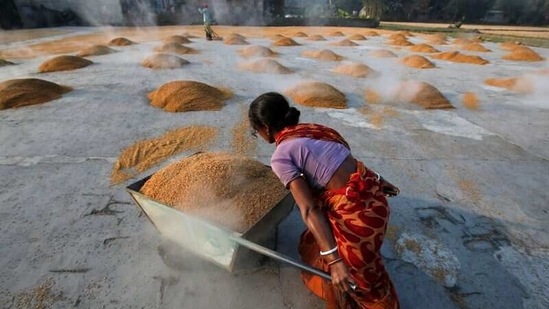
Foodgrain production is estimated to be 303.4 million tonnes in 2020-21, an increase of 2% over last year, according to the agriculture ministry’s second of four advance estimates. Farmers have planted winter crops on over nearly 68.5 million hectares, which is nearly 3% higher than last year.
During the previous rabi season (2019-20), the sown area expanded by 10% to 66.6 million hectares. The sown area this year has touched 111% of normal, heightening the possibility of a bumper harvest.
Ample food stocks help to keep a lid on food prices and inflation levels.
Agriculture, which contributes 39% to the rural economy, was able to shake off the impacts of the coronavirus pandemic because of normal rains and ample supplies of subsidised inputs, such as fertilisers, during the pandemic — while announcing the Atma Nirbhar package, the government increased the fertiliser subsidy by an additional ₹68,000 crore to meet an anticipated higher demand.
Throughout the peak pandemic months, the farm sector was the only bright spot in the Indian economy. It grew 3.4% in the June 2020 quarter, even as the rest of the economy fell deep into recession with a -24.4% growth due to a hard lockdown and curtailed business activities.
Growth returned to positive territory in the December 2020 quarter, the latest available data, expanding 0.4%. Agriculture grew at 3.9% in the same period, compared to 3% in the previous quarter.
According to the agriculture ministry’s data, the area under wheat, the main winter staple, expanded 3% to a record 34.6 million hectares. The average sown-area under wheat is about 30.3 million hectares. The area under gram expanded by 5% to 11.45 million hectares, the highest on record, surpassing last year’s 10.7 million hectares.
The ministry has estimated the total kharif production to be 148 million tonnes, and rabi output to be 155.4 million tonnes.
The rice output during the 2020-21 kharif season has been pegged at 103.8 million tonnes, according to the second advance estimate, higher than the first advance estimates of 102.4 million tonnes and last year’s output of 102.3 million tonnes. The higher summer output came on the back of a larger cropped area, which exceeded last year’s levels by 2 million hectares, with a push coming particularly in states such as Bihar, Jharkhand, Telangana West Bengal and Assam. Higher sowing was mainly on account of robust summer rains.
“The farm economy has turned to be more resilient than the urban economy mainly because of sufficient rainfall. Higher procurement and ample stocks of fertilisers were able to meet higher demand despite the pandemic,” said economist R Mani, who was formerly with the Tamil Nadu Agricultural University.


