E-Paper



Padma Shri awardee, organic farming pioneer, Radha Mohan passes away
Radha Mohan, who retired as a professor of economics, was suffering from bronchial asthma along with other co-morbidities, and was admitted to hospital a few days ago when his health deteriorated


Radha Mohan, a former Odisha information commissioner and retired professor of economics who had turned a barren patch of land into lush forest and popularised organic farming, passed away at a private hospital in Bhubaneswar late Thursday night. He was 78 and is survived by three daughters.
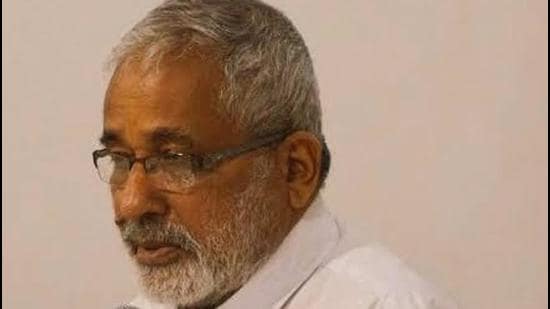
Radha Mohan, who retired as a professor of economics, was suffering from bronchial asthma along with other co-morbidities, and was admitted to hospital a few days ago when his health deteriorated.
Condoling his death, PM Narendra Modi tweeted: “Prof Radha Mohan ji was deeply passionate about agriculture, especially adopting sustainable and organic practices. He was also respected for his knowledge on subjects relating to the economy and ecology. Saddened by his demise. Condolences to his family and admirers.”
Odisha Governor Ganeshi Lal also condoled his death. ‘He will always be remembered for his unique organic farming techniques,” said Lal.
Chief minister Naveen Patnaik tweeted, “Deeply saddened to know the passing away of Gandhian and Padma Shri awardee Prof Radha Mohan. An economist turned environmentalist had distinguished contribution to sustainable organic farming. My thoughts and prayers are with the bereaved family members and well-wishers.”
Also Read | Odisha CM Patnaik announces special relief package for Cyclone Yaas-hit farmers
Last year, Radha Mohan and his conservationist daughter Sabarmatee were awarded Padma Shri in the field of agriculture for their sterling work in organic farming. Three decades ago, the father-daughter duo started Sambhav, a resource centre for farmers where many vanishing food crops such as clove bean, jack bean, black rice and sword bean were grown through organic means.
They began by buying an acre of degraded land in Nayagarh district and started planting trees on it. Over time, that one-acre land transformed into 890 acres of forestation with three rainwater harvesting ponds and 500 varieties of rice. It is also home to nearly 1,000 species of plants including trees such as mango, lichi, jackfruit, chiku, and several timber varieties.
Through Sambhav, they implemented organic farming techniques and used cattle manure, bio-gas slurry, used agro-waste and mulching. They trained local farmers on sustainable agriculture and biodiversity conservation. They also started ‘Adopt a seed’ programme in which interested farmers were given climate resilient indigenous seeds and asked to take oath to preserve them.
Born in 1943 at a small village in Nayagarh district, Radha Mohan graduated in Economics from SCS College in Puri and completed his post-graduation in Applied Economics from Utkal University in 1965.
Radha Mohan was appointed as state information commissioner in 2011 after his retirement as the principal of SCS College. The state government also awarded him with Utkal Seva Samman for his outstanding social service. He also got UNEP’s ‘The Global Roll of Honour’ for his distinguished work for environment. (With Agency Inputs)