
 E-Paper



Former SC judge Sanjay Kishan Kaul appointed to Bahrain commercial court
The BICC is modelled on the Singapore International Commercial Court in the pursuit of transnational justice.


Former Supreme Court judge, justice (retd) Sanjay Kishan Kaul, has been appointed by Bahrain King Hamad bin Isa Al Khalifa as part of the nine-member judicial panel of the Bahrain International Commercial Court (BICC).
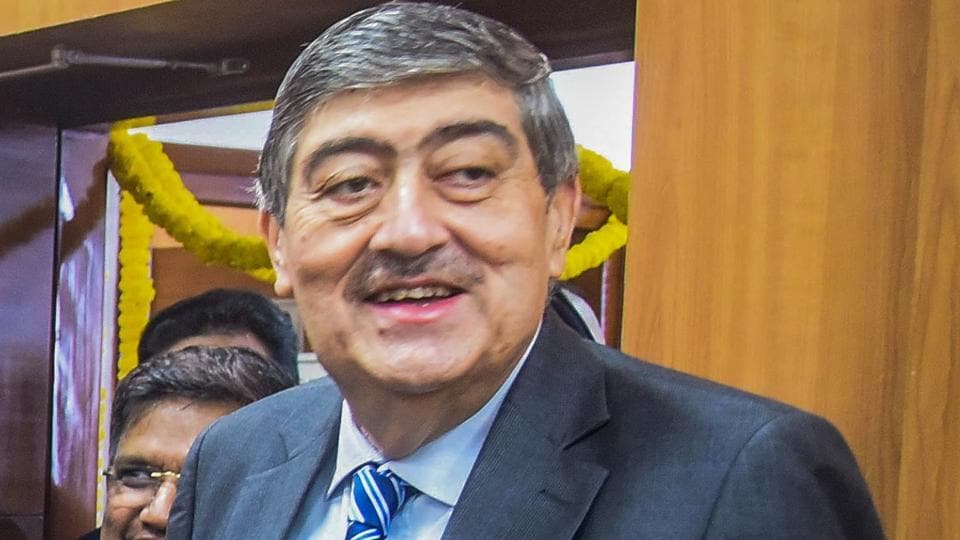
Justice Kaul, who retired from the Supreme Court on December 25 last year, is the only Indian judge on the panel with leading arbitrator Jan Paulsson as president and former International Court of Justice (ICJ) judge of British origin Sir Christopher Greenwood as deputy to the president.
The BICC is modelled on the Singapore International Commercial Court (SICC) in the pursuit of transnational justice and has been conceived with a vision to make Bahrain a premier hub for international dispute resolution. In March, Bahrain had signed an agreement with Singapore for creation of BICC. It will offer parties a right of appeal to an international court of the SICC if the case is in English and the parties to the dispute so agree.
The recent initiative is seen as part of Bahrain government’s ‘Team Bahrain’ effort to enhance private sector investment in the country by providing a world class international dispute resolution forum. The BICC comes close on the heels of the setting up of Bahraini Council for International Dispute Resolution in August.
The other judges on the bench include Lim Thian Suan from Malaysia, Sir Vivian Ramsey from UK, Hi-Taek Shin from South Korea, Henk Snijders from Netherlands, Judith Prakash from Singapore, and Fatima Faisal Hubail from Bahrain.
Justice Kaul, in his illustrious judicial career spanning more than two decades, has left an indelible imprint on the judicial landscape of the country. His notable decisions include the recognition of right to privacy as a fundamental right, the validity of an unstamped arbitration agreement, exercise of power by constitutional courts to annul marriages on ground of irretrievable breakdown of marriage, abrogation of Article 370 that gave special status to Jammu and Kashmir, additional compensation for Bhopal Gas tragedy victims, guidelines for law students to appear for pre-enrolment eligibility exam, besides other landmark rulings.
His ruling on validity of unstamped agreements as part of a seven-judge Constitution bench decision set aside the previous law laid down in April 2023 in NN Global case (5-judge bench) holding an unstamped agreement to be unenforceable and void ab initio. On a challenge to this ruling, the seven-judge bench unanimously held that an unstamped agreement is valid but inadmissible as evidence in a court of law. It held that an unstamped agreement is a “curable defect”, distinguishing between “admissibility” and “validity” of the agreement. The decision allowed more flexibility in arbitration proceedings by fulfilling the purpose of arbitration to achieve ‘speedy and efficient’ justice.
As part of a 9-judge bench in Just KS Puttaswamy v Union of India (2017), justice Kaul in his concurring majority opinion held privacy to be a fundamental right. He held privacy to be at the core of an individual’s existence which enables an individual to make autonomous life choices. The right to privacy, according to him, must extend protection to an individual from the state and non-state actors in a digital society.
In this judgment, justice Kaul opined that one’s sexual orientation is an attribute of privacy. This laid the foundation for a later significant ruling in Navtej Johar (2018) which decriminalised consensual sexual acts between adults of the same sex.
In October last year, justice Kaul’s judicial acumen came to the fore while recognising the right of queer couples to form civil unions. His decision became the minority ruling in a bench of five judges, with then Chief Justice of India (CJI) being the other dissenter along with justice Kaul.
The queer community wanted legal approval of their marriage and challenged provisions in the Indian laws which permits marriage between male and female alone. Justice Kaul reasoned that right to form a civil union was a fundamental right under Article 21 which is available to all citizens, regardless of their sexual orientation and gender. He further held that the Special Marriage Act, while excluding non-heterosexual couples, became arbitrary and discriminatory under Article 14 of the Constitution.
Justice Kaul passed out from St Stephens College in 1979 and took law degree from the Campus Law Centre of the Delhi University in 1982. That same year he joined practice as a lawyer in the Delhi high court. Later, he extended practice to the Supreme Court and was designated a senior lawyer by the top court in December 1999.
It was in May 2001, he was elevated as a judge in the Delhi high court and rose to become the acting chief justice of the same HC in September 2012. In 2013, he was elevated as chief justice of the Punjab and Haryana high court. A year later, he was transferred as chief justice of the Madras high court till his elevation to the Supreme Court in February 2017.


