India may witness one of the longest heatwave spells in the last 35 years — and the phenomenon will only continue, with the intensity and frequency of heatwaves on the rise, India Meteorological Department data suggest and experts say.
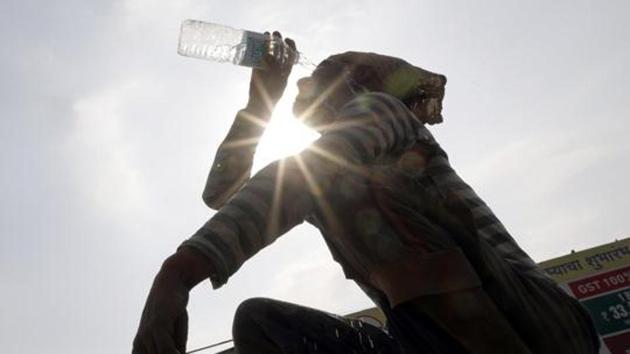
A study titled Diagnostics and real-time extended range prediction of heatwaves over India, conducted by Pune-based Indian Institute of Tropical Meteorology (IITM) in 2018, and the heatwave data recorded by the IMD, show that the frequency and intensity of the heatwaves across the country is rising.
“It may be too early to say whether 2019 will have the longest spell of heatwave or not as the heatwave period is from April to June,” said S Krishnan, a senior scientist dealing with long term weather predictions and climate change at IITM.

However, Mrutyunjay Mohapatra, a senior scientist with IMD, said various studies have established that both the frequency and the intensity of heatwaves in India is rising. This year, due to extremely dry weather conditions, India has witnessed a long spell of heat.
This year, we seem to be on course to break a 31-year-record. In 1988, the most number of heatwave days were 33 (from April 1 to June 30). In 2019, IMD data shows that there have been 32 heatwave days so far.
{{/usCountry}}This year, we seem to be on course to break a 31-year-record. In 1988, the most number of heatwave days were 33 (from April 1 to June 30). In 2019, IMD data shows that there have been 32 heatwave days so far.
{{/usCountry}}A heatwave, according to the IMD, is when maximum temperature of a station reaches at least 40 degree Celsius for plains, and 30 degree Celsius for hills.
Increasing intensity
IMD scientist DS Pai said that their study of long term heatwave data of 35 metrological sub-divisions clearly showed that there was a three-fold increase in heatwaves per year since 1991. The study was based on temperature data between 1971 and 2015.
“Our observation indicates that the increase was steeper in the last two decades,” he said.
The IITM study also stated that another impact of long spells of heatwave was an increase in hot days and nights. An analysis of daily maximum and minimum temperatures of 121 IMD stations well distributed across India between 1970 and 2015 showed that the frequency of occurrence of hot days and nights showed widespread increase whereas that of cold days and nights have decreased.
“The southern peninsular India was showing more increasing trend as compared to north India. With climate change, the frequency and intensity of heatwaves in India will increase,” Krishnan said.
In its heatwave bulletins, IMD said that this year’s hot spell has been amplified by the absence of pre-monsoon showers, as well as hot and dry winds from western dry zones. However, the heatwave spell is likely to cool down this weekend, the IMD heat forecast on Tuesday said.
This year, the monsoon arrival has been delayed by almost a week and the onset of cyclone Vayu in the western coast of India has further weakened the monsoon currents over the peninsular India.
In normal years by mid-June, the monsoon covers more than half of India but this year is spread is only over Kerala and parts of Tamil Nadu. IMD has, however, predicted near normal monsoon with 96-98% of rainfall of long term average.
EL Nino link
The IITM study also said that most parts of India suffer from spells of hot weather during April-June with high frequency over north, northwest, central and eastern coastal regions of India. “Generally, the heatwaves develop in the north-western parts of the country and progresses towards central and east India…The heatwaves in India have been linked with El Nino and some studies link them with variations in sea surface temperatures and re-curving tropical cyclones in Bay of Bengal,” the study said.
El Niño is a part of a routine climate pattern that occurs when sea surface temperatures in the tropical Pacific Ocean rise to above-normal levels for an extended period of time.
A 2017 study by the Indian Council for Agriculture Research (ICAR), published in the American Geophysical Union, said that most of the long period heatwave years in India were linked with El Nino, which normally leads to lower than normal monsoon rainfall.
El Nino affects the moisture laden winds from the cooler oceans towards India, according to IMD. “The probability of heatwave in India during an El Nino year was higher in India than non-El Nino years,” the ICAR study said.