New Delhi : The British government believes a trade deal concluded with India last year demonstrates that the rules-based order is “worth adhering to and supporting” at a time of growing protectionism and global instability, according to a report from the UK House of Lords said to be released on Tuesday.
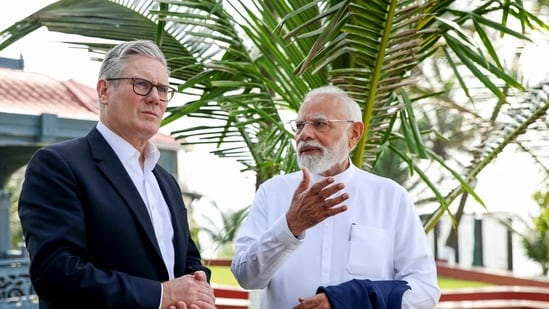
The report, issued following a scrutiny of the India-UK Comprehensive Economic and Trade Agreement by the international agreements committee of the upper house of the UK Parliament, noted that the pact was concluded at a time when there were concerns about global economic instability, counter-balancing China, diversifying supply chains and strategic realignment.
UK trade minister Chris Bryant, while appearing before the committee last December, said that the situation in the US, with a “completely different attitude towards the World Trade Organisation and reciprocal tariffs” had “undoubtedly played some role” in concluding the deal with India. He said “striking a really good deal with one of the growing nations of the world” demonstrated “that the rules-based order is worth adhering to and supporting.”
Other witnesses who appeared before the committee, including experts, said recent US trade measures, including high tariffs such as the 50% tariffs on India, had fuelled “growing uncertainty”, triggered a global economic slowdown, fuelled protectionism, and precipitated rising geopolitical rivalries, and an FTA in this environment is “a platform for long-term strategic engagement” and offers “much desired stability” for businesses.
{{/usCountry}}Other witnesses who appeared before the committee, including experts, said recent US trade measures, including high tariffs such as the 50% tariffs on India, had fuelled “growing uncertainty”, triggered a global economic slowdown, fuelled protectionism, and precipitated rising geopolitical rivalries, and an FTA in this environment is “a platform for long-term strategic engagement” and offers “much desired stability” for businesses.
{{/usCountry}}The report highlighted key challenges for India and the UK, including their relationships with China and the “need to cooperate in counterbalancing China’s influence in the region”, and the need to diversify supply chains and build resilience into foreign and trade policies. The committee said both the UK and India are working to diversify their supply chains to strengthen long-term economic resilience, though China remains “dominant” with about 20% of global supply chain trade.
India and the UK finalised the trade deal in July 2025 and set a target for doubling trade by 2030. UK tariff cuts will benefit India’s labour-intensive sectors such as textiles, leather and gems and jewellery, while Indian tariffs on Scotch whisky were cut from 150% to 75% initially. The trade deal is expected to come into force in the first half of 2026, and two-way trade is currently worth about $56 billion. While welcoming the agreement with a “key partner and growing market in the Indo-Pacific”, the British parliamentary committee raised what it said were “three key shortcomings” in the agreement that the UK government should continue to work on, including by engaging with India.
The first of them is that “benefits for UK goods exporters will take some time to materialise” as India will lower trade barriers in increments over the first 15 years of the agreement. “We heard some concerns that the UK could be subject to high volumes of Indian exports previously destined for the US, as a result of recent tariff measures imposed on India by the US,” the report said.
The second issue, the report said, was that a number of notable UK interests were omitted “in order to get the Agreement over the line”. The third issue was that the agreement is heavily goods-focused and does not significantly liberalise trade in services, the report said.