E-Paper



G20 reaffirms resolve to strengthen health architecture, bring in equity
The three-day meeting culminated with an outline of areas where the countries will together – including on access to safe, effective, and affordable vaccines.

 Prefer HTon Google


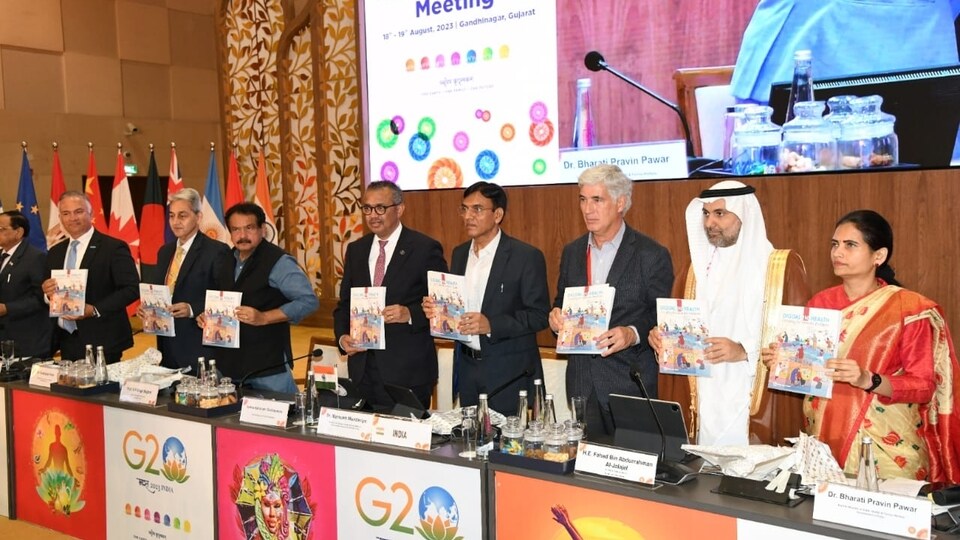
The Group of 20 (G20) nations said they are committed to strengthening the global health architecture and that they had arrived at a consensus to build more “resilient, equitable, sustainable and inclusive health systems,” in an outcome document and chair summary following the ministerial-level meeting on health.
Read here: Modi urges G20 to push for secure digital future
The three-day meeting culminated with an outline of areas where the countries will together – including on access to safe, effective, and affordable vaccines, therapeutics, diagnostics “and other medical countermeasures” --- but there was no joint statement due to continued differences over the war in Ukraine.
“… we arrived at a consensus to build more resilient, equitable, sustainable and inclusive health systems equipped to address ongoing global health challenges and future public health emergencies with equitable access to safe, effective, quality-assured and affordable vaccines, therapeutics, diagnostics, and other medical countermeasures, especially in Low-and Middle-income Countries and Small Island Developing States,” read the outcome document shared by the Union health ministry Mansukh Mandaviya on the last day of the G20 Health Ministers’ meeting held at Gandhinagar.
The document added that the resolve was based on lessons learnt from the Covid-19 pandemic.
“We affirm that the need of the hour is to converge, consolidate, and create a healthier future and the importance of strengthening national health systems including through effective community involvement and the underlying principle of “Leave No One Behind” and considering vulnerable populations living in crises affected settings.”
Delegates from 19 G20 member countries, 10 invited states and 22 International Organisations participated in the sessions.
The focus of the discussions held on August 18-19 was on the three key priorities of the G20 Health Track, including health emergencies prevention, preparedness and response with a focus on anti-microbial resistance and One Health framework; strengthening cooperation in the pharmaceutical sector with a focus on access and availability to safe, effective, quality and affordable medical countermeasures (vaccines, therapeutics and diagnostics); and digital health innovations and solutions to aid universal health coverage and improve healthcare service delivery.
The delegates acknowledged the need to strengthen and develop resilient and sustainable medical research and development, local and regional manufacturing capacities, supply chain ecosystem, health workforce, and the integration of interoperable digital health solutions in the health systems especially at the primary health care level.
Expressing concern over rising cases of zoonotic spill overs and consequently emerging and re- emerging diseases, the members acknowledged the need to identify new and address the existing drivers using a science and risk-based approach, and to strengthen existing infectious disease surveillance systems, with particular focus on addressing the link between climate change and health.
“As such, we recognise the need to enhance the resilience of health systems against the impact of climate change. We commit to prioritizing climate-resilient health systems development, building sustainable and low-carbon/low greenhouse gas (GHG) emission health systems and healthcare supply chains that deliver high-quality healthcare, mobilize resources for resilient, low-carbon sustainable health systems…” said the members in the document.
Mandaviya also launched the ‘Global Initiative on Digital Health – a WHO Managed Network’ in the presence of Tedros Adhanom Ghebreyesus, the director general of WHO during one of the side events on Saturday.
“The world today is witnessing an exponential rise in digital health solutions that are focused on vertical health programmes. The siloed approach and fragmented digital solutions result in significant workload on health workers, inefficiencies due to duplication and lack of interoperability. India’s G20 presidency has leveraged its experience on developing a national digital health architecture through the convergence of digital health interventions aimed at health systems strengthening through interoperability by design,” said Mandaviya.