
 E-Paper



Gadkari dismisses criticism of India’s 20% ethanol petrol rollout as ‘paid campaign’
Addressing 65th annual convention of Society of Indian Automobile Manufacturers (SIAM), Gadkari said that the campaigns on social media against ethanol were to target me politically

 Prefer HTon Google


New Delhi: Union road transport and highways minister Nitin Gadkari on Thursday dismissed criticism of India’s rollout of 20% ethanol-blended petrol (E20), calling it a campaign driven by “vested interests” and “paid” efforts, while strongly defending the government’s ethanol programme.
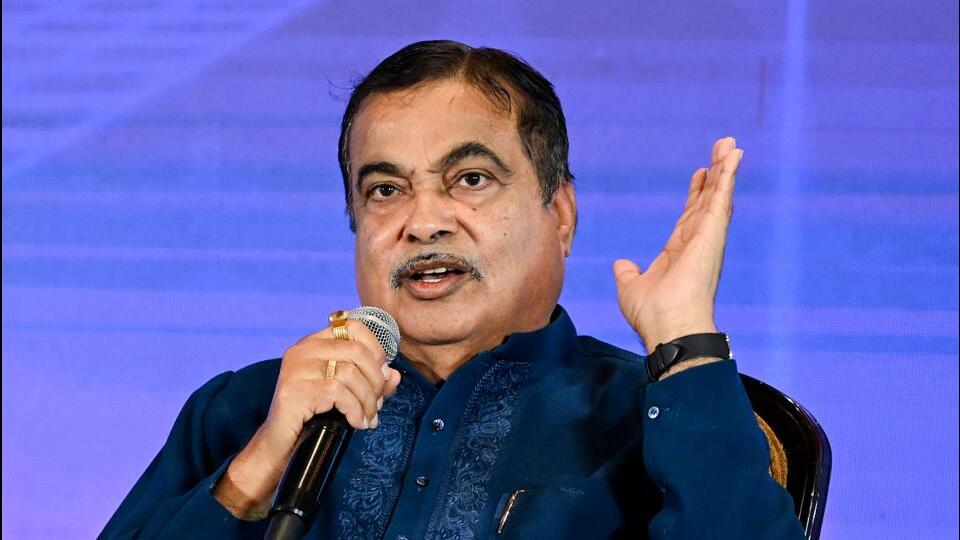
Addressing the 65th annual convention of the Society of Indian Automobile Manufacturers (SIAM) in New Delhi, Gadkari said, “The campaigns on social media against ethanol were to target me politically.”
The minister’s comments come against the backdrop of the Supreme Court dismissing a public interest litigation (PIL) on September 1 seeking mandatory availability of ethanol-free petrol (E0) at all fuel stations, after the centre strongly opposed the plea and termed it an attempt to undermine a national policy.
India introduced 20% ethanol-blended petrol nationwide in April 2023, achieving its blending target five years ahead of schedule. The programme, a central plank in reducing carbon emissions and cutting dependence on crude oil imports, has triggered debate among consumers and automobile experts, many of whom argue that blending ethanol could hurt vehicles’ efficiency and longevity.
The petition had sought directions to the centre to make ethanol-free petrol available alongside blended fuel, mandate clear labelling of ethanol content at retail outlets, and conduct a nationwide impact study on performance and mechanical degradation caused by blended fuel.
Arguing for petitioner Akshay Malhotra, senior advocate Shadan Farasat stressed that the plea was not aimed at halting the government’s ethanol-blending drive but only at ensuring consumer choice. “Only vehicles manufactured after April 2023 are compliant with E20 petrol. For vehicles produced earlier, the absence of an E0 or even E10 option results in mechanical risk and economic burden,” Farasat submitted.
AG Venkataramani opposed the petition outright, contending that the petitioner was merely a “name-lender” and that the plea reflected the interests of a larger lobby seeking to stall India’s clean fuel policy.
The Supreme Court dismissed the case, observing that there was “sufficient clarity” on the policy and no evidence to suggest that E20 fuel was harmful for engines, consumers, or farmers.
Also Read: Explainer | What is the E20 fuel controversy in India all about?
The ministry of petroleum and natural gas has repeatedly defended the policy, noting that ethanol’s lower energy density results in only a marginal efficiency drop — 1–2% for four-wheelers designed for E10 and calibrated for E20, and 3–6% for older models. Officials have also clarified that vehicle insurance validity is unaffected by the use of E20 fuel.
Defending the policy, Gadkari has maintained that ethanol is “import substitute, cost effective, pollution free and indigenous.” He argued that the country spends ₹22 lakh crore annually on fossil fuel imports. “If these ₹22 lakh crore go to the Indian economy, then how much profit will be made here?” he asked, adding that the programme was already yielding benefits for farmers.
On the environmental front, Gadkari cited Delhi’s air quality to underline ethanol’s role in curbing pollution. “There is a report that after living in Delhi, pollution will continue to increase like this, so your life span will reduce by 10 years,” he said, arguing that alternative biofuels are critical to public health.


