The Gauhati high court has directed the Assam government to pay ₹2 lakh as interim compensation to the husband of Mumtaz Begum, a Bengali-speaking Muslim woman who was pushed into Bangladesh after a foreigners tribunal declared her a foreign national.
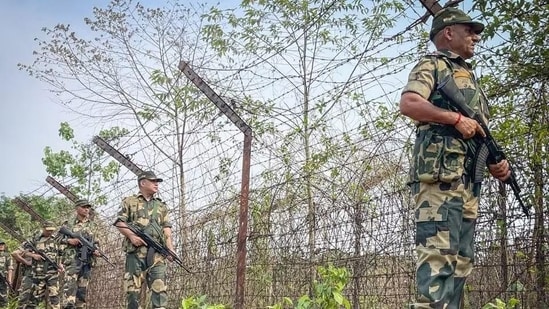
This is the first such instance where a court has imposed a cost on the state for pushing a person into Bangladesh, in violation of deportation rules. The order was passed by a bench of justices Kalyan Rai Surana and Susmita Phukan Khaund while hearing a habeas corpus petition filed by Begum’s husband Mujammel Hoque, a resident of Juria in Nagaon district.
“As the detenue (the woman) has been expelled out of India without providing any information to the petitioner (the woman’s husband) or any adult family member… as an interim palliative measure, the court is inclined to direct the Assam government to pay an interim compensation of ₹2 lakh to the petitioner,” the bench said in its order dated September 3.
Also Read I Vice President Radhakrishnan arrives in Assam on two-day trip
{{/usCountry}}Also Read I Vice President Radhakrishnan arrives in Assam on two-day trip
{{/usCountry}}The bench directed the state government to pay the amount within 60 days and ruled that the petitioner could seek more relief from a civil court.
The division bench also impleaded the ministry of external affairs in the case and said it would direct it to “make an endeavour to have the woman located in Bangladesh and to expatriate her to India”.
Begum's brush with foreigner tribunals
Hoque moved the high court in June after failing to locate his wife at the detention camp meant for people declared foreign nationals by the foreigners tribunals, at Matia in Goalpara district.
Foreigners tribunals are quasi-judicial bodies unique to Assam that adjudicates on matters of citizenship of those marked as suspected foreigners by the border police or those listed as doubtful voters (D-voters) in electoral rolls.
The Nagaon tribunal had declared Begum, who claims to have been born in Rupahihat in Nagaon district in December 1982, a foreigner in 2019, despite producing documents showing that her grandfather’s name was in voter lists prior to 1971 — the cut-off year for citizenship in Assam.
Also Read I Two held for raping 15-year-old girl in Assam’s Sivasagar, found pregnant: Police
Begum challenged the tribunal’s order in the high court. In April this year, the high court set aside the tribunal’s order and sent the case back to the tribunal for a “fresh decision”.
But within minutes of appearing before the tribunal on May 30, Begum was taken into custody by police, kept overnight at the Juria police station and shited to the detention centre at Matia the next day.
It was only after the habeas corpus plea came up for hearing in late June that the authorities informed that Begum was handed over to Border Security Force and “sent back to Bangladesh” on the midnight of June 14 through an international border point at Sribhumi district.
Family not informed of Begum's expulsion
The bench noted that Begum and her family was not informed of the May 30 order, observing that not providing a copy of the tribunal’s order to Begum or her family members or failure to inform them about her expulsion, were procedural lapses on the part of the state machinery and police.
The high court also asked the Assam home department to order an inquiry into the entire episode.
“The state machinery, acting in tandem, had prevented the detenue to exhaust her right to move this court by way of a writ petition to challenge the impugned opinion dated May 30. Thus, only when this writ petition was filed, the petitioner could come to know that the detenue was expelled from the country,” the order said.
Also Read I Assam fisherman found in Bangladesh, BGB alleges drug, arms smuggling
In light of the proceedings, the bench directed district superintendents of police to ensure that declared foreign nationals are informed of tribunal orders before being taken into custody. Also, an adult family member must be informed before the person is removed from the district.
The matter will be heard next on September 24.
In July this year, chief minister Himanta Biswa Sarma informed the state assembly that 1,679 illegal Bangladeshis had been repatriated from Assam in the past two years. He also informed that there were 91,385 ‘D-voters’ (voters with doubtful citizenship) in the state in the electoral rolls.