
 E-Paper



Tomatoes with subsidised cost to reach more states; ‘dal’ get cheaper
Union minister Piyush Goyal electronically opened the sale of subsidised chickpeas under the brand name ‘Bharat Dal’

 Prefer HTon Google


Battling a spell of high food prices, the Union government on Monday announced it would sell cheap chickpeas (chana dal), a widely consumed pulses variety, across the country, starting with the Capital.
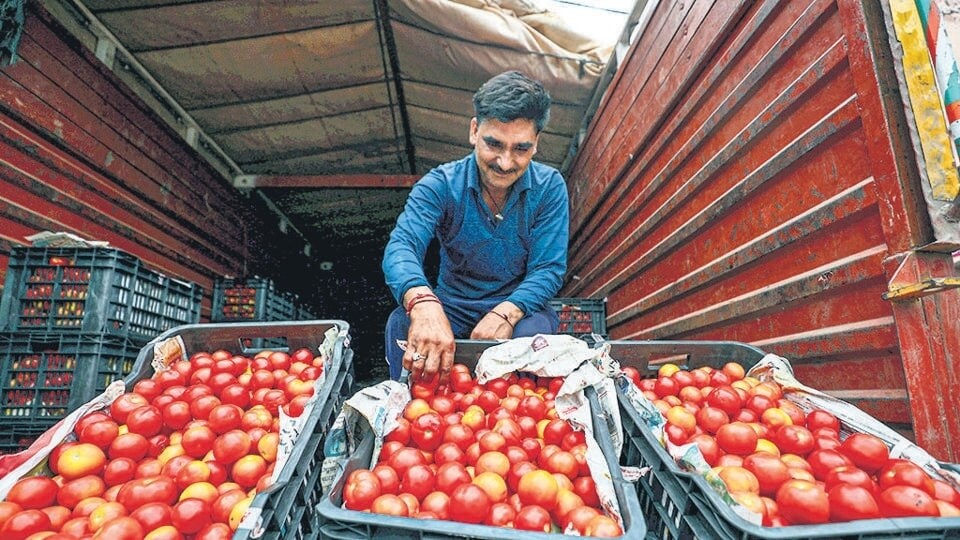
Also read: As tomato prices hit roof, thieves see them as a lucrative option
It also expanded operations to sell subsidised tomatoes in more cities. Authorities are monitoring localized inflation trends and supplies of essential items in over 500 centres, where it plans to promptly intervene in markets to cool prices by replenishing supplies, an official said.
The National Cooperative Consumers’ Federation of India and National Agricultural Cooperative Marketing Federation , two state-backed food traders, are scouring farm stocks in states such as Maharashtra and Andhra Pradesh, among others, to procure tomatoes and send them to states where there is scarcity, the official said.
Union food and consumer affairs minister Piyush Goyal electronically opened the sale of subsidised chickpeas under the brand name ‘Bharat Dal’ at ₹60 per kg for one kilo packs and ₹55 per kg for 30 kilo pack, about 20% cheaper than market prices.
Chickpea sales are being carried out in retail outlets in the national capital, Kendriya Bhandar stores and Safal centres.
“Chana dal is also being made available to states governments for supplies under their welfare schemes and also for distribution via their consumer cooperative outlets,” the official said.
Apart from staples, pulses – a common source of protein for most Indians – have witnessed elevated prices. On June 2, the Centre had imposed caps on the quantity of pulses that retail shops and traders are allowed to store, a measure known as stockholding limits that is invoked to control inflation.
According to the third advance estimates of food production issued by the agriculture ministry on May 25, total pulses production during 2022-23 is estimated to be 27.5 million tonne, which is higher by about 200,000 tonne than previous year’s output of 27.3 million tonnes.
However, pulses are not a homogenous group of commodities and a dip in the production of some varieties and certain parts of the country more than others have hit supplies. Torrential rains and seasonal factors have also led to an uptick in prices of most food commodities.
On Monday, average retail prices of tomatoes declined marginally by ₹15 in some centres but the vegetable is still expensive at about ₹180 a kilo.
Food inflation, as measured by the consumer food price index, leapt to 4.49% in June, compared to a 2.96% climb in the previous month, official data showed on Wednesday. Overall retail inflation rose to a three-month high of 4.81% as a result.
In May 2021, the Centre has allowed duty-free imports of three pulses — tur, urad and moong — to ease prices of lentils. The import policy measures had resulted in a substantial increase in imports of pulses, which augmented supplies and decreased prices.
According to NCCF managing director Anice Joseph Chandra, the selling price for the public has been fixed at all centres at ₹80 a kg, while the buying rate ranged between ₹120-130 per kg. The difference will be paid by the Union government.
Also read: Pune farmer makes ₹2.8 cr by selling tomatoes amid price hike, now aims to earn ₹3.5 cr
Analysts have said that consumers could feel the pain of high grocery inflation at least until September, as the knock-on effects of last year’s lower output of key staples and torrential rains this month hammered household budgets.
“The ability to tamper prices will depend on the scale of the operations. Also, more than chana (chickpea), there is a shortage of urad (back gram) and tur (pigeon pea),” said Abhishek Agrawal, an analyst with Comtrade.
On Sunday, the government cut the price of subsidized tomatoes from ₹90 a kilo to ₹80 in major cities where it is selling the vegetable following more procurement from farm hubs.


