The Goods and Services Tax (GST) Council has scheduled two crucial meetings on August 27 and September 19.
On August 27, the Council’s 41st meeting would consider a proposal to borrow money from the market to compensate states for their revenue shortfalls, and on September 19, the apex federal body 42nd meeting would take up other issues such as the resolution of the inverted duty structure, tax on pan masala and more measures for the ease of doing business, two officials said, requesting anonymity.
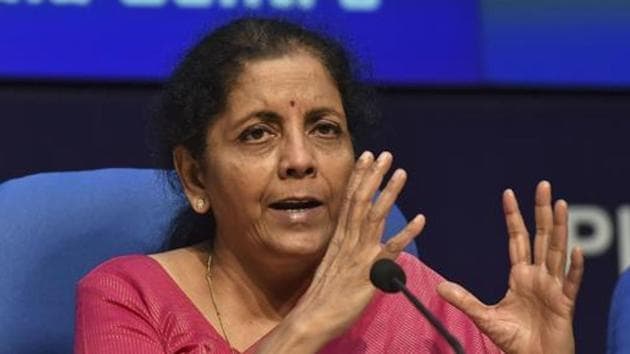
Earlier, Union finance minister Nirmala Sitharaman had said after the 40th meeting of the Council on June 12 that the August 27 meeting would be special, as it would discuss a single matter.
The meeting’s only agenda will be how to pay compensation to states at a time when the compensation cess collection has plunged because of weak economic activities owing to coronavirus disease (Covid-19) pandemic.
While briefing media persons after the 40th meeting, Sitharaman had said on request of members, the Council would meet again in July to discuss a “one-agenda item” --- compensation to states.
“Compensation, which has to be given to states, and, if at all, it results in some kind of borrowing, how and who is going to pay for it,” she had said. The meeting was, however, deferred to August, due to some technical reasons, the officials said.
At the time of introducing the new indirect tax regime in July 2017, the GST law assured states a 14% increase in their annual revenue for five years (up to 2022) and their revenue shortfall should be made good through the compensation cess levied on luxury goods and sin products such as liquor, cigarettes, aerated water, automobiles, coal, and other tobacco products.
{{/usCountry}}At the time of introducing the new indirect tax regime in July 2017, the GST law assured states a 14% increase in their annual revenue for five years (up to 2022) and their revenue shortfall should be made good through the compensation cess levied on luxury goods and sin products such as liquor, cigarettes, aerated water, automobiles, coal, and other tobacco products.
{{/usCountry}}The 41st meeting of the Council is to resolve the difference between the Centre and states over the responsibility of the cess liability.
While states argue that it is the Centre’s responsibility to pay compensation in time, the latter cited the GST law, where the responsibility lies with the Council, the officials said.
The Council is headed by the Union finance minister and finance ministers of states are its members.
Usually, the Council’s decisions are unanimous.
One of the officials mentioned above said although the GST law assured a 14% increase in annual tax revenue of states, the GST collection in 2020-21 is unlikely to see such growth.
“There is virtually no money left to pay compensation to states from April. Market borrowing is one of the solutions, but who will take the guarantee is a big question and that issue needs to be resolved,” he said.
The states were paid Rs 1,65,302 crore GST compensation in 2019-20, even as total cess collection for the fiscal year was Rs 95,444 crore.
This gap is expected to widen this year because of the pandemic, he said. “Law is very clear, compensation has to be paid from the amount collected through compensation cess and not from the Consolidated Fund of India,” he added.
According to a note circulated in the 40th GST Council meeting, compensation cess collected in 2017-18 was Rs 62,612 crore, rose to Rs 95,081 crore in 2018-19, and to Rs 95,444 crore in 2019-20.
However, compensation paid in 2017-18 was less than the total collection at Rs 41,146 crore and Rs 69,275 crore in 2018-19.
Officials said it is up to the Council to find a solution about ways to augment revenue collection and pay the compensation.
Theoretically, the options before the Council for meeting the shortfall could be to rationalise tax rates, include more items under the compensation cess or widen the net, or recommend higher borrowing by states to be repaid by the future collection into the compensation fund, they said.
However, states, particularly ruled by the Opposition parties, said that timely payment of full compensation is the responsibility of the Central government.
Officials said, the 42nd meeting of the Council on September 19 would be generic in nature and could consider revising tax on several items that suffer from inverted duty such as fertilisers, footwears, renewable energy devices, tractors, man-made yarns, and fabrics.
Inverted duty structure is a mechanism, where inputs are taxed at a higher rate than finished goods.