
 E-Paper



Guidelines to protect lawyers from summons is not immunity: Supreme Court
The court asked the country’s two top law officers, Attorney General R Venkatramani and Solicitor General Tushar Mehta, to study the suggestions

 Prefer HTon Google


NEW DELHI: The Supreme Court on Tuesday said that the guidelines proposed to protect lawyers from being summoned by investigating agencies for giving legal advice would not confer immunity on legal professionals who commit a crime.
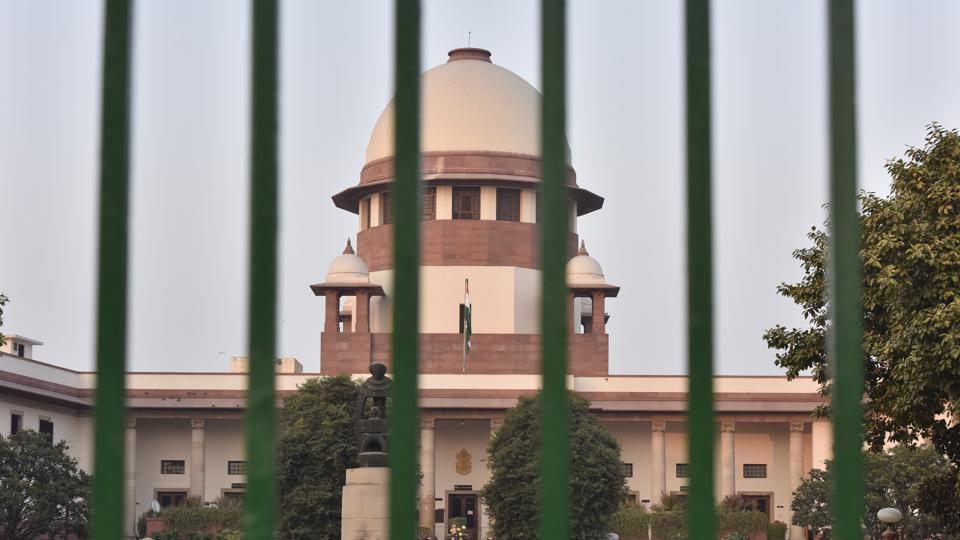
A bench of Chief Justice of India (CJI) Bhushan R Gavai and justice K Vinod Chandran made the observation during its hearing on a suo motu petition to frame guidelines to shield lawyers from investigating agencies summoning them for giving advice to clients facing criminal prosecution.
The court asked the country’s two top law officers, Attorney General R Venkatramani and Solicitor General Tushar Mehta, to study the suggestions received from lawyer bodies and propose the possible directions that can be issued.
The matter was taken up by the court following two instances where senior lawyers Arvind Datar and Pratap Venugopal were summoned by the Enforcement Directorate (ED) probing the grant of Employee Stock Option Plans (ESOP) by Care Health Insurance to former Religare Enterprises chairperson Rashmi Saluja. The ESOPs numbering over 22.7 million were valued at ₹250 crore.
Tushar Mehta, who appeared for the ED, asked the court not to lay down any guidelines, reasoning that stray incidents such as these were condemnable but should not become the basis for the courts to establish guidelines.
“individual instances should not be sufficient to change the legal framework. As lawyers, we want to be protected. But not everyone may be discharging their duty credibly. There may be a possibility of summoning them within the framework of the law. But any future judicial legislation in this regard will make the task of investigating agencies counter-productive,” Mehta said.
The bench said, “We cannot ignore the recent instances. An eminent lawyer had been issued summons. We have made it clear that there is no protection for any crime. If somebody is assisting the client in destroying evidence, certainly they can be accused of destruction of evidence. But can that be done for giving advice?”
The two lawyers’ bodies of the Supreme Court - Supreme Court Bar Association (SCBA) and Supreme Court Advocates-on-Record Association (SCAORA) submitted their suggestions to the court.
Senior advocate Vikas Singh, who is also SCBA president, submitted that in cases where the investigation agency has direct evidence against a lawyer, the same can be considered by the magistrate. If the magistrate feels that the evidence is admissible, summons can be issued, Singh said.
SCBA secretary Pragya Baghel, who submitted the association’s submissions, traced the protection afforded under the law to lawyers that protects privileged communication between the lawyer and client under the Bharatiya Sakshya Adhiniyam that replaced the Indian Evidence Act. Similar protection is also available under the Companies Act.
Senior advocate Siddharth Luthra, assisting the court, pointed out that the guidelines should also address the issue of receiving fees for the legal opinion tendered to a firm or person facing criminal prosecution.
Attorney General R Venkatramani, assisting the court in the suo motu proceedings, assured the court that he will examine all suggestions and report back with his observations. The court asked both AG and SG to examine the suggestions and revert on the next date of hearing on August 12, when the bench will consider passing further directions.
SCAORA, which had described the ED summons to the two senior lawyers as a “chilling signal to the legal community”, told the court that the unwarranted summons to advocates to disclose information concerning clients involved in criminal proceedings undermines the sanctity of the lawyer-client relationship and poses a serious threat to the integrity of India’s criminal justice system.
Senior advocate ANS Nadkarni, who represented SCAORA, pointed out a recent instance from Kolkata where the laptop of a lawyer practising before the Calcutta high court was seized. “On the laptop, there is not just information about one client but all his clients. It is the lifeline of the lawyer’s practice,” Nadkarni said, expressing concern over the search and seizure of lawyers conducted by investigating agencies that need judicial oversight.
The submissions handed over by the SCAORA office bearers pointed out that the Bar Council of India rules explicitly prohibit advocates from committing, directly or indirectly, any breach of the obligations to their client, breach of which amounts to professional misconduct.
“The duty to maintain confidentiality is not merely statutory but is deeply embedded in the ethical and professional framework governing advocates in India. Disclosing privileged communication without client consent may constitute professional misconduct and attract disciplinary consequences,” SCAORA said.


