E-Paper



Gujarat HC rejects Yusuf Pathan’s plea, asks civic body to clear encroachment
The high court verdict was delivered on August 21, but the order was uploaded to the court’s website only on September 2.

 Prefer HTon Google


The Gujarat high court has rejected former cricketer and Trinamool Congress MP Yusuf Pathan’s petition challenging the Vadodara Municipal Corporation (VMC) order to remove him from a 978-metre plot next to his house in the city, observing that celebrities have a higher bar of accountability and granting them leniency would send a wrong message.
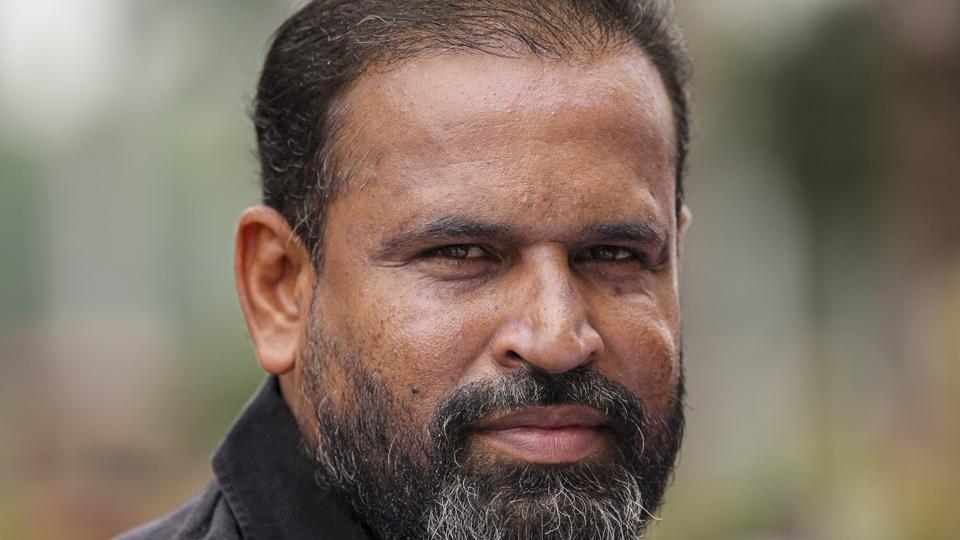
The verdict was delivered on August 21, but the order was uploaded to the court’s website only on September 2.
An official of the Vadodara Municipal Corporation (VMC) stated on Friday that the corporation has initiated the process to reclaim the plot that was in Yusuf Pathan’s possession.
“Celebrities serve as social role models and their accountability is greater not lesser. The celebrities by virtue of their fame and public presence wield substantial influence on public behaviour and social values granting leniency to such persons despite their non-abeyance of law gives wrong message to the society and undermines public confidence in the judicial system,” justice Mauna M Bhatt observed in her 28-page order.
Pathan had first applied to seek allotment of the plot in March 2012, citing security considerations since it was located next to his bungalow.
On March 30, 20212, the corporation’s standing committee agreed to allot the plot to him at a rate of ₹57,270 per square metre after a valuation exercise. The corporation’s general body also cleared the decision in June 2012, and the recommendation was sent to the state government for its approval since the case pertained to allotment of land without an auction.
The Gujarat government rejected the proposal in June 2014. But Pathan continued to occupy the land and built a boundary wall. In June 2024, the VMC Commissioner ordered him to remove the encroachment, leading to Pathan’s petition in the high court.
The high court dismissed his petition, emphasising that he had no legal right to the land and that his possession constituted encroachment.
Senior advocate Yatin Oza, representing Pathan, argued that municipal corporation did not need the state government’s approval under the Gujarat Provincial Municipal Corporations Act, 1949, to dispose of property. “If possession held by the petitioner is considered on the aspect of reasonableness and probability, then it may be considered that for 12 years VMC did not do anything, not a single letter was addressed and straightway the order in the year 2024 was passed,” he submitted.
Oza further argued that the action against Pathan was taken after he was elected as a Member of Parliament from West Bengal and said this timing was significant. Pathan also offered to pay the current market value for the plot and requested that his application be reconsidered.
VMC, through advocate Maulik Nanavati, argued that Pathan had no right to the land as no final allotment order was passed and no payment was made.
“Long possession will not create any right over the property. The land must be sold through auction, and at the most, the petitioner may be given preference if his offer matches with the highest bid,” Nanavati submitted.
Justice Bhatt observed: “Without paying consideration or without any order of allotment in favour of petitioner, it would be improper on part of the petitioner to occupy the land in question and this action would amount to encroachment by creating a boundary wall.”
The court said that permitting him to retain possession would “amount to regularising encroachment in a petition under Article 226 of the Constitution of India.”
The court dismissed the petition and directed VMC to remove the encroachment. It, however, declined to impose costs on Pathan, noting that VMC had delayed action despite knowing about his possession since 2014.
Shyam Shah, the advocate on record for Pathan said they are exploring legal remedies to challenge the court’s order.