
 E-Paper



Harish Rana's passive euthanasia process begins after emotional goodbye, 'could take 2-3 weeks'
In a first for India, SC allowed passive euthanasia for Harish Rana, a resident of Ghaziabad who has been in coma since suffering from a head injury in 2013.

 Prefer HTon Google


The process of passive euthanasia for 32-year old Harish Rana, whose "right to die" was upheld by the Supreme Court earlier this month, may take weeks to complete as it involves several stages, including gradually withholding or withdrawing the nutritional support.
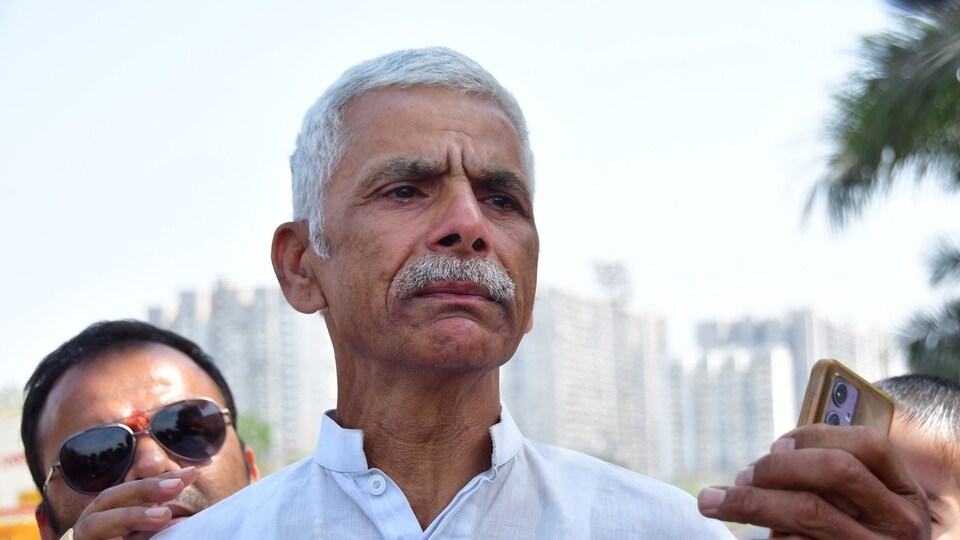
Rana, a resident of Uttar Pradesh's Ghaziabad, has been in coma since suffering from a catastrophic head injury after falling from the fourth floor of his paying guest accommodation in 2013, when he was an engineer student in Chandigarh.
He was shifted from his Ghaziabad home to the palliative care unit at Dr BR Ambedkar Institute Rotary Cancer Hospital at the All India Institute of Medical Sciences (AIIMS) Delhi on Saturday.
In its first ever order allowing passive euthanasia, the Supreme Court on March 11 permitted the withdrawal of artificial life support to Rana.
The passive euthanasia process
Dr Sushma Bhatnagar, former AIIMS chief and professor of onco anaesthesia and palliative medicine, said the case exemplifies palliative care focused on reducing prolonged suffering when recovery is no longer possible.
“As a principle of palliative care, external support that prolongs suffering in irreversible medical conditions may be withheld or withdrawn after all medical approvals, thereby allowing nature to take its course,” an earlier HT report quoted Dr Bhatnagar as saying.
The process generally involves withholding or withdrawing the nutritional support gradually while ensuring adequate pain relief.
The patient is given palliative sedation so that he or she is not in distress. Life support measures such as artificial nutrition, oxygen and medications are slowly withdrawn, Dr Bhatnagar said.
In Harish's case, sources said the entire process could take two to three weeks to complete, according to a PTI news agency report.
The stages also include obtaining approval from two medical boards has been, a process that has been initiated at AIIMS in accordance with Indian law governing living wills and passive euthanasia. These boards must certify that the patient meets necessary criteria before life support can be withdrawn, according to the earlier HT report.
All medical assessments will be carried out by the hospital’s medical board constituted for the case, the hospital said. “AIIMS is following the orders of the Supreme Court in Harish Rana’s case,” the hospital said in an official statement Sunday.
Dr Sandeep Dewan, senior director of Critical Care at Fortis, explained that a primary medical board at the admitting hospital must first certify that the patient suffers from an irreversible medical condition. Within 48 hours, the district chief medical officer constitutes a secondary board to verify the same.
Only after confirmation from both boards can life support be withdrawn – including Ryles tube (or nasogastric tube) feeding, which constitutes passive euthanasia.
“If the patient is not on a ventilator but is receiving life sustaining treatment through Ryles tube feeding, that too can be withdrawn after certification by both medical boards, which forms part of passive euthanasia treatment,” the HT report quoted Dr Dhawan.
'Sabko maaf karte hue…': The heartbreaking final goodbye
A heartbreaking video from the Rana residence in Ghaziabad surfaced on social media earlier this week, showing relatives offering prayers as a member of the Brahma Kumaris puts a 'tilak' on Harish's forehead and says softly, "Sabko maaf karte hue, sabse maafi mangte hue, so jaao… theek hai... [forgive everyone, seek forgiveness from everyone and sleep]."
The Brahma Kumari in the video is Sister Lovely from the Mohan Nagar Seva Kendra in Ghaziabad, Komal, a member of the Brahma Kumaris based at Mount Abu, told PTI over phone.
The entire spiritual process took place at the Rana's Ghaziabad home just before he was shifted to AIIMS on Saturday, Sister Lovely later reportedly said.
She said that four sisters had visited Rana's household.
"It was a surreal experience for us as well. We prayed for him and told him that whatever was being done was in his best interest, to relieve him of his suffering and to set him free. We urged the soul 'udd jao'... fly away peacefully," she said.
Earlier, explaining the rituals Sister Lovely and others offered at Rana's home, Komal said, "She is following a ritual with the words that mean he (Harish) leave the world in a happy state, seeking and giving forgiveness... it is part of a meditative chant that comforts the soul and eases the entire process of the soul merging with the sublime."


