E-Paper



Hathras stampede: Rise of Bhole Baba, miracles and all
65-year-old religious preacher, known as Bhole Baba, caused India's biggest stampede in Hathras. 121 dead, 100+ injured, and the Baba remains on the run.

 Prefer HTon Google


At 12.30pm on Tuesday, a ripple went through the waiting, breathless crowd of more than 200,000 people in Phulrai Mughalsarai village in Hathras. In a typical crisp white suit and white shoes, a 65-year-old-man ascended the stage, and sat down on a bejewelled throne. A man known by many names — Suraj Pal, Narayan Sarkar Hari, and Bhole Baba. A man who has lived many lives — as head constable with the Uttar Pradesh Police, as a member of the UP local intelligence unit, and for the past two decades, as a religious preacher with millions of followers ranging from the poor to the influential.
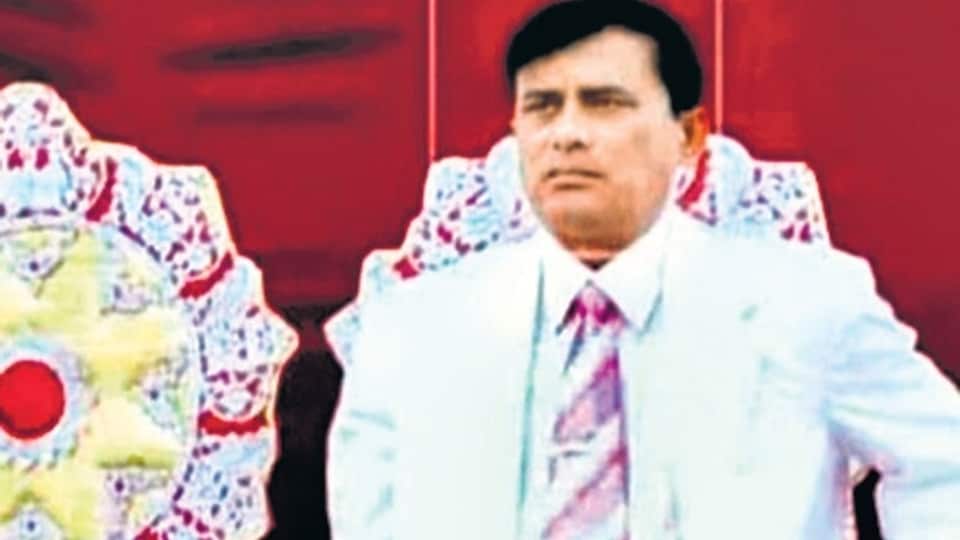
For an hour, he delivered a sermon, like he does across different parts of north India on every first Tuesday of the month. His message, his followers claim, is of “manavta” or humanism, garnished with dollops of superstition. He can cure ailments, bring succour to the poor, even revive the dead, believers say. Over the years, they developed a custom -- every time he left an arena, devotees rushed forward to collect the dust from the ground he had touched; a practice they call “Raj”.
Read Here: Three-member judicial commission to probe Hathras stampede
At 1.40pm, as Bhole Baba descended from the stage and left the arena, the crowd lurched forward, eager to collect “Raj”. The ground was wet, there was an unfortunate slope, and barely any security measures for a group of people that large -- in other words, the setting for a horrible tragedy. What happened next was India’s biggest stampede since 2008, 121 people -- mostly women and children -- were killed, and over a hundred injured. And the Baba himself? Unscathed, unnamed in the first FIR registered on Tuesday night, and on the run.
The beginning
From Patiyali village in Kasganj, Suraj Pal was a head constable with the UP Police till 1998, even serving in the Etah local intelligence unit, when he took voluntary retirement. Colleagues who remember him from the time say that there was little warning of his turn to “spirituality” at the time. But by the early 2000s, Pal shifted from his home in Agra’s Kedar Nagar back to his village, and began living in a hut. He would later tell his rapt congregation that his pivot was motivated by a “direct experience with God” in which he realised that his “body was a part of the supreme soul”.
He began proclaiming that he was the divine essence of Narayana, an epithet of Vishnu, and used the name Narayan Sarkar Hari.
His wider message was of humanity -- a poster announcing the July 2 event, for instance, talks about “unity in diversity”, the removal of discrimination, and making people believe in the power of Narayan Sarkar. Officials in Uttar Pradesh said that his catchment grew and grew, branching out in Rajasthan and Madhya Pradesh, with most devotees either Dalits or from backward classes. They saw him as a living embodiment of sacred virtues — a godman who came from within them at a time when they often felt unheard.
Hathras stampede: Chest injuries, asphyxia among causes of death, autopsy report reveals
As his clout grew, so did his influence. At his congregation, there were sometimes politicians, such as Samajwadi Party president Akhilesh Yadav who attended one session in 2013. Two years ago, one close aide said, he solemnised that wedding of an IAS officer at his 60 bigha ashram in Bichwa Mainpuri, a locality that has now come to be known as “Hari Nagar”.
But the Baba’s influence is not without dark superstition or murky controversy.
In March 2000, a case under sections of the Drugs & Magical Remedies Act of the Indian Penal Code was registered against him in Agra after he claimed that he had magical powers to resurrect a six-year-old girl who had died recently. He was never arrested, and the police filed a closure report months later.
In May 2021, a case was also filed against him and his sevadaars for organising a satsang of around 50,000 people in Farrukhabad despite pandemic restrictions being in place.
And in Kanpur, Ranjit Kumar, ACP Ghatampur, said that police are investigating allegations that his organisation “Sakar Vishwa Hari” had allegedly encroached on seven bighas of land in Karsui village. “We are currently investigating the matter to gather more details,” Kumar said.
The organisation of his satsangs
At the gated ashram in Mainpuri, devotees said that there is a daily footfall of over 10,000 people who come to seek blessings, with large covered platforms built for those who want to spend a few days at the venue. Arrangements for devotees, and indeed satsangs like the one on Tuesday, are overseen by sevadaars, often dressed in black, who handle logistics from traffic management to barely existent crowd management.
Read Here | 'Bhole Baba didn't allow photos to be clicked, kept phones of devotees': NCW chief on Hathras stampede
“No prasad is offered, and for devotees, dust from his feet is sufficient. They do not accept donations, and this has increased his following,” one UP government official said, adding that operational revenue of the organisation and the wealth amassed by Pal were still unclear, and now being examined.
Some of the sevadaars are devotees such as Munni Devi from Bisana in Mathura, a follower for 17 years who later became a volunteer. “I went on Monday to the satsang venue and performed seva like cleaning, sprinkling water and assisting the other sevadaars. During the lockdown period, my three daughters-in-law were under some kind of bad omen and could not have children. I went to occult practitioners and they told me to sacrifice animals which I could not afford. So I took them to Baba’s satsang, and they then had children. I trust him,” she said, as if recounting a miracle.
For the event on Tuesday, police said that six people, including the “Mukhya Sevadaar” identified as Devprakash Madhukar from Hathras, obtained permission from the subdivisional magistrate for a congregation of 80,000 people, but the crowd eventually swelled to 250,000. On Wednesday, UP chief minister Yogi Adityanath said, “The permission was taken by the committee-members and they are primarily responsible for the stampede. The sewadars at the satsang also tried to suppress the devotees who were trying to reach out to the baba. The baba is not named in the FIR but the scope of investigation will be expanded as investigation progresses.”
Unshakeable faith
On Wednesday morning, at the Sikandra Rao Trauma Centre, 7km away from the fields where the tragedy unfolded a day earlier, 45-year-old Leelawati from Gangapur village lay prone on a hospital bed. She was one of the injured, and closely escaped death. And yet, such is the godman’s influence, that she said, “I owe my life to Bhole Baba. I had a severe illness and have been attending his sermons for 13 years. He cured me in 2012.”
Read Here: Godman ‘Bhole Baba's lawyer blames ‘anti-social’ elements for Hathras tragedy
But at least Leelawati, who later revealed her illness was breathlessness, is one of the living.
For the past 20 years, Kailash and Kamla Chand’s lives have revolved around Bhole Baba. They first encountered him in Ballia in 2002, when they were taken to a satsang by Kamla’s brother. “His teaching of love, peace and spiritual salvation resonated with us. We returned home with a sense of purpose. In fact, our eldest daughter Roshni was born from his blessings,” Kailash said.
On Tuesday, then, they travelled to Hathras, with Roshni, now 17 and an ardent supporter herself. But as Sural Pal left the venue and the stampede ensued, Roshni was separated from her parents. They looked for her everywhere. In the hours that followed, they realised that she was dead.