E-Paper



Heat danger limit may be lower than theorised
Harvard researchers question the wet-bulb temperature survival threshold, suggesting it may be closer to 31°C instead of the widely accepted 35°C.

 Prefer HTon Google


The widely accepted wet-bulb temperature survival threshold of 35°C is being questioned after recent physiological studies suggest the limit may actually be closer to 31°C, Harvard researchers revealed following a recent interdisciplinary conference with the Union environment ministry to discuss heat stress in India and adaptation interventions.
Wet-bulb temperature combines heat and humidity measurements to indicate how effectively the human body can cool itself through sweating when outdoors. Unlike regular air temperature readings, wet-bulb measurements reflect the body’s cooling capacity in humid conditions—when the wet-bulb temperature reaches the same level as human skin temperature, sweat evaporation becomes impossible, preventing the body’s primary cooling mechanism from working.
Temperature thresholds that should trigger emergency responses during extreme heat episodes are “far more complex than presently understood”, the scientists said based on their research and discussions at the four-day Delhi conference last month.
The 35°C wet-bulb threshold was originally proposed by scientists Steven C Sherwood and Matthew Huber from the University of New South Wales in a 2010 study. They theoretically concluded that exceeding this temperature for extended periods should induce heat stroke within just six hours of exposure.
However, more recent physiological research suggests the survival limit is potentially much lower. A 2023 study by the Center for Healthy Aging at Pennsylvania State University examined young, healthy subjects performing minimal activity in warm environments of 40°C with 50% relative humidity, which roughly translates to a wet bulb temperature of 31°C . Researchers observed that core body temperatures began to rise continuously—defined as uncompensable heat stress—during prolonged exposure of over six hours, even while still below heat exhaustion or stroke values.
The same Penn State researchers concluded in a 2022 paper that the 35°C wet-bulb threshold overestimates real-world conditions leading to uncompensable heat stress. Their controlled experiments found critical wet-bulb temperatures ranging from 25°C to 28°C in hot-dry environments and from 30°C to 31°C in warm-humid environments.
A March 2025 paper from the University of Ottawa, analysing over 400 laboratory-based heat exposure studies, determined that even during short, sedentary exposure to heat waves, resting core body temperature can exceed 38°C—commonly recommended as the safe upper limit in occupational settings.
Limited insight on Global South conditions
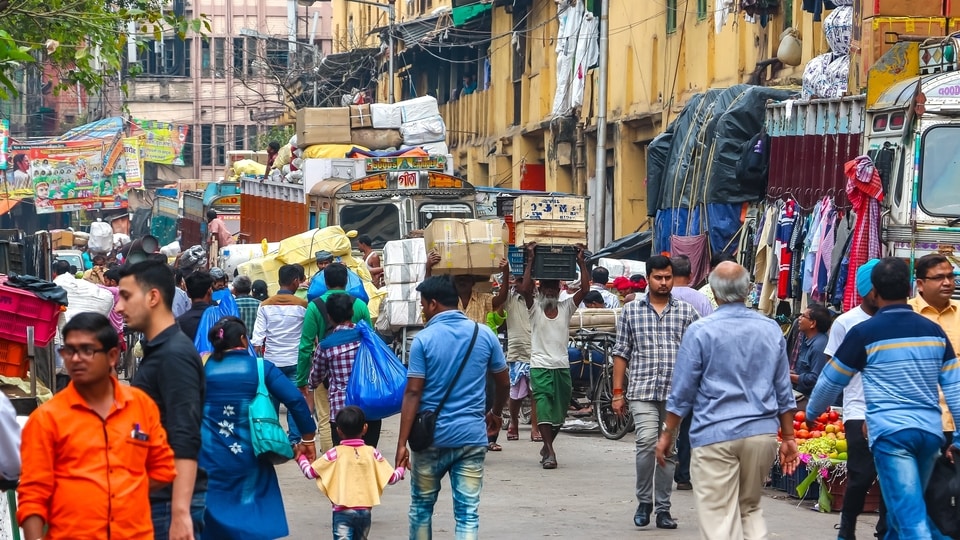
“By and large, a lot of our studies are based on Caucasians, mostly men, and even our understanding of thermal physiology has come from athletes and from armed forces, and, , the occasional plantation workers or a farmers for a short period of time. We don’t have adequate data on prolonged exposure to temperature and humidity in the actual lived environments of the poor in the global South,” said Dr Satchit Balsari, associate professor of emergency medicine at Harvard Medical School, who chaired the scientific committee of the India 2047 conference.
“The kind of condition we don’t have is prolonged exposure to temperature and humidity in the actual lived environments of the poor in the Global South,” Balsari added.
These thresholds fail to consider exposure to high daytime and nighttime temperatures in poorly insulated homes common in certain parts of India. Balsari’s team is tracking hundreds of workers in their living environments to develop what they call a “personalised heat exposure” index.
“And so a concept that we are trying to ask is to see if it’s the time to actually consider something called a personal heat exposure index. Radiologists, for example, in the hospital have a little dosimeter that they wear on their lab coats, where continuous exposure to radiation is measured over weeks to months to years. Is it time to measure people’s continuous exposure to heat and their physiological response to it [in a similar manner]? We probably need data from thousands or tens of thousands of people to eventually get a sense of what comfort limits might be in contexts where they matter most,” said Balsari.
Dr Robert Meade, thermal physiologist at Harvard TH Chan School of Public Health, explained that the 35°C wet-bulb is a theoretical limit. “If our skin is also 35 degrees, there’s no vapor gradient between our skin and the environment and therefore no ability to evaporate sweat from the skin. If we can’t evaporate sweat, we can’t lose heat, which means body temperatures can climb to dangerous levels quite quickly.”
However, Meade cautioned that upper limits for survival, whether 35°C or lower, don’t capture most of heat’s adverse effects. “In heat waves, usually you see the vast majority of deaths occur due to conditions like heart attacks and kidney injury. Even if body temperature is stable, people’s heart rate will be higher, their blood flow to their kidneys and gastrointestinal tract will be reduced.”
Balsari emphasised that the focus should be on “human flourishing” rather than mere survivability. He cited a poignant example of a street vendor who noted that while 45°C might be the threshold for health concerns in heat insurance policies, her vegetables begin decaying at 40-42°C. “They just cannot live life to their full potential when work productivity, rest, sleep are all affected by hot days and hot nights.”
The Pennsylvania State study also warned that parts of the Middle East and the Indus River Valley will experience brief exceedances of these lower thresholds with just 1.5°C warming over pre-industrial levels. Future moist heat extremes in these regions will lie outside the bounds of past human experience and beyond current heat mitigation strategies for billions of people.
Balsari warned that there should be a balanced approach to factoring acclimatization (since Indians have always been exposed to hot summers) and complacency. “We saw a very large number of deaths during Covid despite many saying that Indians or South Asians may have better immunity. The issue is similar for heat. What can we tolerate better as we are used to the heat, and where does physiological adaptability stop?”