E-Paper



Heat wave, flooding risks in Hindu Kush, forecasts ICIMOD
ICIMOD issued the forecast on Wednesday, predicting above-average rainfall across India, Nepal, Pakistan and China’s Tibetan Autonomous Region

 Prefer HTon Google


The entire Hindu Kush Himalayan region, which includes parts of India, faces temperatures up to 2°C hotter than average this monsoon season, with severe heat wave conditions already gripping the Western Himalayas and experts warning of surging flood risks across a region where three-quarters of all floods occur during summer rains.
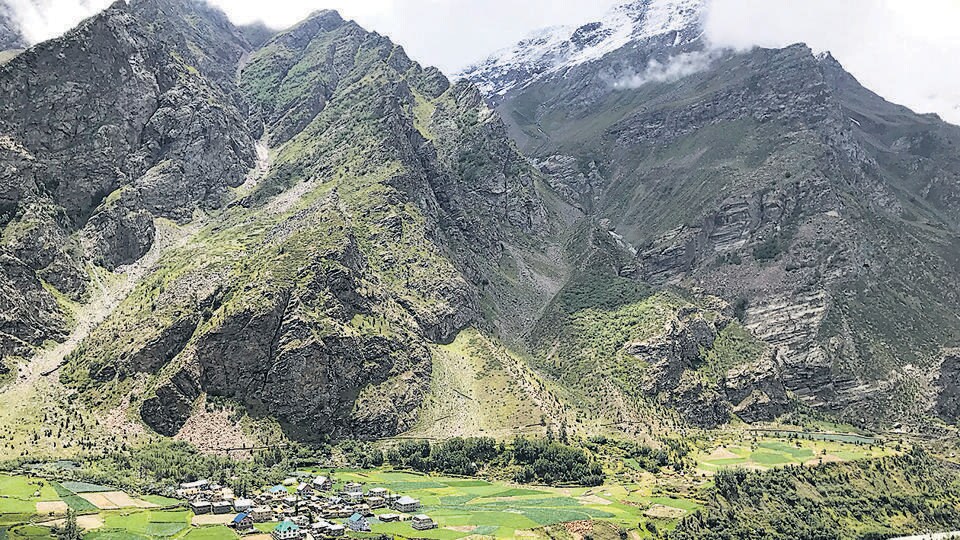
The International Centre for Integrated Mountain Development (ICIMOD) issued the forecast on Wednesday, predicting above-average rainfall across India, Nepal, Pakistan and China’s Tibetan Autonomous Region alongside the dangerous temperature spike.
Meanwhile, India’s Meteorological Department warned that heat wave to severe heat wave conditions will continue across northwest India, including the Western Himalayan region, until June 13, with some areas recording temperatures exceeding 40°C.
The combination of extreme heat and heavy rains threatens to trigger a cascade of climate disasters across the world’s highest mountain range, home to nearly 2 billion people who depend on its glaciers and rivers.
“With floods the leading cause of deaths and economic damage in the HKH, and close to three-quarters (72.5%) of all floods from 1980 to 2024 occurring during the summer monsoon season, experts warn disaster agencies and communities to brace for a possible rise in climate risks,” ICIMOD said.
The analysis indicates above-normal rainfall likely over India with normal to above-normal temperatures until September. Nepal, Bhutan, Afghanistan, Myanmar, Pakistan, Bangladesh and China face higher likelihood of above-normal temperatures during the monsoon months.
“The forecasts we’ve studied are unanimous in predicting a hotter monsoon across the entire HKH, with a trend towards higher-than-normal rainfall in major parts,” said Arun Bhakta Shrestha, senior adviser at ICIMOD.
Multiple climate threats converge
Rising temperatures combined with extreme rainfall raise risks of water-induced disasters including floods, landslides and debris flows, while having longer-term impacts on glaciers, snow reserves and permafrost, Shrestha warned.
“Lower rainfall, meanwhile, particularly in water-stressed countries such as Afghanistan, may pose risks to food and water security in a country with already extraordinarily high levels of malnutrition,” he added.
Climate change can trigger intense rainfall, permafrost degradation and glacier retreat that further trigger floods, landslides and glacial lake outburst floods — the primary cause of increasing frequency and magnitude of mountain hazards in the region.
Temperature rise combined with wetter monsoons can also raise risks of heat stress and waterborne disease outbreaks such as dengue, experts said.
Current heat wave conditions
The IMD reported heat wave conditions prevailed at many places on Wednesday, with severe heat wave conditions at isolated locations across Jammu-Kashmir, Punjab, and West Rajasthan.
Heat wave conditions affected many places over West Rajasthan, Punjab, Jammu-Kashmir, Himachal Pradesh, south Haryana-Delhi and at isolated places over east Rajasthan and south Uttar Pradesh.
Warm night to severe warm night conditions were observed in isolated pockets of West Uttar Pradesh and West Rajasthan. Warm night conditions are likely in isolated areas of Punjab, East Uttar Pradesh and Haryana.
Wednesday’s forecast warned heat wave conditions are likely across Jammu-Kashmir, Punjab, Haryana, Chandigarh and Delhi until June 14, with severe heat wave conditions at isolated areas on June 12.
Arunachal Pradesh saw marked rises in day temperatures on Wednesday, with night temperatures also above normal due to weak monsoon conditions over the region.
East Siang and East Kameng recorded maximum temperatures exceeding 40°C, whilst Lohit, Upper Siang, Namsai, West and East Siang recorded temperatures nearing 40°C.
The extreme temperatures resulted from continental easterly and northeasterly winds in lower levels, with no moisture from the Bay of Bengal due to absent favourable weather patterns. Clear skies during daytime contributed to higher solar heating.
Call for enhanced preparedness
“Given the extremely high exposure and risks in our region, we urgently need impact-based early warning systems adopted at scale, and for government and donor support to build up disaster preparedness,” said Saswata Sanyal, manager of ICIMOD’s disaster risk reduction work.
The analysis synthesised predictions from global and regional meteorological bodies including the South Asian Climate Outlook Forum, the Asia-Pacific Economic Cooperation Climate Centre, the International Research Institute for Climate and Society, Copernicus Climate Change Service and national agencies.
“The Hindu Kush Himalayas is increasingly recognised as an epicentre of not just risk but also, given the huge population sizes here, of exposure — so it’s worrying that this is also a climate-data scarce region,” said Sarthak Shrestha, remote-sensing and geo-information associate at ICIMOD.
“We need the global climate banks and knowledge partners to work with national governments to bring more state-of-the-art forecasting tools to this region, to support the level of disaster readiness that will be able to save lives and protect investments,” he added.