E-Paper



High court stays Goa land plans of which BJP MLA was ‘major beneficiary’
The high court bench of justices M S Sonak and Valmini Sa Menezes noted that Lobo, the local MLA is “one of the prime beneficiaries of the conversions and zone changes”

 Prefer HTon Google


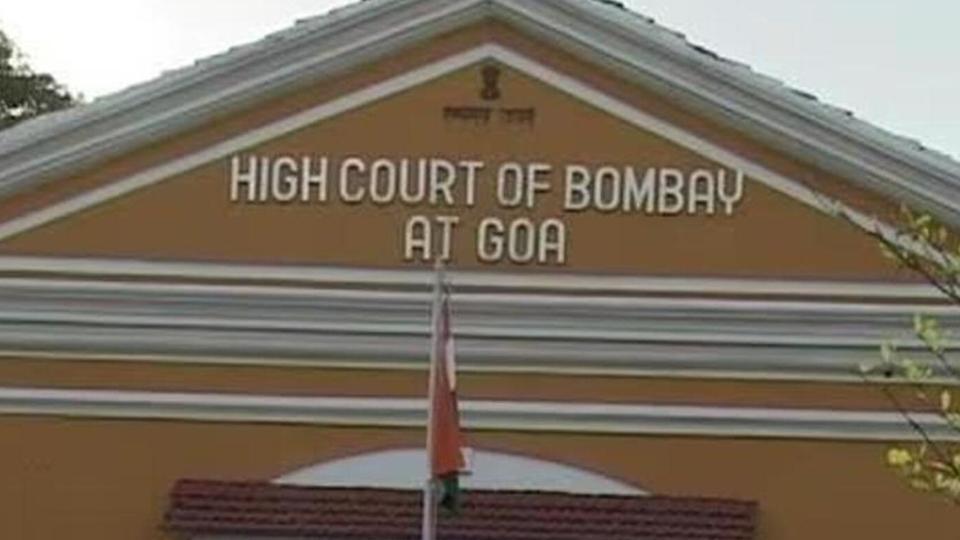
Panaji: The Bombay high court at Goa bench on Thursday stayed the operation of the Outline Development Plans (ODPs) notified for the villages of Calangute-Candolim, Arpora Nagoa and Parra that fall under Bharatiya Janata Party (BJP) MLA Michael Lobo’s constituency and directed that “no permissions, clearances, or change of zones shall be granted based on the December ODPs.”
The high court bench of justices M S Sonak and Valmini Sa Menezes noted that Lobo, the local MLA is “one of the prime beneficiaries of the conversions and zone changes” that have been brought about via the plans that included the conversion of tenanted agricultural land as well as no-development slopes for residential and commercial built-up use.
The high court noted how the state government in 2022 via the report of an expert committee severely indicted Lobo for irregularities in drafting plans during his tenure as the chairman of the North Goa Planning and Development Authority, but failed to “rectify the legalities, including several illegalities of which Mr Michael Lobo was found to be beneficiary” and instead drafted fresh ODPs that were “not significantly different from the ODPs that the expert committee had severely castigated, criticised and condemned.”
ODPs are drawn up for urbanised areas for the state and set aside detailed descriptions of what a piece of land will look like when it has been fully developed including land uses, open space networks, treatment of environmentally sensitive lands, park space, etc.
However, politically controlled planning authorities have been making arbitrary changes to benefit certain landowners by permitting large-scale changes through constantly changing maps.
“It appears that Mr Michael Lobo, whose conduct in the preparation and finalisation of the previous ODP was severely castigated, criticised and condemned by the expert committee has again emerged as one of the beneficiaries of the December ODPs. Surprisingly, the CTP’s affidavit does not refer to an arca or other details with respect to which permissions have been issued or changes of zones permitted. However, the material placed on record is sufficient to prima facie indicate that there is no substantial difference between previous ODPs and December ODPs, which the impugned Ordinance now seeks to revive,” the high court said.
A government expert committee report had blamed Lobo for making illegal and arbitrary changes to areas in his constituency via these maps.
“The balance of convenience is in favour of the grant of interim relief because otherwise, the Respondents are poised to undertake large-scale construction and development activities based on December ODPs … If interim relief is declined and large-scale constructions, development, conversions, and zone changes are allowed, the same is bound to adversely affect the villagers of five Calangute-Candolim and Arpora-Nagoa-Parra coastal villages,” the High Court said adding that if no interim relief is granted, then Lobo, “who is the major beneficiary and because of whose involvement the previous ODPs had been scrapped, would once again change the zones and convert his properties to promote haphazard development and construction activities.”
“The large tracts of these coastal villages fall within the highly eco-sensitive areas under the Environment Protection Legislation… Irreparable prejudice will visit the eco-sensitive areas in the five coastal or semi-coastal villages if throwing the precautionary principle to the winds if large-scale construction, development, conversions and zone changes are allowed based on the December ODPs,” the High Court said.
“Nothing was placed on record by the State to show the gross illegalities and the instances of manifest arbitrariness in converting agriculture-tenanted lands of 1.60 lakh square metres, about 95,610 square metres of non-developable slopes, and thousands of square metres of mangrove areas, low-lying paddy fields, etc. Just because of some changed equations, expert review committee reports cannot now be attempted to be pushed under the carpet or downplayed to introduce the same ODPs, if not more drastic ones,” the high court also said.
The matter will be heard on July 8.