
 E-Paper



SC raps hijab petitioners over deferment plea, issues notice
A bench of justices Hemant Gupta and Sudhanshu Dhulia observed that the petitioner’s request for the adjournment could be a pretext for “forum shopping”

 Prefer HTon Google


The Supreme Court on Monday pulled up the petitioners in the Karnataka hijab ban cases for seeking an adjournment even as it issued a notice to the state government, which sought a swift hearing and urged the court to admit the matter. In March, the Karnataka government opposed the urgent listing of the petitions.
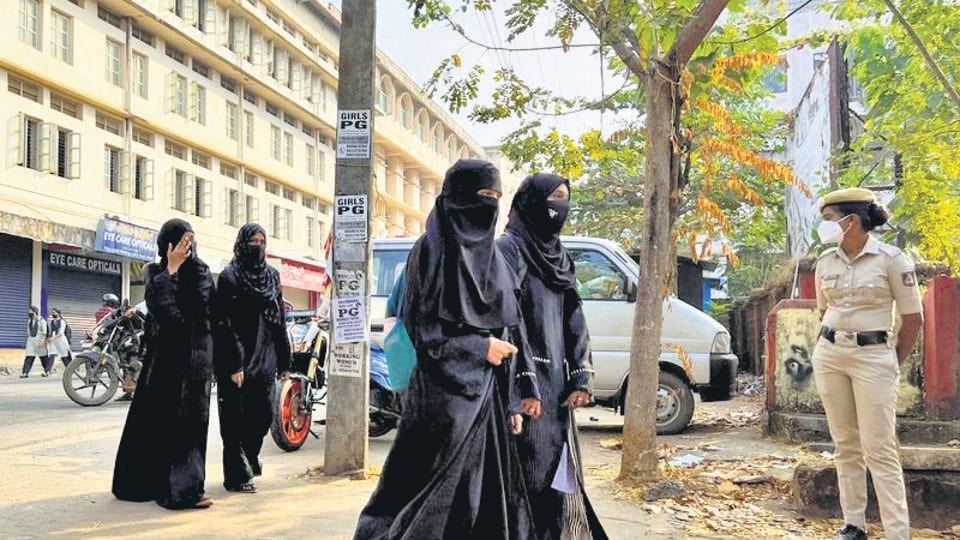
A bench of justices Hemant Gupta and Sudhanshu Dhulia observed that the petitioner’s request for the adjournment could be a pretext for “forum shopping” or an attempt to take the matter to a different bench and another combination of judges.
“This is not acceptable. We will not permit forum shopping. You only wanted urgent listing and now you are asking the hearing to be adjourned when it is finally listed. What’s this? We will not allow this,” the bench told a lawyer appearing in the bunch of 24 petitions arising out of a March 15 judgment by the Karnataka high court.
The high court held that the wearing of a hijab does not form a part of essential religious practice in Islam and that the state government is authorised to prescribe uniforms in its educational institutions.
The petitions included those filed by girl students, women’s rights groups, lawyers, activists, and Islamic bodies.
As soon as the matter commenced on Monday, the lawyer requested for an adjournment, saying the cases were suddenly listed and other senior counsel in Karnataka could not travel to Delhi at short notice.
The bench replied: “It takes only two-and-a-half hours to come to Delhi for Karnataka. We will not allow this. Come tomorrow and argue.”
At this point, Solicitor General Tushar Mehta intervened on behalf of the Karnataka government to point out that the state’s advocate general is present in the court and he too travelled from Karnataka to the national capital.
Opposing the plea for deferring the matter, Mehta said he has a list of dates to show the petitioners mentioned the matter six times since March for an immediate hearing whereas they now want it delayed.
“We have a request to make if this court may consider it. They want an adjournment. We are requesting this court consider issuing a notice to the state. Only a point of law needs to be argued and we can argue the case on the next date. This way, the first stage will be over by the time the matter is heard next.”
Accepting Mehta’s suggestion, the bench issued the notice to the Karnataka government and listed the matter on Monday next. The court also issued a notice on the petitioners’ application for staying the high court judgment.
The petitioners’ lawyer, at this juncture, said the cases can be taken up after two weeks if the notices are being issued but the bench turned down the plea.
“You come and argue on Monday and we will then see if it requires a lengthy hearing. The Solicitor General has already said he does not need to file a counter and only the points of law need to be argued,” the bench said.
A full bench of the high court on March 15 upheld the ban on the headscarves imposed by the state government in schools and colleges through a February 5 executive order, which led to protests and counter-protests across the state and in several other cities across the country.
The high court’s three-judge bench, headed by chief justice Ritu Raj Awasthi, held that the Quran does not mandate the wearing of hijab for Muslim women and that the attire “at the most is a means to gain access to public places” and a “measure of social security”, but “not a religious end in itself”.
Dismissing a bunch of petitions filed by some girl students pressing for the wearing of hijab as their religious right protected under the Constitution, the high court also favoured a “speedy and effective” investigation into the stoking of the hijab controversy in Karnataka, suspecting some “unseen hands at work to engineer social unrest and disharmony in the state”.
In its judgment, the high court upheld the state government’s authority to prescribe uniforms in educational institutions under the Karnataka Education Act while declaring that “adherence to dress code is mandatory for students”.
Hours later, Niba Naaz filed an appeal in the Supreme Court, arguing that the high court erred in creating a dichotomy of freedom of religion and freedom of conscience wherein the court has inferred that those who follow a religion cannot have the right to conscience.
Aishat Shifa, another petitioner before the high court, also filed an appeal in the Supreme Court.
The petition by students of PU College in Udupi – the epicentre of the original protests seeking to wear the hijab – was mentioned for an urgent hearing on March 16 when the court said it would look into the plea but did not set down the cases for hearing. Subsequently, other petitions and applications were moved before the top court against the verdict.
On March 24, when the petitioners requested a hearing, Mehta opposed the plea. “What is this? What is so urgent that they are repeatedly mentioning this matter?”
The petitioners’ lawyers requested former Chief Justice of India (CJI) NV Ramana at least six times to hear these cases but to no avail. On two separate occasions in March, Ramana declined to assign a date of hearing, observing that cases pertaining to the ban on hijab have nothing to do with school examinations and that the matter should not be sensationalised by the petitioners.
The hijab ban cases were finally listed on Monday, the first working day of new CJI Uday Umesh Lalit. Lalit, on the administrative side, ordered the listing of hundreds of fresh cases for preliminary hearings, including the hijab ban matter, before appropriate benches.



