E-Paper



Hijab case hearing: Courts not equipped to interpret Quran, says Supreme Court
The Supreme Court is not going to interpret the Quran since it may not be equipped to do so, the top court observed on Thursday while hearing the Karanataka hijab row cases.

 Prefer HTon Google


The Supreme Court is not going to interpret the Quran since it may not be equipped to do so, the top court observed on Thursday while hearing the Karnataka hijab row cases, even as the petitioners demanded that the matter be referred to a Constitution bench owing to its seriousness.
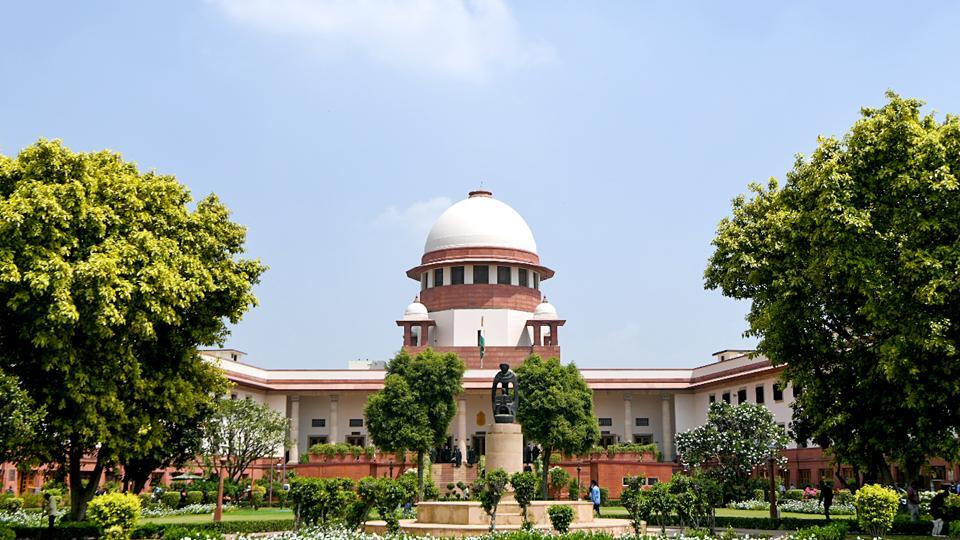
“We are not going to interpret the Quran...we may not be equipped and this is what several lawyers have also argued before us. Courts are not equipped to interpret,” remarked the bench of justices Hemant Gupta and Sudhanshu Dhulia when the issue of hijab being a religious tenet came up.
Also Read: Hijab ban order led to 17,000 girls skipping exams in Karnataka, advocate tells Supreme Court
During the over four-hour-long hearing, the court repeatedly pointed out that the Karnataka high court had to decide whether hijab is mandatory in Islam or not since several petitioners premised their case on hijab being an essential religious practice.
“It was petitioners who asked that question. Several writ petitions before the high court were only on the ground that it (hijab) is an essential religious practice. The difficulty arises when you raise an argument and then complain that the court ruled on it... nobody stopped you from raising other grounds which you are now raising here,” the bench told a bunch of lawyers who argued against the March 15 high court judgment that ruled the wearing of hijab is not mandatory in Islam.
On Thursday, senior counsels Kapil Sibal, Colin Gonsalves, Meenakshi Arora, Jayna Kothari, AM Dar and advocate Shoeb Alam argued for petitioners and other intervenors, criticising the high court judgment for reportedly focussing only on the religious aspect of hijab while ignoring that the prohibition was discriminating on the basis of religion and gender, besides trampling upon identity, dignity and privacy of girl students.
Emphasising on the right to privacy and the Supreme Court verdict on the right to privacy, Sibal and Alam pointed out that hijab is a part of persona and identity for several girls, and that a student does not forego fundamental rights when she steps inside the school. Sibal said that the matter should be referred to a larger bench.
Alam, reading out from the right to privacy judgment, pressed that privacy attaches to a person and not to a place. “The impact of the state government’s GO (of February that mandated uniform) is that I will give you education when you surrender your right to privacy, dignity and self-determination. This can never be sustained...The State has an affirmative obligation and duty to facilitate education,” he argued.
While Arora underlined that the entire aim of education is to promote diversity and tolerance, Dar took the court through the verses of the Quran in an attempt to rebut the high court’s reasoning that the wearing of hijab is not mandatory, but just directory. Gonsalves, on his part, asked: “If a turban is allowed in school, why not the hijab?”
Senior advocate Dushyant Dave will commence his arguments on behalf of one of the petitioners on Monday. Asked to conclude quickly, Dave told the two-judge bench that it should not have heard the case at all.
“This bench should have referred it to a larger bench. Your lordships should not have heard it. And if you are hearing it, you cannot restrict us to time. This is far more serious than prescribing uniform...The state has chosen not to file a counter. They are so sure about it that they have taken it for granted. It suits the State not to file a counter [affidavit] in this case,” said Dave.