Tamil Nadu cannot take the position that Hindi will never be taught on its soil, the Supreme Court said on Thursday while refusing to recall its earlier direction requiring the state to identify land in every district for setting up Jawahar Navodaya Vidyalayas.
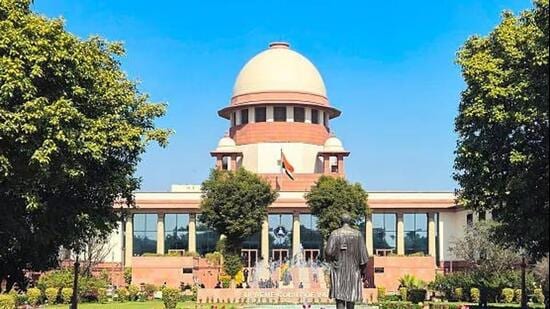
A bench of justices BV Nagarathna and AG Masih, while urging Tamil Nadu and the Centre to resolve their differences over the schools through dialogue, gave the state three months to comply with its December 15, 2025 order and identify suitable land for the proposed schools.
‘Change your mindset’
The exchange came during the hearing of Tamil Nadu’s plea against a Madras High Court direction to establish Navodaya Vidyalayas in every district. The state has resisted the schools, among other reasons, on the ground that their three-language model, including Hindi, conflicts with Tamil Nadu’s two-language policy.
Also read: Supreme Court directs ED, Delhi Police to submit details of cases against Unitech directors
“You have to change your mindset. It can’t be that Hindi will not be taught on the soil of Tamil Nadu,” observed the bench, as it also sought to dispel the state’s apprehension that accepting the central scheme would amount to surrendering its educational autonomy.
{{/usCountry}}“You have to change your mindset. It can’t be that Hindi will not be taught on the soil of Tamil Nadu,” observed the bench, as it also sought to dispel the state’s apprehension that accepting the central scheme would amount to surrendering its educational autonomy.
{{/usCountry}}“We are saying in addition to all the good things you are doing in your state, having something in addition will not bring down your standards. Coming from Delhi will not lower the standards of Chennai. People in Chennai should not alienate Delhi and vice versa,” it said.
What Tamil Nadu said on school order
The court’s intervention came after senior advocate Jaideep Gupta, appearing for Tamil Nadu, argued that the state’s opposition was not merely a matter of mindset but concerned its constitutional authority to frame education policy.
Gupta said the state was not opposed to Hindi as such but objected to what he described as the insistence on Hindi as the predominant language in the Navodaya system. He also argued that the central scheme was optional and that the court could not issue a mandamus compelling a state to adopt a particular policy.
“This kind of unification is not the purport of the Constitution. There is an adamancy that Hindi must predominate,” Gupta said.
Court's response
The bench, however, maintained that the state could continue with its own educational institutions and policies while allowing another model of school to operate in Tamil Nadu. “Today it is education, tomorrow it will be something else. You have to relax this rigidity in your mind,” said the bench, stressing the need for cooperative federalism.
Also read: ‘How can there be a blanket ban?’ Delhi HC to cops over protest refusal at Jantar Mantar
The court made clear that it was not directing Tamil Nadu to immediately acquire land or committing the state to a particular expenditure. It said its December 2025 direction only required the state to identify suitable land in its government plan. “Comply with our earlier order. We are not asking you to acquire land. We are only asking to identify,” it added.
In its 2017 order, the had held that the proposed schools did not violate Tamil Nadu’s law on Tamil learning and that a blanket refusal to facilitate them deprived students of the choice of accessing the central scheme.
Tamil Nadu then approached the top court, contending that education being in the Concurrent List did not mean the state could be compelled to adopt an optional central policy, particularly when the Navodaya model followed the three-language formula.
In December last year, the Supreme Court directed the state to identify the land required for establishing the schools in every district within six weeks. Tamil Nadu subsequently sought recall of that order, citing, among other things, the change in the state government and the lack of progress in discussions with the Centre.
Three-month deadline
The bench declined to recall the direction on Thursday. At the same time, it gave the state another three months to comply and directed representatives of the Centre and state to continue discussions on the policy and its implementation.
The language question figured prominently in those discussions. The bench suggested that the state’s concerns could be addressed through negotiations and even indicated that Tamil could be accommodated in the language arrangement.
“If you want Tamil as a second language, it is a matter which can be considered,” said the bench, asking the state and Centre to engage at the level of their respective education secretaries.
Gupta said discussions had already taken place but the Centre had remained firm on Hindi. He nevertheless agreed to another round of consultations. The state also raised a financial objection, claiming that the Centre had failed to release funds under existing education schemes and that Tamil Nadu could not take on additional financial liabilities.
Additional Solicitor General KM Nataraj, appearing for the Centre, countered that the State’s primary obligation under the Navodaya scheme was to provide land, while construction and other expenditure would be borne by the Centre.
The Centre also submitted that the schools were at a nascent stage and construction would take several years, leaving sufficient time to resolve the language-related differences. The bench said the financial and language issues could be discussed separately and emphasised that the establishment of Navodaya schools would not prevent Tamil Nadu from continuing its own education system.
“Ultimately everybody must work together,” the bench said.
The state, however, maintained that cooperative federalism could not operate in only one direction and that the court should not enter the policy debate.
The bench responded that the central scheme should not be viewed as an attempt to displace Tamil Nadu’s educational model.
“We are not alienating you and we are not alienating them. Some more type of schools come in your state also which will only enhance the high standard which we are aware of. This is not going to lower your standards. It will provide more opportunity,” said the bench.
In its order, the bench recorded Tamil Nadu’s explanation that the change in government and lack of material progress in discussions with the Centre had contributed to its non-compliance with the December 2025 direction.
“Be that as it may,” said the bench, directing the state to comply with the earlier order insofar as identification of land necessary to establish a school in each district was concerned.
The matter has been posted for December 14, by when the state and Centre are expected to have had further consultations.