
 E-Paper



'Pillars from old temple...': What ASI survey said about Gyanvapi mosque cellars in Varanasi
ASI report says there existed a large Hindu temple prior to the construction of the existing structure in the 17th century

 Prefer HTon Google


The district court in Varanasi on Wednesday allowed the Hindu side to offer prayers in the southern cellar of the Gyanvapi mosque.
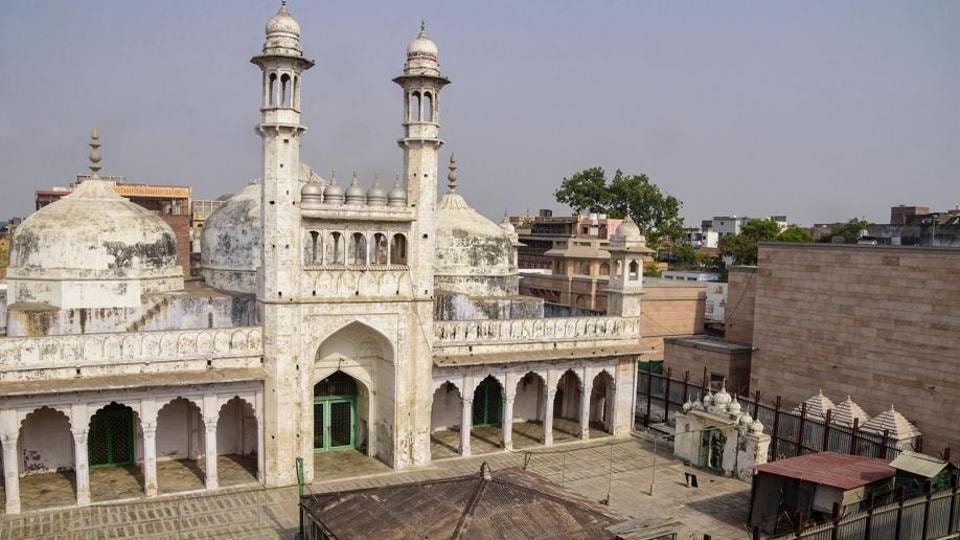
The court directed the district magistrate to arrange for the prayers and a priest nominated by Shri Kashi Vishwanath Temple Trust.
The Muslim side, represented by the Anjuman Intezamia Masajid Committee, said they would challenge the order in the higher court.
The district court issued its order a day following a plea by four Hindu women to the Supreme Court, requesting an excavation and scientific survey of a sealed portion of the mosque. This request came in response to an Archaeological Survey of India (ASI) report, which concluded the presence of a significant Hindu temple predating the mosque's construction.
Here's what the ASI report said about the Gyanvapi mosque:
- Citing its in-depth study of the existing structures, and alluded to features and artefacts recovered from the site, the ASI in its report concluded that “there existed a large Hindu temple prior to the construction of the existing structure” in the 17th century.
- “Based on scientific studies/ survey carried out, study of architectural remains, exposed features and artefacts, inscriptions, art and sculptures, it can be said that there existed a Hindu temple prior to the construction of the existing structure,” stated the ASI report, relying on the tools it used.
- The report declared that the western wall, which is made of stones and decorated with mouldings, is remaining part of an earlier Hindu temple.
Also Read | Citing ASI report, VHP asks Muslim side to hand over Gyanvapi structure to Hindus
- It cited existing architectural remains, decorated mouldings on the walls, “karma-ratha” and “prati-ratha” (something to depict Shiva and Parvati) of the central chamber, a large decorated entrance gate with ornamental skirting on the eastern wall of the western chamber, a small entrance with a mutilated image on the door jamb, birds and animals carved for decoration inside and outside, to suggest that the western wall is the remaining part of a Hindu temple.
- The ASI said that its officers studied the pillars and pilasters used in the existing structure systematically and scientifically before holding that the parts of the pre-existing temple were used in the present structure.
- Officials said that during the scientific investigations/survey a number of Sanskrit and Dravidian inscriptions were noticed on the pre-existing structure and existing structure.
- "Most of these inscriptions which can be dated from 12th to 17th century have been reused in the structure, suggesting that the earlier structures were destroyed and their parts were reused in construction/ repair later,” the report said.
- The report pointed out that sculptures of Hindu deities and carved architectural members were also found buried under the dumped soil in one of the cellars.
- “Pillars from earlier temples were reused while making cellars in the eastern part of the platform. A pillar decorated with bells, niches for keeping lamps on all four sides, and bearing an inscription of Samvat 1669 is reused in cellar N2,” said the report.


