
 E-Paper



Hindutva is neither Left nor Right: RSS general secretary Hosabale
Hosabale was speaking at the launch of RSS leader Ram Madhav’s book ‘The Hindutva Paradigm: Integral humanism and the quest for the non western world’


The Rashtriya Swayamsevak Sangh has never termed itself rightist, Dattatreya Hosabale, said on Friday. “Many of our ideas are like leftist ideas,” the RSS general secretary added.
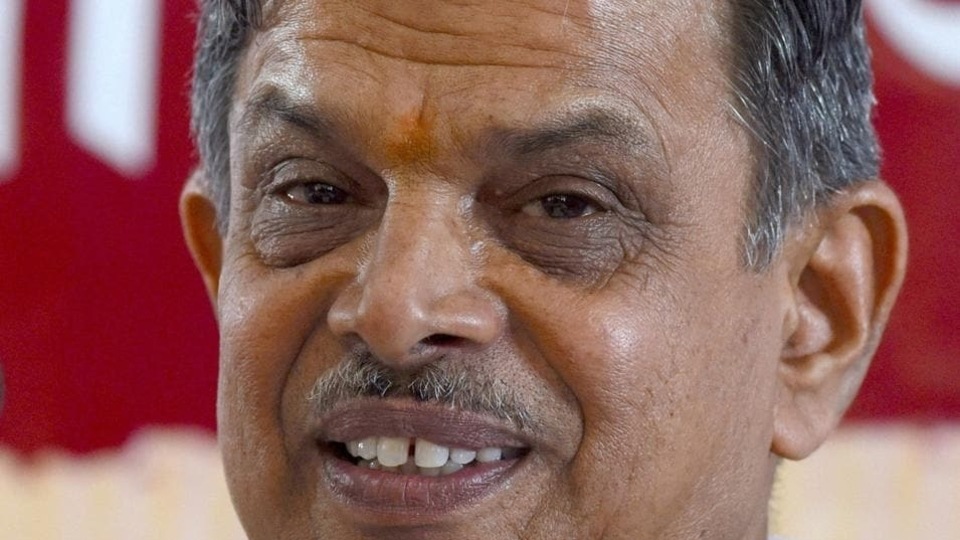
Hosabale was speaking at the launch of RSS leader Ram Madhav’s book ‘The Hindutva Paradigm: Integral humanism and the quest for the non western world’. “The world had gone to the left, or was forced to go left and now the situation is such that world is moving towards the right, so that it’s at the centre. That is what Hindutva is all about, neither left, nor right,” he said.
The essence of Hindutva is to take the best from every corner and mould it to suit your needs, surroundings and life, Hosabale added. And there is space for ideas of both sides, the left and the right, since these are “human experience”.
He also spoke about colonial remnants that continue to persist despite their irrelevance. To buttress his argument, he quoted the Chief Justice of India’s recent comment about the Indian judicial system not being fit for the country.
CJI NV Ramana said last month: “Very often our justice delivery poses multiple barriers for the common people. The working and the style of courts do not sit well with the complexities of India. Our systems practise rules being colonial in origin may not be best suited to the needs of Indian population. The need of the hour is the Indianisation of our legal system.”
Hosabale also underlined the importance of cultural cohesion for longevity of nations. He cited the examples of how Germany reunited with the fall of the Berlin Wall and how the USSR disintegrated. “Any forceful division or unification does not sustain, culture is the basis for that,” he said.
Speaking on his book, Madhav said it is not anti-West world view, but an Indian one. “A post-Covid world order, based on new principles, is going to take shape in the next decade or so. In this new period of transition, we should we able to transfer our wisdom.”
Making a case for being open to new ideas, he added: “We should continue to accept and implement the ideas we got from outside, but there are some ideas that this land can also contribute and we must turn to them.”


