
 E-Paper



How G20 expert group chalked out blueprint to boost multilateral development banks
Singh said that the response to these recommendations had been far more positive than he had expected, but also acknowledged that this was work in progress.

 Prefer HTon Google


When NK Singh was appointed the co-convener of the G20 independent expert group to reform and strengthen multilateral development banks (MDBs), along with his old friend, the former American treasury secretary Lawrence Summers, they were handed what appeared to be an impossible job. In less than five months, they had to present a road map for one of the complex questions of the times, in time for the G20 finance ministers meeting in July which would then feed into the leaders’ summit that commences on Saturday.
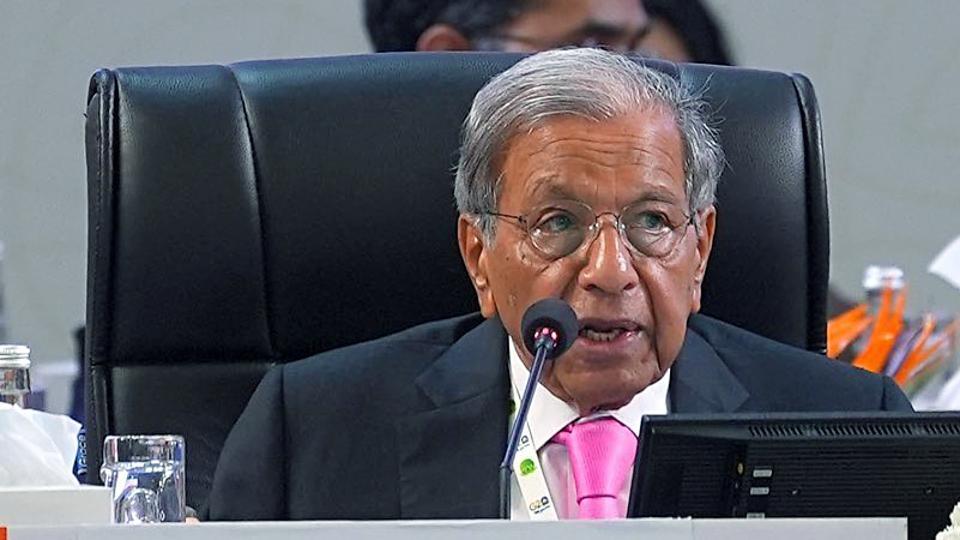
But Singh, Summers and their fellow members have managed to deliver a blueprint that both speaks of expanding the mandate of MDBs, particularly the World Bank Group, and expanding the resources available to the institutions to deal with the expanded mandate. And they have done so with the widest possible consensus at a particularly divisive moment in international politics.
In a conversation with HT on Friday morning, Singh said, “What was impossible now looks more possible.” He referred to the submission of the Volume 1 of the group’s report and the impending submission of the Volume 2 of the report to the finance ministers during their final meeting under the Indian presidency in Marrakesh in October.
The first volume, the recommendations of which are expected to find a reflection in the Delhi declaration, focuses on three themes. “Basically what we have said is that the lending capabilities of MDBs would be tripled; their mandate would be expanded from ending extreme poverty and boosting shared property to include issues of global public goods (GPGs); and that, besides the International Development Association (IDA) which is for concessional finance and International Bank for Reconstruction and Development (IBRD), which is for normal finance, the window would be expanded with the creation of a special mechanism which can garner resources in more innovative ways, with much greater participation of private capital to address GPGs and trans-boundary issues.”
Singh said that the response to these recommendations had been far more positive than he had expected, but also acknowledged that this was work in progress. In Marrakesh, the group will elaborate on leveraging private capital, suggest innovative mechanisms to mitigate risks vis a vis the new lending mechanisms, and recommend immediate steps that can be taken in low income and some middle income countries where poverty has gone up and prosperity has gone down.
In the context of the upcoming leaders’ summit, Singh indicated that paragraph 40 of the Joe Biden-Narendra Modi joint statement at the end of Modi’s “outstanding” state visit to the US in June was a turning point. The US and India agreed to strengthen MDBs, and alluded to the need for them to evolve their “vision, incentive structure, operational approaches and financial capacity so that they are better equipped to address a wide range of SDGs and trans-boundary challenges including climate change, pandemics, conflicts and fragility”.
More significantly, in that statement, the two countries said that by the time of the Delhi G20 Summit, the US and India will “work together to secure G20 commitment to create a major new dedicated pool of funds at the World Bank to deploy concessional lending for global challenges, and to enhance support for crisis response in International Development Association recipient countries”.
Singh said that he expected this to happen during the summit, enabling the implementation of the group’s recommendations.
Referring to recent pieces that both Summers and he have written, together and separately, Singh said, “The world is indeed on fire. Urgency is the name of the game. I expect a strong push on all major issues of reform of MDBs. It will certainly find positive mention in the Delhi declaration. I expect that the adequacy of finance and resources to address both traditional issues of poverty and emerging issues will find suitable and appropriate recognition.”
But Singh said that the only way this could happen was if there was additional resources, not just with the existing resource basket. More lending can happen through multiple instruments, including by fuller harnessing of the balance sheet which will entail the fullest implementation of the capital adequacy framework report, recalibrating the equity-loan ratio, and the deployment of callable capital and hybrid capital to substantially release more funds.
Along with this, what needed to be done in the immediate context, Singh emphasised, was a “a firm commitment” on a significant large volume of additional resources to augment the lending capacity of banks; looking at needs of LICs where poverty had increased; significantly augmenting IDA’s concessional financing (which is meant for poorer countries); ensuring better “operating model, enhanced efficiency and balance sheet optimistisation” of banks; and recapitalisation.
Asked how the group managed to avoid the pitfalls of geopolitics, Singh said they chose not to get mired in the current uncertainties of geopolitics, a domain that the group could not in any manner shape or alter developments. “Within the limitations of these uncertainties, we sought to build consensus to address priorities of a world on fire”.
On India’s G20 presidency itself, Singh, who has a unique vantage point of witnessing Indian diplomacy and economic policymaking from the inside for over five decades, said that India had historically played an important role as a “consensus builder, a voice of south, a reconciler of contradictions”. And the presidency was a continuation of that historic role, as India sought to harmonise contradictions and enhance the reach of the global south. From pushing for African Union’s inclusion to the group to expanding the basic mandate of the MDBs to address new and old challenges, India’s presidency, Singh said, has been both new and unique.


