
 E-Paper



How NBAIR walked us to food safety on six legs
The upcoming Sunday— October 19th— marks the 33rd Foundation Day of the ICAR National Bureau of Agricultural Insect Resources (NBAIR)

 Prefer HTon Google


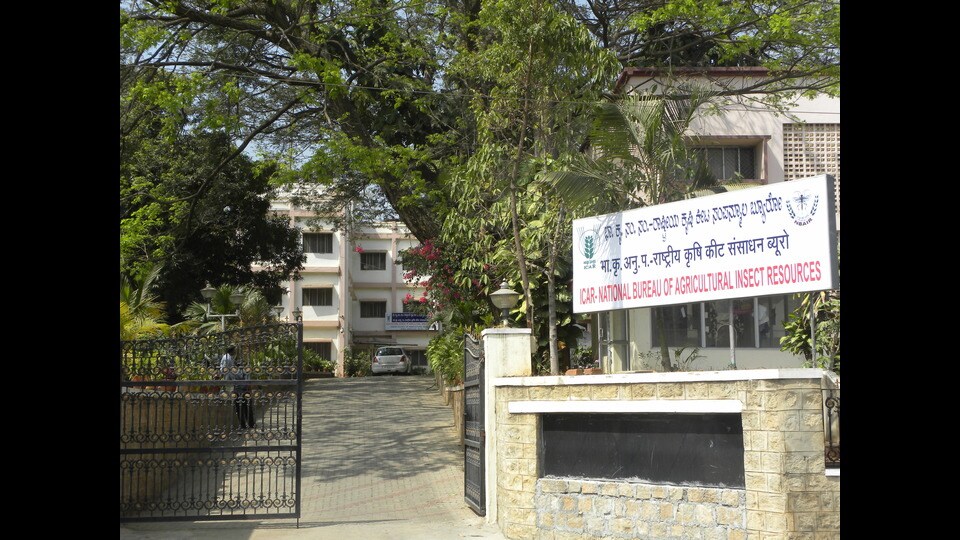
The upcoming Sunday— October 19th— marks the 33rd Foundation Day of one of Bengaluru’s pre-eminent, yet little-known, scientific institutions, the ICAR National Bureau of Agricultural Insect Resources (NBAIR). Speaking at an event to commemorate the occasion last week, Dr Chandish R Ballal, NBAIR’s former director, and its only woman director to date, stressed the need for India to urgently develop its own Red List for native insect species facing extinction risk, so that efforts towards conserving them may be initiated. “The tragedy,” she said, “is that we have so many insects that haven’t even been identified yet, let alone classified. We are losing entire species before we are even aware of them, or their potential to help us in biological control of agricultural pests.”
Through the ages, most agricultural pesticides were inorganic compounds – derivatives of copper, arsenic, mercury and other elements, or toxic plant extracts like nicotine. It was only in the 1920s, when resistance to inorganic pesticides became widespread, that biological control, or the control of insect pests using other insects, emerged as an alternative. Biological control (or biocontrol) was not a new idea – the practice was first reported in a 1700-year-old Chinese text – but the term itself was coined in 1919, by American entomologist Harry Scott Smith. Still, the idea was not pursued with urgency until the 1962 publication of “Silent Spring”, a damning account of the hitherto unrecorded environmental damage caused by the wonder insecticide, DDT, so effective during and after WWII in controlling the spread of insect-borne diseases like malaria and typhus. The book was written by American marine biologist Rachel Carson.
In 1957, just a few years before DDT’ s fall from grace, the Commonwealth Agricultural Bureaux (CAB), founded in London in 1910 with a brief to fight “one of the enemies of mankind” – insects that caused disease in humans, animals, and crops – opened its first station in India. Like so many scientific institutes of the time, CAB chose to locate the Commonwealth Institute for Biological Control (CIBC) in Bengaluru. Its founder-director was Dr Vakettur Prabhakar Rao, the inspirational entomologist often referred to as the Father of Biological Control in India. Renowned agricultural scientist Dr TM Manjunath, who joined CIBC in 1961, recalls, “No one had heard of ‘biological control’ then – people thought the acronym stood for Commonwealth Institute of Birth Control, which the government was pushing at the time.”
CIBC’s golden years, funded largely by America’s PL-480 program, which allowed India to pay in rupees for food grains imported during the food shortages of the 50s and 60s, began to decline in the mid-70s, because of restrictions on the PL-480 programs. In 1988, CIBC was shut, and its scientific facilities handed over to ICAR (Indian Council of Agricultural Research), an autonomous body under the government of India. In 1993, it took on new life as the Project Directorate of Biological Control. Since 2014, it has been called NBAIR.
Over the last 32 years, NBAIR has rendered sterling service to the Indian farmer – collecting and maintaining pest colonies for study; identifying and conserving colonies of natural enemies to supply to farmers and other research institutes across the world; inundating environments with predators and parasitoids in the event of disease outbreaks; swinging into action when an alien invasive pest gets past the strict protocols at the country’s ports of entry; classifying new insect species; maintaining a well-catalogued library of native insects; creating extensive databases on pests and beneficial insects on their website, and much more. The bureau’s public outreach programs include the National Insect Museum at the original Hebbal campus, and the pollinator garden at the Yelahanka campus. They also organise an annual Biocontrol Expo (happening this year on Sunday 19th October) and the rather sweetly named Beetle Mania festival.
(Roopa Pai is a writer who has carried on a longtime love affair with her hometown Bengaluru)


