Pakistan’s two crucial arguments didn’t work at the International Court of Justice (ICJ) against an Indian appeal to save Kulbhushan Jadhav, an alleged spy sentenced to death.
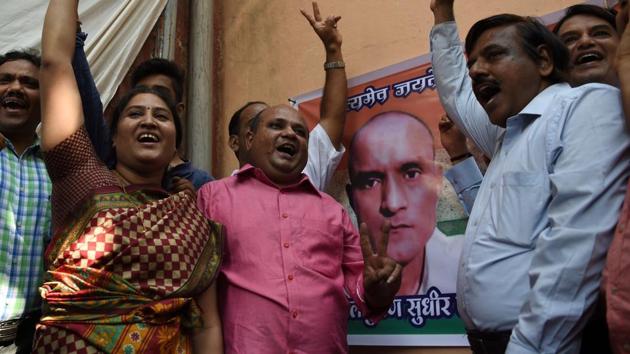
The Hague-based court ordered Pakistan on Thursday to stop the 46-year-old former Indian naval officer’s execution until the judgment is out.
“The order was along expected lines. But two aspects of the order are noteworthy,” said Shashank Kumar, a Geneva-based lawyer who had worked with two judges of the international court.
India went to the ICJ with the plea that an innocent man’s life is in grave danger as Islamabad didn’t respond to 16 requests for consular access after a Pakistani court convicted him on April 10 of spying.
The ICJ was not convinced with Pakistan’s argument that there was no urgency because Jadhav’s execution date was not fixed. The Pakistani counsel said legal recourse is available for Jadhav and it will take at least 150 days before he exhaust the options to appeal for clemency.
Pakistan’s second argument failed too. It said a 2008 bilateral agreement exempts cases related to national security.
“The ICJ did not see the agreement between the countries as excluding its prima facie jurisdiction in this case,” Kumar said.
{{/usCountry}}“The ICJ did not see the agreement between the countries as excluding its prima facie jurisdiction in this case,” Kumar said.
{{/usCountry}}India contended that Article 120 of the United Nations Charter says UN organ shouldn’t rely on treaties not registered with the secretariat of the world body. The ICJ is the judicial arm of the UN.
So, rather than the bilateral pact, the court gave precedence to the Vienna Convention on Consular Relations of 1963, a multi-nation treaty that includes India and Pakistan as signatories.
Besides, Jadhav’s trial in a military court “flouted all norms of international relations”.
“Why did Pakistan use a military court and didn’t allow consular access to India even after 16 requests. These questions beg answers,” an official in New Delhi said.
Thursday’s court order brought temporary reprieve, but efforts to secure Jadhav’s release will require navigation through tense bilateral ties.
“The easy part of the case is over ... the court will now consider in detail many of these issues during the merits. A reversal of Jadhav’s conviction and his release, the relief requested by India, is far from a foregone conclusion,” Kumar said.