E-Paper



ICMR starts second all-India sero survey; results expected in September
The results of the sero survey to detect the presence of Covid-19 antibodies in the general population are expected by September-end.

 Prefer HTon Google


The Indian Council of Medical Research (ICMR) has begun the second round of its coronavirus disease (Covid-19) sero survey to determine how many more Indians have been exposed to the infection since the first such exercise was conducted in May during the nationwide lockdown.
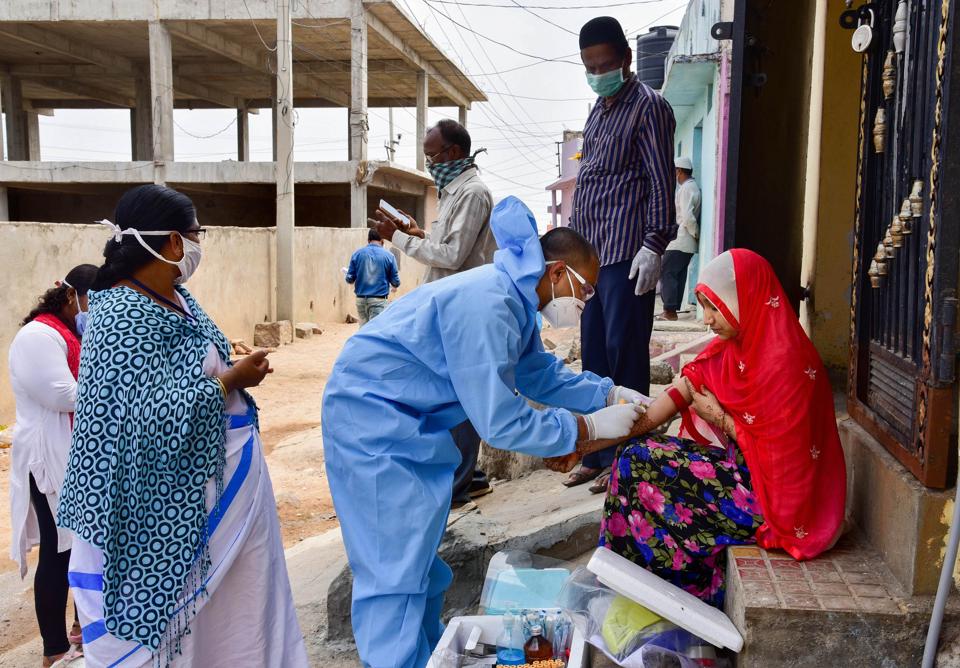
The results of the sero survey to detect the presence of Covid-19 antibodies in the general population are expected by September-end.
The first sero survey, which was conducted by ICMR along with National Centre for Disease Control, state health departments and the World Health Organisation (WHO) had shown pan-India prevalence of Sars-Cov-2, the virus that causes Covid-19, at 0.73%.
Also Read: Vaccine coverage of at least 50% needed
Close to 24,000 samples will be collected and tested from the same 69 districts in 21 states that were covered in the first sero survey. The sampling has already begun, with many states finishing sample collection and the others in various stages of completing the process.
“We have from ICMR embarked on the second national serosurvey, and it is also a work in progress, and should be completed, hopefully, by the first week of September...Most of the sero surveys are looking at antibodies, and other details like neutralizing antibodies, T-cell responses etc. are not being studied in these large sero surveys,” said ICMR director general Balram Bhargava.
The blood samples for the sero survey will be tested for the presence of Immunoglobulin (IgG) antibodies against Sars-CoV2.
Also Read: In race for vaccines, rich nations bag biggest deals
Sero surveys are important also to determine whether the disease has entered the community transmission stage
“This Phase II sero survey is a follow up of the first survey, and the process is a repeat of what was done in May when movement of people was restricted. We have to see how much difference has lifting of lockdown made to the disease prevalence in the country. Same areas/clusters will be covered this time also, but samples will be lifted of different people,” said an official from ICMR, requesting not to be identified.
ICMR’s National Institute of Epidemiology in Chennai is the nodal agency to oversee the survey and will be processing samples, and analyzing the results.
Like in the previous exercise, this survey is designed as a cross-sectional survey of adults aged 18 years or more from 21 states, wherein the districts were categorized into four strata according to the reported Covid-19 cases per million population (zero, low: 0.1-4.7, medium: 4.8-10 and high: >10).
The focus, say some experts, must not be merely on detecting antibodies in the population. “Even if you get to know people have developed antibodies, it is not good enough; what is important is to know the quality of antibodies and to determine whether people will get immunity against the disease in the long run or not,” said Dr Lalit Kant, former head, epidemiology and communicable diseases, ICMR.