PANAJI: Chief Justice of India B R Gavai on Saturday said that the acts of several district administrations to unilaterally bulldoze the homes of those accused of crimes struck at the very core of the idea of rule of law and the constitutional concept of separation of powers.
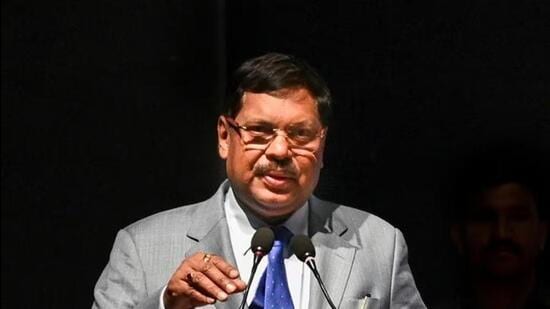
Speaking at a felicitation function organised by the Goa High Court Bar Association, the Chief Justice said that it became incumbent upon the court to step in because the executive was giving itself the powers of a judge.
“Our Constitution recognises the separation of powers of the executive, judiciary and the legislature and if the executive itself is permitted to be a judge, then we will be hitting at the very concept of the separation of powers,” Gavai said, adding that the court was “perturbed by the fact that the buildings, the houses of the people, who were not even tried and who were only accused of having certain charges against them.”
“Houses were being demolished without following the due procedure of law. And we held that the houses are not housed by only the accused. The members of the family who reside in the house. They also are made to suffer for no fault of theirs. And even if a person is convicted, still he is entitled to the rule of law and the rule of law is paramount in our country,” Gavai said.
A bench of the Supreme Court of Justices B.R. Gavai and K.V. Viswanathan brought a halt to ‘bulldozer action’ in November 2024 .
{{/usCountry}}A bench of the Supreme Court of Justices B.R. Gavai and K.V. Viswanathan brought a halt to ‘bulldozer action’ in November 2024 .
{{/usCountry}}Gavai also recalled his reasoning behind his judgment on the sub-classification of Scheduled Castes in reservations.
“I have been widely criticised for the said judgment from people belonging to my own community, but I always believed that I have to write my judgment, not by the demands of the people or desires of the people, but as the law as I understand and as per my own conscience,” he said.
In August 2024, a seven-judge Constitution Bench of the Supreme Court, which Justice Gavai was a part of, in a 6-1 judgement held that Scheduled Castes do not constitute a socially homogeneous class and can be sub-classified by states for the purpose of providing reservation to those lower down the social strata within the class grouping.
“The question that I had put to myself was that the son or daughter of a person who gets education in the best of the schools in Mumbai, or in Delhi…Can he be equated with the son or daughter of a mason or an agricultural labourer residing in a village and who takes education in a zilla parishad or gram panchayat school?” Justice Gavai said, adding that he was criticised by members of his own community for the judgement.
“I always consider my office as an opportunity given by destiny to serve the nation and serve the society. I always considered that the office which we enjoy is not for enjoyment, but for discharging your duties as mandated in the Constitution and for doing public good,” he added.
Earlier in the day, the Chief Justice of India attended the golden jubilee celebrations of Goa’s V M Salgaocar College of Law.