
 E-Paper



In a boost to madrasas, SC overturns HC ruling
The Supreme Court upheld the 2004 Uttar Pradesh Madarsa Education Act, ensuring minority rights and educational standards in madrasas, while clarifying state oversight.


The Supreme Court on Tuesday overturned the Allahabad high court’s March ruling that declared the 2004 Uttar Pradesh Board of Madarsa Education Act unconstitutional in a verdict that came as a big boost to the minority institutions, even as it underlined the critical role of State oversight in educational standards in recognised madrasas.
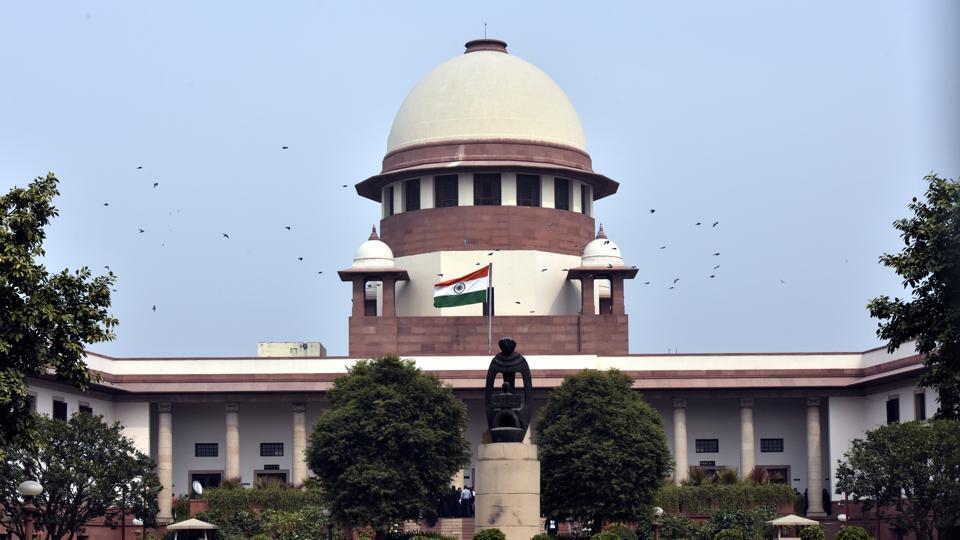
A bench, led by Chief Justice of India (CJI) Dhananjaya Y Chandrachud, held that the 2004 Act is valid and essential to align madrasas with modern academic expectations while simultaneously safeguarding the religious rights of minority communities under Article 30 of the Constitution which empowers them to establish and administer educational institutions of their choice.
The bench, also comprising justices JB Pardiwala and Manoj Misra, emphasised the delicate balance between maintaining quality education and respecting the autonomy of minority educational institutions. The Madarsa Act, it held, “furthers substantive equality for the minority community”, noting that the Act “imposes a responsibility on the Madarsas to attain certain standards of education laid down by the Madarsa Board”.
Clarifying that the Act does not encroach upon the religious freedoms of minorities but instead promotes inclusive, high-quality education within madrasas, it asserted: “The State has an interest in ensuring that minority educational institutions provide standards of education similar to other educational institutions.” The court added that regulatory measures serve to “promote efficiency and excellence of educational standards” within recognised madrasas.
By upholding the 2004 Act, the Supreme Court verdict seeks to preserve madrasas as vital contributors to India’s educational landscape, while also ensuring that madrasa students are not isolated from mainstream academic and vocational opportunities. The judgment prevents an outright deregulation that could lead to academic disparities, enabling madrasas to coexist within the national educational framework under state supervision.
While the 2004 Act allows for regulation of educational standards in madrasas, the top court declared, that the law does not extend to higher education degrees such as Fazil and Kamil, equivalent to graduate and postgraduate levels. As these degrees are governed under the University Grants Commission (UGC) Act, the court held that any provisions in the Madarsa Act addressing higher education “are beyond the legislative competence of the state legislature since they conflict with the relevant provision of the UGC Act”, declaring such provisions to be unconstitutional.
The Congress and the Samajwadi party lauded the verdict with the former saying that the judgement underscores the rights of the minority community to establish madrasas and the latter criticising the BJP government in UP “which did not want madrasas to function”.
Muslim organisations expressed their happiness after the apex court set aside the Allahabad High Court’s March 22 verdict, which had struck down Madrasa Education Act. They said that the apex court verdict affirmed the constitutional protection to institutions of the minority community.
The court’s judgment came in response to multiple appeals against the Allahabad high court’s March ruling which invalidated the 2004 Act on grounds that it violated secular principles by promoting religious education at the expense of general academic subjects.
Additionally, a series of directives from the National Commission for Protection of Child Rights (NCPCR) aimed to transfer madrasa students into government schools, prompting concerns about the preservation of minority rights under Article 30 of the Constitution, which guarantees religious and linguistic minorities the right to establish and administer educational institutions.
The petitioners, represented by senior advocates Abhishek Manu Singhvi, Salman Khurshid, Menaka Guruswamy and MR Shamshad, argued that madrasas play an integral role in India’s religious and educational diversity and that they adhere to certain state-mandated curriculum standards. They also emphasised the broader implications of the high court’s decision, which they contended unfairly targeted religious institutions and eroded Article 30 rights for minorities.
Representing the Uttar Pradesh government, additional solicitor general KM Nataraj maintained that the Act should be partially, not wholly, struck down. He argued that the high court could have limited its decision to specific provisions instead of invalidating the entire framework.
Setting aside the high court ruling, the Supreme Court noted that concepts like secularism and federalism, though integral to the Constitution, do not offer grounds for declaring legislation unconstitutional.
“Concepts such as democracy, federalism and secularism are undefined concepts. Allowing courts to strike down legislation for violation of such concepts will introduce an element of uncertainty in our constitutional adjudication...The high court erred in holding that a statute is bound to be struck down if it is violative of the basic structure. Invalidation of a statute on the grounds of violation of secularism has to be traced to express provisions of the Constitution,” held the top court.
The judgment further affirmed the rights of religious and linguistic minorities under Article 30, which guarantees minorities the right to establish and administer their own educational institutions. However, the court clarified that this right is not absolute and does not exempt minority institutions from reasonable regulations by the state.
“The right to administer minority educational institutions includes the right to manage the affairs of the institution in accordance with the ideas and interests of the community in general and the institution in particular. However, the right to administer is…not the right to maladminister,” noted the bench, reinforcing the idea that while madrasas are free to impart religious and cultural education, they are still accountable to standards that prevent substandard educational practices.
Highlighting that the primary purpose of Article 30 is to protect the unique character of minority institutions while not entirely isolating them from state-imposed quality standards, the court added that madrasas ought to retain their autonomy but must comply with certain academic standards that apply broadly to other educational institutions, provided that these standards do not interfere with their religious character.
The judgment upheld the state’s authority to regulate the education imparted in madrasas to uphold academic standards, thereby supporting the provisions within the 2004 Act. “The State has an interest in ensuring that minority educational institutions provide standards of education similar to other educational institutions. The State can enact regulatory measures to promote efficiency and excellence of educational standards,” it stated.
The court further observed that such regulation must not erode the essence of madrasas as minority institutions but should act as a “supportive” measure. “Affiliation or recognition of minority educational institutions by the Government secures the academic interests of students studying in such institutions to pursue higher education,” the judgment read.
Article 21A, which enshrines the right to free and compulsory education for children, applies universally to all children in India, regardless of the type of institution they attend. The Supreme Court confirmed that the Madarsa Act aligns with Article 21A, as it seeks to ensure that even students in religious institutions are provided with the requisite educational standards.
“The Madarsa Act is consistent with the positive obligation of the State to ensure that students studying in recognised Madarsas attain a level of competency which will allow them to effectively participate in society and earn a living,” said the bench, adding that the 2004 Act should be seen as an extension of the Right to Education (RTE) framework.
The judgment also delineated a clear boundary between religious instruction and secular education, holding that while madrasas may primarily impart religious instruction, their designation as educational institutions necessitate some degree of secular curriculum to equip students for a modern, interconnected world.
“There is a distinction between ‘religious instruction’ and ‘religious education’. While the Madarsas do impart religious instruction, their primary aim is education,” noted the bench, while clarifying that although religious instruction may be imparted in an educational institution which is recognised by the state, or which receives state aid, no student can be compelled to participate in religious instruction in such an institution.
However, the judgment said, the dissemination of religious instruction does not change its fundamental character as an institution that imparts education. “Merely because an educational institution is run by a minority or even a majority community and professes some of its teachings, does not mean that the teachings in such institutions fall outside the ambit of the term ‘education’...The mere fact that the education which is sought to be regulated includes some religious teachings or instruction, does not automatically push the legislation outside the legislative competence of the state,” held the court.
Samajwadi Party spokesperson Ameeque Jamei said, “People across the country are welcoming the decision of the Supreme Court. This government neither wants the madrasas to function nor implement government curriculum in these institutions. This government wants to open air-conditioned schools in this country where students of only one section are able to study. The backwards, Dalits and Muslims remain neglected...The government should fully fund the madrasas.”
Cong leader Rashid Alvi said, “The constitution allows the minorities to build their madarsas and university-like institutions and run them as per their will...It’s very clearly in the constitution. Despite that, if a court [Allahabad high court] gives such a verdict that is against the constitution, it is unfortunate,” Alvi said.
General secretary of the All India Shia Personal Law Board (AISPLB) Maulana Yasoob Abbas termed the top verdict a ‘great decision’. “It is a great decision. I welcome this decision... I salute the Supreme Court for their decision,” he told ANI.
Lucknow Eidgah Imam and member of All India Muslim Personal Law Board Maulana Khalid Rasheed Firangi Mahali said the decision has brought joy to the people associated with madrasas. He said that madrasas also impart modern education along with Islamic education.
“This decision has brought joy to the people related to Madrasas. UP Madrasa Act had been drafted by the UP government. How can an Act drafted by the government be unconstitutional? We have said this earlier too that besides Islamic education, we impart modern education too at the madrasas,” the Maulana said.


