
 E-Paper



In Munich, Jaishankar calls for ‘permanent fix’ to Israel-Palestine conflict
Calling for the return of hostages taken by Hamas during the October 7 terror attacks, Jaishankar said it is important to be very mindful of civilian casualties

 Prefer HTon Google


India believes that immediate measures to protect Israel from terror attacks and provide humanitarian aid to the Palestinian people must be complemented by the “permanent fix” of a two-state solution, external affairs minister S Jaishankar said on Saturday.
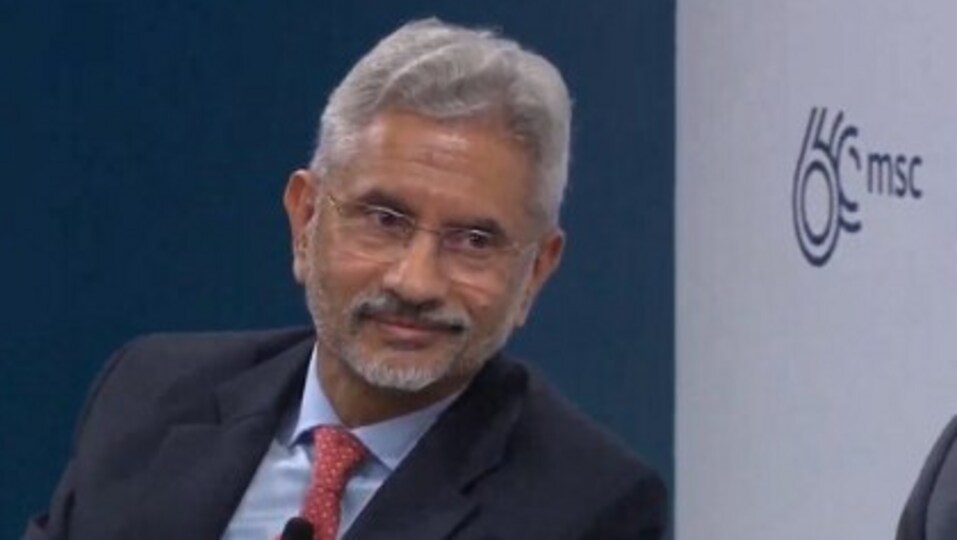
Jaishankar, who was participating in a discussion with German foreign minister Annalena Baerbock and US secretary of state Antony Blinken at the Munich Security Conference, said countries of the Global South believe that terrorism cannot be justified and that a two-state solution should not be delayed.
He emphasised four key issues regarding the Israel-Hamas conflict – the October 7 attacks were a terrorist act without justification, it is important for Israel to be “very mindful of civilian casualties” in its response as it has an obligation to observe international humanitarian law, the return of hostages taken by Hamas is imperative, and the need for a long-term solution.
“There is a need for a sustainable humanitarian corridor to provide relief and eventually, there has to be a permanent fix, a long-term fix. Otherwise, we are going to see a recurrence,” Jaishankar said.
India has backed a two-state solution for decades, and many countries today feel such a solution is not only necessary but “more urgent than it was before”, he added.
Jaishankar said: “A very large number of countries, especially of the Global South, believe that terrorism shouldn’t be countenanced or justified, but they equally strongly believe that a two-state solution should not be delayed. These are not choices, these are both musts and unless we are able to address both these issues, we are not going to really solve the problem.”
Baerbock said the West has to work with Arab partners to guarantee that there is no repeat of the terror attacks and that Palestinians have the security they need to live in peace. Blinken endorsed Jaishankar’s position and said it is imperative to proceed towards a Palestinian state that also ensures the security of Israel. While Israel is more secure in terms of coping with immediate threats, it has to make sure the cycle of violence doesn’t repeat itself, he added.
During the discussion with the theme “Growing the pie: Seizing shared opportunities”, Jaishankar was asked by the moderator if India has gone from a policy of non-alignment to “all alignment”, with the example of the country’s decision to continue buying Russian oil after the invasion of Ukraine.
He replied: “Do we have multiple options? The answer is yes. Is that a problem? Why it should be a problem? If I am smart enough to have multiple options, you should be admiring me, you shouldn’t be criticising.”
He added, “I do not want you to, even inadvertently, give the impression that we are purely and unsentimentally transactional. We are not. We get along with people, we believe in things, we share things, we agree on some things but there are times when you are located in different places, have different levels of development, different experiences, all of that gets into it.”
India has participated in a grouping such as Brics (Brazil-Russia-India-China-South Africa) because it was created by “significant powers...who felt they were not part of the G7 but maybe they also brought value to the table”, he said. The relevance of Brics was demonstrated by the 30 countries who asked to join the grouping last year, he added.
“I think it’s important today to make a distinction between being non-West and anti-West. I would certainly characterise India as a country which is non-West but which has an extremely strong relationship with Western countries [that is] getting better by the day,” Jaishankar said.



