
 E-Paper



Income can’t be sole criterion to determine OBC creamy layer: Supreme Court
The court said that adopting an interpretation that disadvantages one segment of the same backward class without rational justification would amount to treating “equals as unequals”

 Prefer HTon Google


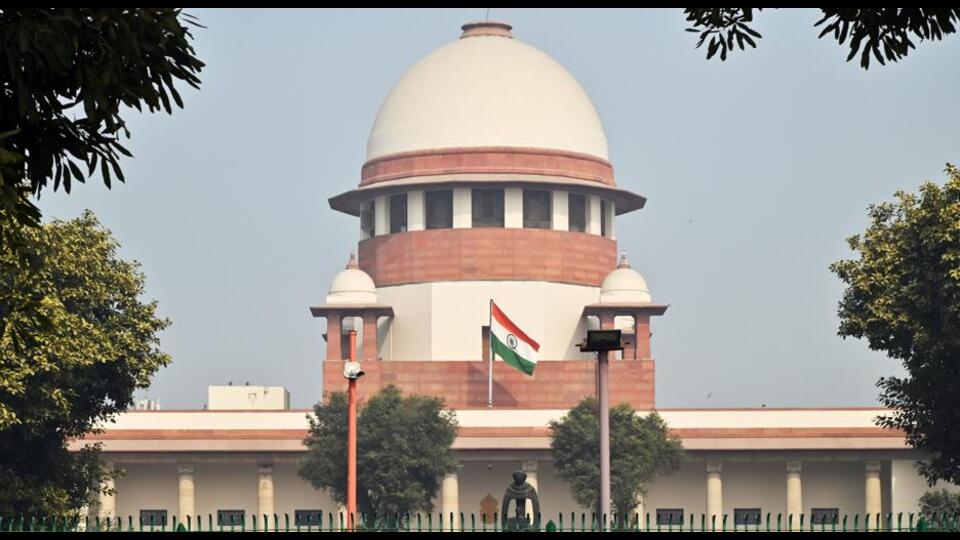
The Supreme Court on Wednesday held that the determination of creamy layer among other backward classes (OBC) should be the same for wards of public sector or private employees vis-a-vis government employees.
In a ruling that came on Centre’s appeals against decisions by three high courts, which held the different yardsticks adopted to compute income for the determination of creamy layer for PSUs vis-a-vis government employees to be “discriminatory”, the top court said that income cannot be the sole criterion to determine creamy layer status of OBC parents.
A bench of justices PS Narasimha and R Mahadevan said, “The object of excluding the creamy layer is to ensure that socially advanced sections within the OBCs do not appropriate benefits meant for the genuinely backward. It is not to create artificial distinctions between equally placed members of the same social class.”
The high courts of Madras, Delhi, and Kerala considered the cases of three OBC candidates seeking entry into the civil services based on their scores in the Union Public Service Commission (UPSC) examination. Upon verification of their entitlement, the three were classified as belonging to the creamy layer. They approached the Central Administrative Tribunal and the high courts, which directed the Centre to treat them as OBC non-creamy layer.
The high courts relied on the office memorandum (OM) of 1993 that lays down the criteria for the creamy layer, along with a clarification letter issued by the Centre in 2004, to conclude that the wards of OBC parents working in PSUs and the private sector, as was the case with all three petitioners, are being discriminated against when it comes to creamy layer determination. It held that the determination must solely be based on the status or post of the candidate’s parents and not their income alone.
The top court agreed with the view of the high courts. “Any interpretation of the 1993 OM or the 2004 letter that results in unequal treatment of similarly placed OBC candidates would not only be legally erroneous but constitutionally impermissible,” it said. “Determination of creamy layer status solely on the basis of income brackets, without reference to the categories of posts and status parameters enunciated in the 1993 OM is clearly unsustainable in law.”
The top court said that adopting an interpretation that disadvantages one segment of the same backward class without rational justification would amount to treating “equals as unequals” and would thus become the antithesis of equality, the cornerstone of the Republic.
“Having regard to the peculiar facts of the present cases, the reasoning adopted by the High Court that treating similarly placed employees of private entities and PSUs differently from Government employees and their wards, while deciding their entitlement to reservation, would amount to hostile discrimination, is certainly one that inspires the confidence of this court,” it said.
The OM of September 8, 1993, prescribed the income/wealth test, and this category specifically provides that income from salaries and income from agricultural land shall not be clubbed with income from other sources for the purpose of computing gross annual income. In essence, it said that salary and agricultural income are to be kept outside the common pool while determining exclusion under the test.
On October 14, 2004, a letter issued by the Centre recognised that where equivalence of posts in PSUs and similar organisations has not been evaluated, creamy layer status must be determined based on the income/wealth test. The clarification stated that income from salaries and income from other sources (excluding salaries and agricultural land) are to be assessed separately, and exclusion would follow only if either component exceeds the prescribed limit for three consecutive years.


