E-Paper



India and Latin American countries should double trade to $100 bn by 2027: EAM
India’s top leaders have made 34 visits to the Latin America and the Caribbean region in the past nine years, including four by PM Modi

 Prefer HTon Google


India and countries of the Latin America and the Caribbean (LAC) region should aim to double two-way trade to $100 billion by 2027, external affairs minister S Jaishankar said on Thursday as he outlined a four-point plan to drive economic ties.
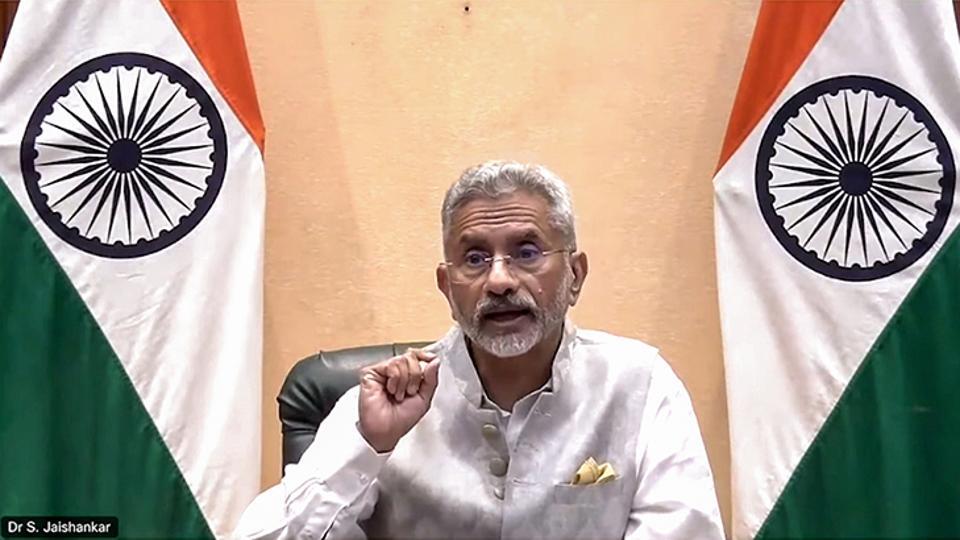
The two sides should also look at negotiating mobility agreements since legal mobility is becoming increasingly important and mutually beneficial in a knowledge economy, Jaishankar said while addressing the inaugural session of the India-LAC Conclave organised by the external affairs ministry and the Confederation of Indian Industry (CII).
Trade between the two regions was worth nearly $50 billion in 2022-23, and India’s exports to Brazil stood at $10 billion, almost double the exports to Japan. Jaishankar said the trade volume can be doubled to $100 billion by 2027, and the setting of a target serves as a motivator to achieve results.
The EAM suggested a plan with four pillars for intensified trade and economic engagement between India and LAC countries. The two sides should look at supply chain diversification since the Covid-19 pandemic had highlighted the need for resilient supply chains for redundant sourcing, diversified production, and food and energy security, he said.
Given India’s status as the fifth largest economy and the country’s rising demand for oil, gas, strategic minerals and food, the two sides should work on resource partnerships. Indian products and services can also meet the needs of the middle class of LAC countries, he stated.
The two sides should share developmental experiences, including digital capabilities, health solutions and agricultural practices. In this context, India can provide customised training and exchanges for LAC countries.
Jaishankar also said the two sides can work together to address global challenges such as climate change, concerns of the Global South, and reforms of multilateral structures. “By harnessing our shared strength, experiences, capabilities and resources, we can create a lasting partnership that will benefit both our regions,” he said.
Referring to importance of mobility arrangements for professionals, Jaishankar said, “We are willing to work with LAC countries to make movement easier between our businesses [and] our people.” The two sides should consider whether to negotiate mobility agreements since legal mobility is increasingly important and mutually beneficial, he said.
The business conclave is part of India’s upgraded engagement with LAC countries in recent years. India’s top leaders have made 34 visits to the region in the past nine years, including four by Prime Minister Narendra Modi.
India has also opened two new embassies in the region in Paraguay and the Dominican Republic.
Indian companies have a presence in LAC countries in areas such as agriculture, energy, IT, pharmaceutical products, manufacturing and automobiles. Their total investments in this region amount to $15 billion.
India’s car exports to Latin America account for one-third of global exports, and Mexico is the second largest market for Indian cars. Other big markets for automobiles are Chile, Peru, Colombia, Ecuador, Panama and Guatemala. Similarly, motorcycle exports to Latin America account for a third of India’s global exports and Colombia is the biggest market in the region for Indian two-wheelers.
India currently imports oil from Brazil, Mexico, Colombia and Guyana. The country imported crude oil and petroleum, oil and lubricant (POL) products from Latin America worth $7 billion last year, and exported a similar amount of refined products.
Under India’s development partnership initiative, New Delhi has extended 35 lines of credit to partners such as Bolivia, Cuba, Jamaica, Guyana, Honduras, Suriname, Nicaragua. Credit of nearly $900 million was provided under these lines and the Indian side has completed 21 projects in the region.
CII president R Dinesh called for greater cooperation in areas such as resource sharing for sustainable economy, transfer of technology to reinforce food security, and integration with global value chains in sectors such as horticulture. He suggested mutual recognition agreements in pharmaceuticals and FTAs to augment bilateral trade and investment flows.
Twenty senior ministers from 11 LAC countries are taking part in the conclave.