E-Paper



India, Australia working for ‘early harvest’ trade deal, says foreign minister Marise Payne
Australian foreign minister Marise Payne and defence minister Peter Dutton are in New Delhi to participate in the maiden India-Australia 2+2 dialogue of the defence and foreign ministers. The decision to elevate the dialogue to the ministerial level was made last year.

 Prefer HTon Google


India and Australia are working towards an “early harvest” trade deal that will prepare the grounds for a comprehensive economic cooperation agreement, Australian foreign minister Marise Payne said on Friday.
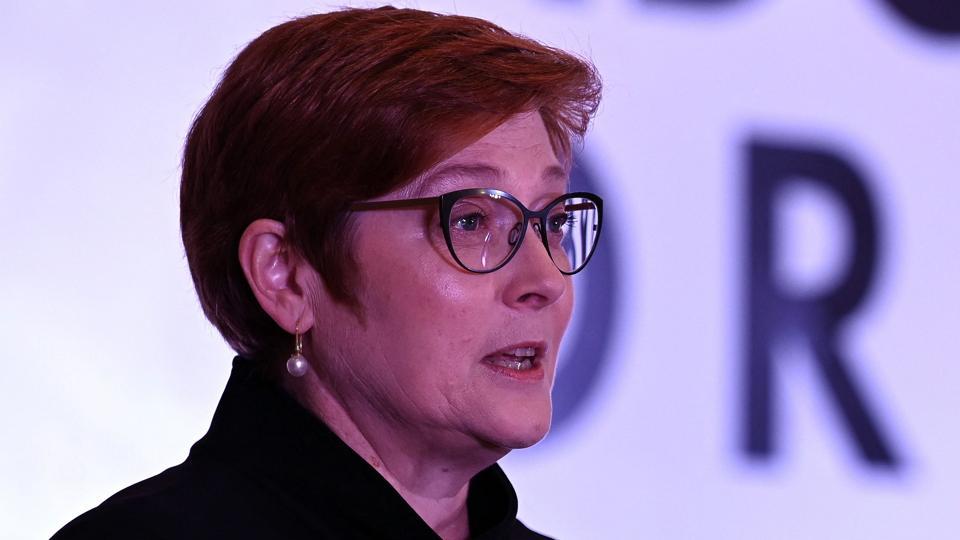
Australia’s trade minister Dan Tehan and India’s commerce minister Piyush Goyal have “instructed officials to work out an ambitious timeframe for striking a trade deal”, Payne said while delivering an address at an event organised by the Observer Research Foundation (ORF).
“We are working towards an interim agreement as an early outcome with a comprehensive economic cooperation agreement to follow,” she said, adding that this would be a welcome development for Indian and Australian businesses seeking to diversity and grow markets.
“It’s also a vital vote of confidence in a rules-based international order for which India and Australia are long-term champions,” she said.
Participating in a question-and-answer session after her speech, Payne said the two sides were engaged in regular discussions on how to make progress towards a trade agreement. The “early harvest” trade deal is expected to be concluded towards the end of this year, she said.
Payne delivered the address shortly after she and defence minister Peter Dutton arrived in New Delhi to participate in the maiden India-Australia 2+2 dialogue of the defence and foreign ministers. The decision to elevate the dialogue to the ministerial level was made last year. Dutton also held talks with his Indian counterpart Rajnath Singh on Friday.
She also talked about China’s coercive approach and the environment of strategic competition in the region, and said Canberra will continue to constructively engage with Beijing without compromising on national interests in any way.
Australia attaches importance to its long-standing relationship with China that has a strong economic component, Payne said. China’s rise has contributed to strengthening the growth of the Indo-Pacific “but with that growth and development into a strong and significant power, comes in our view, a degree of responsibility and how one uses that power”, she said.
She added, “Australia will always engage constructively with China but we will always consider the advancement of our national interests in doing so...what we have seen in recent times has certainly presented challenges for the relationship because we have considered that some of those actions have threatened Australia’s national interests.”
The Quadrilateral Security Dialogue or Quad, which includes India, Australia, Japan and the US, had rapidly evolved over the past two years to forge innovative and flexible responses to challenges facing the four democracies that have shared interests in the region, Payne said.
The Quad is also not aimed at any country and is working on crucial issues such as Covid-19 vaccines, climate change and countering “manipulative, deceitful and dangerous” misinformation on social media, she said. Australia and India also share a common vision for an open, inclusive and resilient Indo-Pacific region where states cooperate and resolve differences based on international rules, she added.
Payne spoke on a number of other issues, including trade and investment, cooperation in critical minerals, emerging technologies and steps to ensure the return of Indian students to Australia. She said Australia is trying to ensure that the next generation of technologies is shaped by standards and rules that uphold and protect shared democratic values and promote human dignity.
She also announced that Australia will contribute $10 million for the India-led Coalition for Disaster Resilient Infrastructure and another $1 million for the International Solar Alliance.